

Energy Transition
Discover how the shift from fossil fuels to renewable energy ensures security and economic growth. Explore the main challenges and solutions.

THE ➡️ SUSTAINABLE ENERGY TRANSITION – Shifting Away from Fossil Fuels
Also known as the green transition, the global shift from fossil fuels such as coal, oil, and natural gas to renewable, low-emission energy sources is essential to ensure energy security and a healthier planet for future generations.
This transition is driven by the need to reduce carbon emissions and combat climate change, as well as to reduce reliance on finite, environmentally damaging resources.
Not only will this switch help protect our planet, but it will also promote energy security, economic growth, and job creation in new energy sectors.
Jump straight to our guide on ➡️ The Energy Transition
Explore our comprehensive guides on -
- Renewable Energy
- The Fossil Fuel Industry
- The Climate Crisis
- The Green New Deal
- Conference on Transitioning Away From Fossil Fuels
Progress is Stalling, But There Is Reason For Hope
The energy transition is currently off-track. The COVID-19 pandemic and gas shortages stemming from the war in Ukraine further compounded the challenges facing the transition.
Sustainable Development Goal 7 - ensuring access to affordable, reliable, sustainable, and modern energy for all – is failing. Based on current trends, by 2030, there will still be 660 million people without electricity and 1.8 billion without access to clean cooking.
At current rates, the planet will fall well short of the 1.5°C goal, and by 2050, we are facing an emissions gap of 29-32 Gt (gigatonnes).
- Air pollution from fossil fuels kills 5 million people every year.
- In 2023, fossil fuels were responsible for 37 billion metric tonnes of CO2 emissions, an increase of 1.1% from the previous year.
- The number of climate-related disasters has tripled in the last 30 years. In 2023, there were 28 weather and climate disasters, surpassing the previous record of 22 in 2020 - the cost of these totalled $93 billion.
- In 2022, global fossil fuel subsidies reached an all-time high of $7 TRILLION (IMF).
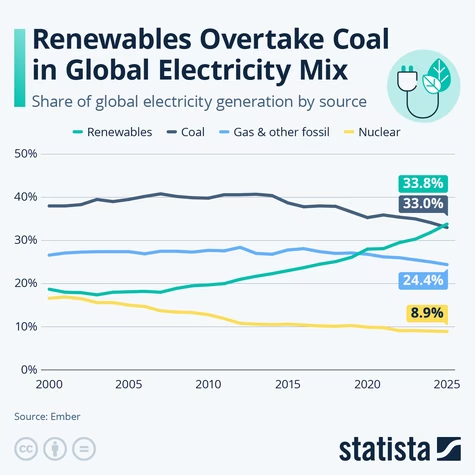
- Renewable energy still only accounts for 30% of the world's energy. Having increased by 10% since 2011, the sector is growing quickly, and investments in new power generation are now dominated by renewable energy.
- In 2025, 67% of the record $3.3 trillion in global energy spending went to the clean energy industry.
- In April 2026, solar and wind energy combined surpassed gas globally for the first time.
- To dramatically cut our dependence on fossil fuels and meet CO2 emission guidelines, it is estimated that by 2050, 77% of our planet's energy supply must come from renewable energy sources.
The Role of Renewable Energies
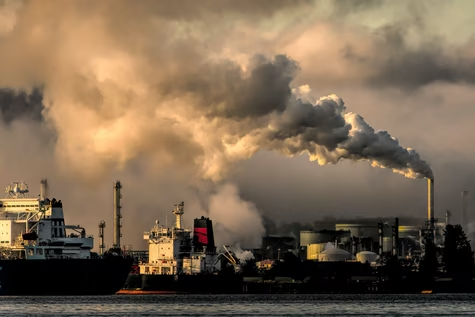
Since fossil fuels are the largest contributor to the climate crisis, we must transition to clean energy sources to mitigate its worst effects.
Currently, 30% of global energy is generated by solar, wind, and hydropower. Not only are these energy sources clean, but they are also sustainable - their supply will never run out.
At present, only seven countries produce almost all of their electricity from renewable sources, mainly through hydroelectricity: Albania, Bhutan, Nepal, Paraguay, Iceland, Ethiopia, and the Democratic Republic of Congo. Other countries leading the way are Costa Rica, Sweden, Germany, Uruguay, Kenya, Morocco, New Zealand, and Norway. These countries are proving that the transition is possible.
The electrification of our energy systems is key to meeting climate targets. Replacing old technology with electric versions, such as electric cars and heat pumps, allows us to utilise renewable energy easily and affordably.
To limit global warming to 1.5°C, the world needs to triple its renewable energy capacity by 2030. The installation of renewable infrastructure has exceeded that of fossil fuel and nuclear for the last 4 years. Continued massive funding and investment into the renewable energy sector is essential.
SOLAR ENERGY
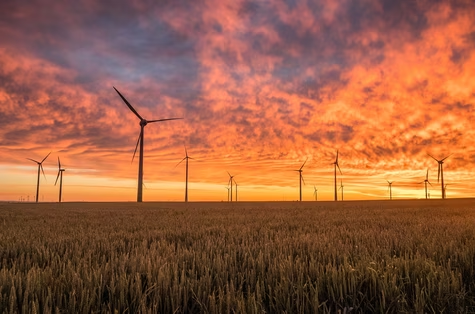
Solar electricity generation is estimated to surpass coal and gas by 2030. It is the fastest-growing renewable energy sector. Solar is also now the cheapest source of renewable energy, with prices dropping by 90% since 2010. It is now cheaper to produce than gas!
WIND ENERGY
The cost of producing wind power has also dropped 90% since the 1980s. The carbon payback of wind turbines is just 3-6 months. In this time, they produce the same amount of energy needed to cover their manufacturing, installation, operation, maintenance, and decommissioning! In 2025, global energy capacity increased by 40% from the previous year. Offshore wind has the potential to generate 18 times the current global electricity demand. By 2030, the wind energy sector will employ 4 million people.
HYDROELECTRICITY
The World's number one renewable energy source accounts for 50% of all renewable energy generated. The largest hydropower station in the world is the Three Gorges Dam in China, with generators capable of producing a gigantic 22,500 megawatts of power. Expensive, vulnerable to drought, and with serious consequences for surrounding communities and ecosystems, hydropower, although clean and sustainable, unfortunately brings a different set of problems.
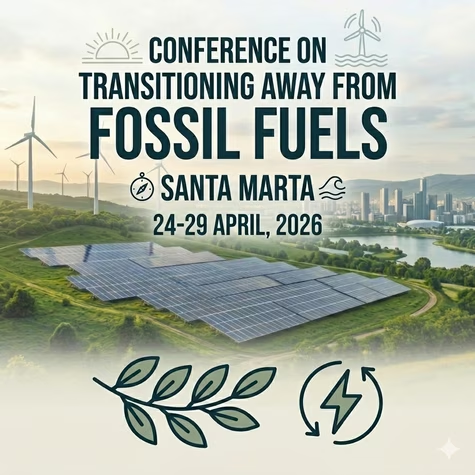
Conference on Transitioning Away From Fossil Fuels, 24-29 April 2026
Also known as the Santa Marta Conference, this first-of-its-kind conference was co-hosted by Colombia and the Netherlands. With 57 countries in attendance, the talks focused on coordinating an international effort to phase out fossil fuels.
The countries present account for one-third of global GDP and have been branded the coalition of the willing. Notably, the U.S. (the world's largest oil consumer) and China (the world's largest coal consumer) were absent (not invited!).
Although the Santa Marta Conference was designed to complement the UN COP Conferences, the idea, spearheaded by the Fossil Fuel Treaty Initiative, was born of frustration with inaction, lobbying, and an unwillingness to commit to concrete measures now synonymous with COP.
Led by Colombian President Gustavo Petro, the conference saw many significant advances. One of the most important developments was the official launch of the Science Panel for the Global Energy Transition.
This panel will provide countries with specific guidance on direct actions to meet the 1.5°C goals and to help them overcome legal, financial, and political barriers. This move represents a significant shift from negotiation to implementation.
The conference proceeded without the hindrance of major fossil fuel producers, consumers, and lobbyists, allowing for candid discussions focused on real change. This new era of international cooperation helps limit the political and economic risks of acting alone and places huge pressure on the world to finally commit to phasing out fossil fuels.
Barriers To The Green Transition
Many economic, political, and environmental factors influence the speed and success of the energy transition. Pressure from profit-hungry oil, gas, and coal giants severely hinders progress.
Corporate greenwashing has been used as a tactic to distract the public from the realities of the fossil fuel industry, and it allows them to continue operating with impunity.
Climate denial and the withholding of key scientific findings have allowed Big Oil to continue upscaling operations. Companies such as ExxonMobil, Shell, and BP have kept this dirty secret since the 1970s, long before the public was made aware of the consequences of unchecked fossil fuel energy production.
Politicians also play a key role in propping up the fossil fuel industry. In his 2024 election campaign, Trump received $14.1 million in donations from oil and gas executives. In return, he promised to open up new areas for drilling, scrap environmental rules, and provide tax breaks for the industry.
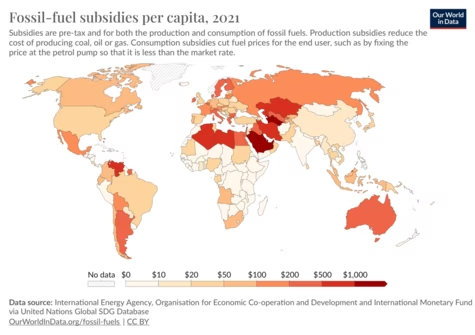
There cannot be an energy transition without an end to intense lobbying by Big Oil and gigantic fossil fuel subsidies. In 2022, a staggering $7 trillion was spent by governments propping up the fossil fuel industry - 7.1% of GDP.
These subsidies are among the biggest barriers to the shift to renewable energy sources. They are designed to protect consumers by keeping prices low, but in reality, they impose higher taxes, reduce public spending, enable unchecked pollution, and divert investment from renewable energy projects.
Renewed interest in nuclear power is another key obstacle to the shift to renewables. Touted as a clean alternative to fossil fuels, this short-sighted vision ignores the major risks and costs of nuclear energy.
Despite their enormous cost, the nuclear weapons proliferation risk, decades-long construction time, reliance on cancer-causing uranium mines, and the unsolved issue of nuclear waste, there are currently 65 reactors under construction and a further 90 planned around the world.
Energy Transition Outlook
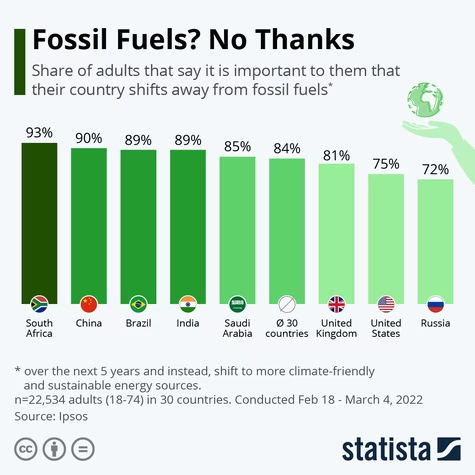
True renewable energy sources are the answer, but high initial installation costs, misguided political influence, and the enormous weight of the fossil fuel industry are preventing a fast and just transition.
Devastatingly, climate injustice means that those who are affected first and most severely are the nations and communities that contribute least to its causes. Developing countries which support higher populations of low-income and disadvantaged people are on the frontlines of climate change and are the least able to protect themselves.
The energy transition is essential to providing future generations with a planet worth living for, to meeting sustainability goals, and to protecting our environment, ecosystems, and health. International cooperation and the sharing of technological advancements are crucial to promoting the use of renewable energy worldwide.
The energy transition not only offers the opportunity to mitigate the climate crisis, but also helps the poorest nations develop faster and helps build a more sustainable future for future generations.
Author: Rachael Mellor, 20.02.25 (Updated 06.06.26) licensed under CC BY-SA 4.0
For more information on the Energy Transition see below ⬇️
More Resources