
NUCLEAR Energy
Explore the nuclear energy debate. From uranium mining and waste management to fusion tech and the weapon connection, is nuclear power truly sustainable?
NUCLEAR ENERGY - Expensive, Unsafe & Unreliable
Discover the controversial world of nuclear energy and learn how you can actively advocate for a safer, more sustainable future. Our nuclear energy guide offers you in-depth information on the risks and costs of nuclear power, a country by country guide, the unsolved problem of radioactive waste, major nuclear disasters, and its links to nuclear weapons.
Connect with hundreds of valuable resources, initiatives, and organisations – for a nuclear-free world, accelerated renewable energy transition, and a sustainable future.
Jump straight to our guide on ➡️ Nuclear Energy
*****
General Information
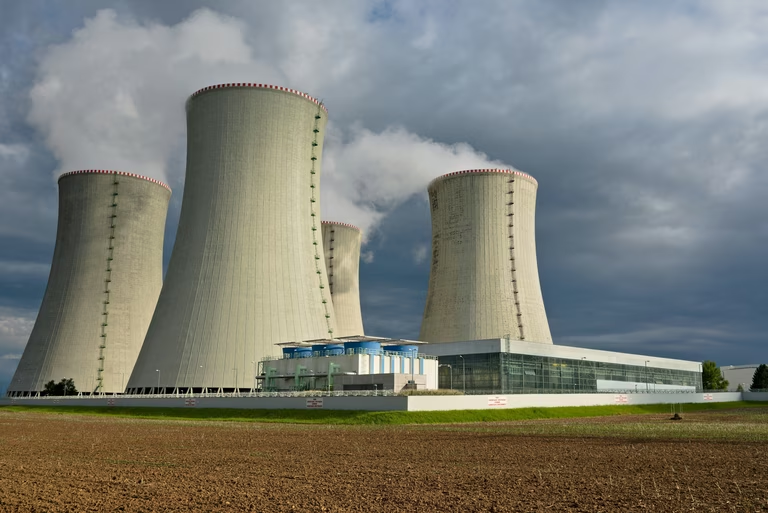
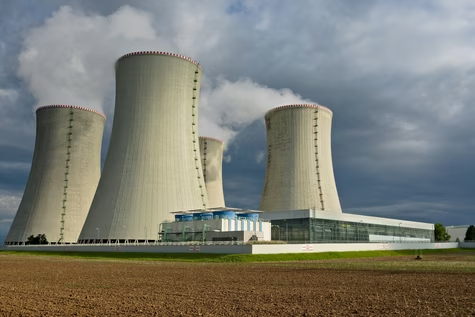
Nuclear power is created by the energy released during nuclear fission. Most nuclear power plants utilise enriched uranium to generate electricity. The fission of uranium atoms heats water, which then creates steam. This steam then spins turbines, which drive generators to produce electricity.
The first nuclear power plants began operation in the 1950s and have been a controversial source of energy ever since. Energy generated by nuclear reactors now accounts for 9% of the world's electricity supply, from 440 reactors in more than 50 countries.
It is the world's second-largest low-carbon energy source after hydroelectric power. Driven by clean energy targets, a surge in energy demand due to AI, and a nuclear renaissance, forecasts predict that nuclear energy capacity could double to over 800 GW by 2050.
“Nuclear energy can never be 100% safe and is never ‘clean’ whatever the industry claims.” - Richard Outram, secretary of the Britain / Ireland Nuclear Free Local Authorities group.
The U.S. produces more nuclear energy than any other country, with a total installed capacity of 91.5 GW - 30% of the world's nuclear energy production. The country's 94 reactors generate 18% of the country's electricity. China takes second place with 57 reactors. Following closely behind are France, Russia, and South Korea.
Nuclear energy is often referred to as a clean energy supply and the green panacea to the energy transition. Although it is true that nuclear energy does not rely on fossil fuels and produces very little carbon dioxide or other greenhouse gas emissions, this overly simplistic view ignores the major risks and costs involved with nuclear energy production.
*****
Advantages & Disadvantages of Nuclear Energy
PROS -
- It provides a steady, reliable source of power and produces very few greenhouse gas emissions.
- Nuclear power has enabled rapid decarbonisation of the energy market in the green energy transition.
- Just a small amount of nuclear fuel produces large amounts of energy, and plants can operate for up to 2 years before they need refuelling. They can deliver maximum power 93% of the time, and a single power plant can produce thousands of megawatts of energy.
CONS -
- Nuclear waste is a highly radioactive and toxic byproduct from nuclear reactors. It remains radioactive for tens of thousands of years.
- The potential for weaponisation is very real. The technologies of nuclear energy and nuclear weapons are deeply intertwined. With the increasing availability of both, the risk of them falling into the wrong hands is high. Even more so in countries with high levels of corruption and instability. The risk of damage in war situations, intentional or otherwise, such as what happened at Zaporizhzhia in Ukraine, is also a very real concern.
- When nuclear energy fails, it does so spectacularly. In 2011, the Fukushima disaster led to the displacement of more than 150,000 people, thousands of related deaths, devastating environmental consequences, and billions of dollars in cleanup costs.
- The cost of catastrophes is so high that no insurer will take on the risk; this means that accidents are always at the cost of the taxpayer.
- Nuclear energy is one of the most expensive forms of energy. Nuclear plants cost billions of dollars to construct, are funded by large taxpayer subsidies, and can take up to a decade to build. It is a futile distraction from the renewable energy transition.
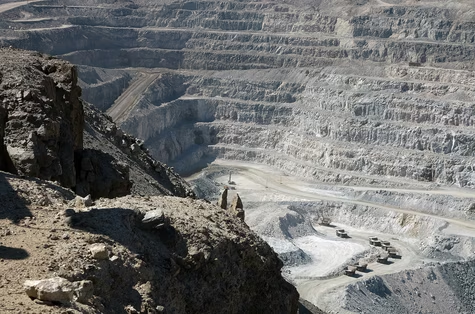
- Uranium mining is dirty, dangerous, and unsustainable. They create huge scars on landscapes and radioactive contamination, including arsenic and radon, which are leeched into the local environment. The U.S. has 15,000 abandoned uranium mines, mostly on Native lands, which continue to leave a legacy of serious health complications for Indigenous communities.
- Nuclear plants rely on vast quantities of water. In 2015, the United States consumed 320 billion gallons of water generating nuclear power. Plants are usually located next to lakes or oceans to feed their cooling tanks and dump thermal water. Rapid temperature changes are harmful to plant and animal ecosystems. During times of drought, plants are unoperational.
- Decommissioning nuclear power plants safely is incredibly expensive and can take generations. Dismantling Sellafield in the UK will cost at least £136 billion and is expected to take until 2125.
Can We Solve The Nuclear Waste Problem?
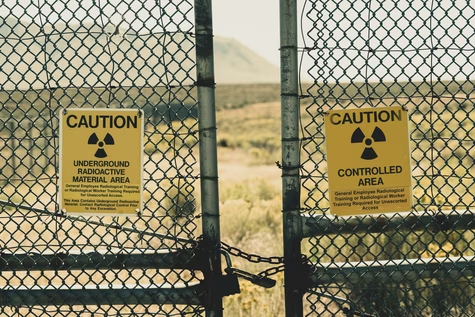
Nuclear waste is created by leftover fuels used in nuclear power plants and facilities involved in nuclear weapons production. It contains poisonous chemicals like plutonium and uranium pellets, which remain highly radioactive for tens of thousands of years. Nuclear waste poses a very real threat to agricultural land, fishing waters, freshwater sources, and human life.
Since the 1950s, more than 400,000 tonnes of highly toxic nuclear waste have been accumulated. The largest quantity of untreated nuclear waste on the planet is currently stored in the Sellafield plant in the UK. It is the equivalent of over 27 Olympic-sized swimming pools, and is considered one of the most hazardous nuclear sites in the world.
In most cases, it is stored in decommissioned nuclear power plants. In some cases, including Chernobyl, the plant's reactors still contain an enormous amount of toxic waste. In 2019, at a cost of $1.6 billion, an enormous steel-and-concrete structure was built to encase one of its reactors, a solution that will last only 100 years.
The first attempt at burying nuclear waste underground took place in Finland, when 2,300 tonnes of high-level waste were entombed in an underground hard-rock mine on the Island of Olkiluoto, 450 metres deep. The project cost $3.4 billion, and whether this is a viable long-term solution remains to be seen.
No country in the world has been able to provide a reliable, permanent solution to store nuclear waste. The temporary solutions that are currently in use are incredibly expensive. This money would be better invested in the renewable energy sector.
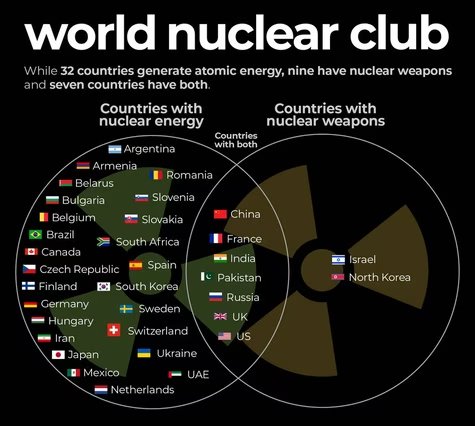
Nuclear Power & Nuclear Weapons
The civilian nuclear power industry and the worldwide proliferation of nuclear weapons are inextricably linked. The nuclear energy industry grew out of the atomic bomb programme in the 1940s and the 1950s.
Nuclear secrecy began right from the start when, in the UK, nuclear energy was used as a deliberate cover for military activities.
The development of nuclear energy programs increases the likelihood of nuclear weapon proliferation through the spread of technologies and raw materials. With greater availability, the risk of non-peaceful use increases.
It is an open secret that militaries pressure governments to invest in nuclear power. This is why nuclear-armed states are disproportionately committed to nuclear power.
Civil nuclear energy projects maintain the skills and supply chains needed for military nuclear programmes. It can be, and is, used to cover up nuclear weapon proliferation.
Britain's first nuclear power station at Calder Hall was sold to the public as a cheap and clean energy source for everyone. Its primary function, however, was to produce plutonium for nuclear weapons development. The electricity it produced was merely a byproduct.
Most governments go to great lengths to keep the connection between nuclear energy and nuclear weapons well hidden, even though the industries are obviously mutually beneficial. The truth is that most modern reactors produce enough plutonium to build 2 atomic bombs a month.
Currently, 26 countries operate nuclear power plants but are not nuclear-weapon states. As they have the fuel and technology needed to build atomic bombs, any country with the capability to enrich uranium should be considered a nuclear-weapon state.
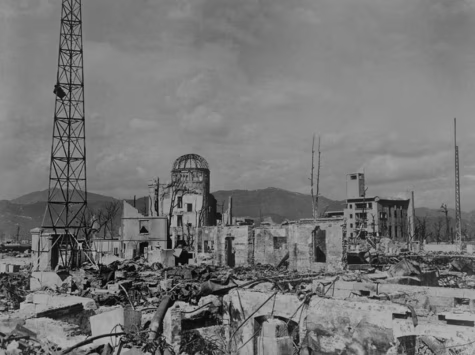
The failure of the Nonproliferation Treaty is solely due to large nuclear nations, not the smaller, nuclear-free states. Since the catastrophic bombings of Hiroshima and Nagasaki, the U.S. has threatened to deploy nuclear weapons a staggering 40 times.
During the first and second presidencies of Donald Trump, there have been at least six major instances where he explicitly threatened devastating military action through the deployment of the U.S. nuclear arsenal.
It has so far not proved possible to separate civilian nuclear energy from nuclear power for military purposes, rendering the goal of nonproliferation out of reach as long as the nuclear power industry exists.
What Is The Future Of Nuclear Energy?
The major nuclear accident at the Fukushima Daichi plant in Japan in 2011 caused widespread public and political alarm. During this time, investments in the industry had already been declining. This incident led to the loss of 48 GW of electrical power generation globally.
Germany and Belgium decided to phase out nuclear altogether, and many other countries scaled back investments, scrapped plans to maintain ageing facilities, and abandoned new projects.
However, with growing pressure on wealthy nations to meet the Paris Agreement climate targets, a renewed focus on energy security after Russia's invasion of Ukraine, and investments by tech giants Microsoft, Google, and Amazon, nuclear energy is undergoing a revival.
China currently has 36 new plants under construction, South Korea has scrapped its nuclear phaseout plan, France has recommitted to its reliance on nuclear, and the U.S. has announced it intends to triple its nuclear power generation by 2050.
The appeal of nuclear energy lies in its reliability as a carbon-free source that complements clean but intermittent renewable energy sources like solar and wind power. To the dismay of environmentalists and anti-nuclear campaigners, the European Commission included nuclear power in its "green taxonomy", labelling it suitable for sustainable finance.
This new era of nuclear energy delays any chance of a nuclear phaseout, creates even greater unsolved issues for future generations, and, with increasing instability and geopolitical tensions, puts our planet at even greater risk of nuclear catastrophe.
Soaring energy demand in developing countries, the exponential growth of AI, and energy-hungry data centres are putting energy security at risk and placing even more pressure on governments to provide energy from low-carbon energy sources.
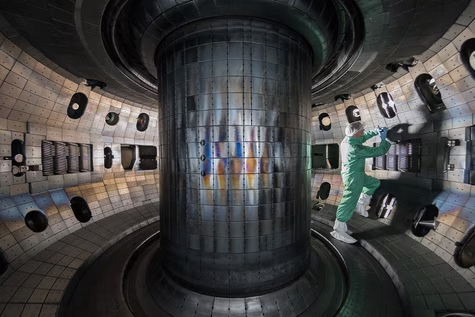
Promises of nuclear fusion as the answer to our energy prayers have so far fallen flat. With the potential to provide clean, limitless energy, nuclear fusion currently consumes more energy than it produces, and many more breakthroughs are needed before it becomes commercially viable.
Small Modular Reactors (SMRs), a recent development in the nuclear sector, have promised to bring down the startup costs for new nuclear power plants. They are smaller than traditional reactors and use standardised parts for faster assembly. There are more than 80 designs under development globally, but none have yet been proven at commercial scale. They have the same risks and will also need many years to be built.
The debate on nuclear power remains highly polarised. With no real permanent solution to the problem of nuclear waste, the nuclear renaissance is irresponsible and short-sighted.
With such high costs - human, environmental, and economic - for now, the best option lies in truly renewable energy sources that do not put our planet in danger.
“The reality of the nuclear age is that we are compelled to live in constant company with the worst—the most incomprehensible and absurd—danger imaginable” - Daisaku Ikeda, Japanese Buddhist leader.
Author: Rachael Mellor, 18.02.25, latest update, 15.07.26, licensed under CC BY-SA 4.0
For further reading on Nuclear Energy see below ⬇️
More Resources
Curated Directory & Deep-Dive Resources on NUCLEAR Energy
- General Info - expensive, unsafe & unreliable 345
- Major Nuclear Disasters 1084
- Countries 1225
- Risks & Costs 450
- Critical Projects 131
- Radioactive Waste 364
- Nuclear Phase-Out 120