
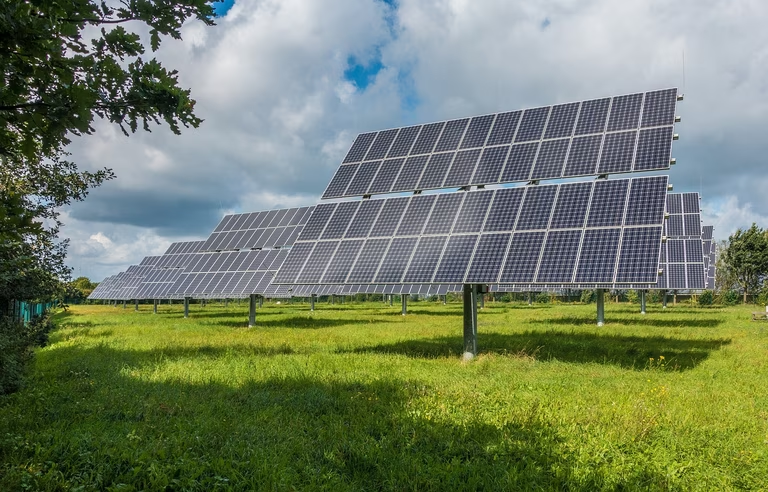
SOLAR Energy
Complete guide to solar power | Photovoltaics, solar panels, efficiency, energy storage, costs and benefits, large solar plants, and feed-in tariffs
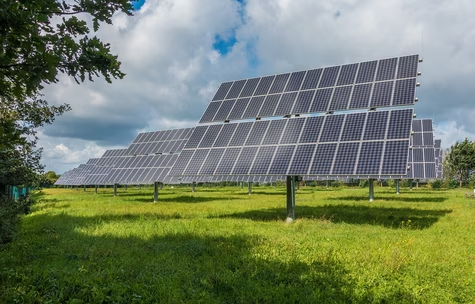
➡️ SOLAR POWER – Harnessing The Power Of The Sun
Solar power is now the cheapest source of renewable energy, with prices dropping 90% since 2010. It is now cheaper to produce than gas!
This clean, sustainable energy harnesses the sun's rays, supports the green energy transition, and helps us reduce our reliance on fossil fuels.
Find essential information on:
- Solar Power News & Key Platforms
- Solar Farms & Huge Solar Projects
- Large Solar Companies
- Feed-in Tariffs & Smart Export Guarantee
- Guide to Photovoltaics
- Solar Energy Storage
- Solar Cookers
- Solar Energy Costs
- Must-Read Articles
A common misconception of solar power is that panels need sunlight to operate. In truth, they only need daylight, making them versatile and practical in most places on the planet.
The primary technologies for capturing and converting solar energy include photovoltaic (PV) panels and solar thermal systems. PV panels convert sunlight directly into electricity, while solar thermal systems use the sun's heat to produce thermal energy, which can then be used for heating or converted into electrical power.
After the initial startup costs, solar-generated energy is not only free, but excess energy can be sold back to the grid through schemes such as the Smart Export Guarantee in the UK. Solar panels require little maintenance and can last up to 25 years.
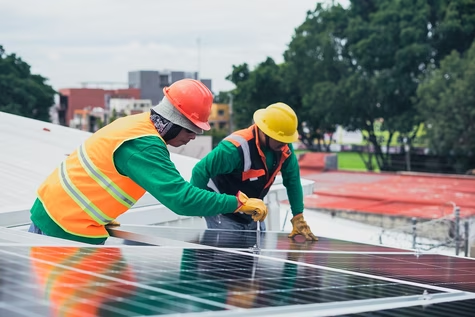
Advantages of Solar Energy
- Renewable & Infinite: The sun is the most abundant energy source on the planet; unlike fossil fuels, its power will never run out.
- Environmentally Friendly: Solar power does not produce greenhouse gases or contribute to air pollution, helping reduce climate change.
- Reduction in Electricity Costs: Once installed, solar panel systems can reduce energy bills by 50–75%.
- Low Maintenance: Solar panels require minimal maintenance and have a long lifespan.
- Decentralised Energy Generation: Solar energy enables independence from the power grid, increasing energy efficiency and providing greater control at the local level.
- Job Creation: The solar industry accounts for more than a third of the total workforce in the renewable sector, totalling 7.2 million jobs across research, development, production, installation, and maintenance.
- Solar Power in International Development: Solar power contributes to the Sustainable Development Goals by bringing clean energy to communities, creating jobs, advancing development, and protecting the environment.
Disadvantages of Solar Energy
- High Initial Investment Cost: Installing solar panels, inverters, batteries, and wiring adds up. The average cost to build a solar farm in the UK is between £500,000 and £1 million per Megawatt (MW) of installed capacity. In 2026, the average cost for a homeowner to purchase and install solar panels in the UK ranged from £6,000 to £9,000, depending on the system size.
- Weather Dependent: Cloudy, rainy days will reduce the efficiency of solar energy production. For this reason, solar energy can only reach maximum efficiency in specific geographical regions with long hours of sunlight.
- Environmental Impact of Manufacturing: The mining of minerals required to build solar panels, although less impactful than fossil fuels, is still highly damaging to local areas, creates pollution, and produces greenhouse gases. These mines are often in developing countries and create a myriad of problems for communities, including large-scale displacement and heavy metal contamination of water supplies.
- Resource Requirements: The huge increase in solar panel production has created a strong demand for rare earth minerals, driving up mining of silicon, silver, aluminium, and copper – all finite resources. The availability of these raw materials may not be sufficient to meet future demand.
- Storage & Grid Integration: A lack of standardisation complicates integrating new solar developments to the grid. Efforts to improve connections are being outpaced by the growth of renewable energy. Without careful management, fluctuations in energy supply can create grid instability.
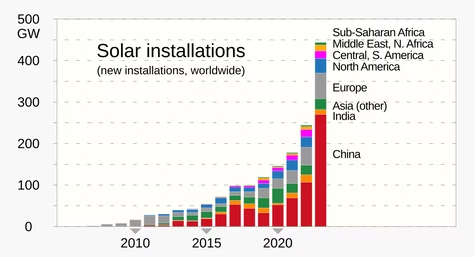
Leading Countries In Solar Power Generation
As the clear frontrunner in the energy transition, solar energy is being embraced worldwide as nations aim to meet their clean energy targets, reduce carbon emissions, and minimise dangerous levels of air pollution.
Currently valued at $268 billion, the solar power market is projected to reach the trillions by 2050. Below, we highlight the top 5 solar energy-producing countries:
CHINA
Leading the solar revolution, China has a whopping 609 GW of solar capacity, accounting for 50% of the global market. They also dominate the list of solar panel manufacturers, accounting for 90% of global solar panel production.
In a paradox, China also takes the top spot as the largest single country contributor to global greenhouse gas emissions. China’s solar energy boom is driven by the need to meet its climate targets, massive investment, technological advancements, and supportive government subsidies.
It is estimated that by 2030, 50% of the world's renewable energy will be produced in China.
U.S.A.
In second place, the U.S. has a solar capacity of 139 GW and is expected to reach 378 GW by 2028. The country boasts vast areas of land abundant in sunlight, especially in California, Arizona, and Texas, where most solar energy is generated. Interestingly, the U.S. is also the second-largest producer of greenhouse gases and has set a federal target to achieve a 100% clean, carbon-free electricity grid by 2035.
JAPAN
With a total installed capacity of 89 GW, Japan ranks third. They have invested heavily in the development of space-based solar power and flexible solar cells. Solar now accounts for over 10% of Japan's total electricity generation. As Japan is densely populated and mountainous, its solar market is even more impressive. Limited ground space has spurred investment in innovative solutions such as floating solar projects in bays and reservoirs.
GERMANY
As the largest solar energy producer in Europe, Germany takes fourth place globally with a solar capacity of 81 GW. Germany has long been a pioneer in the renewable energy sector, and the Russian war in Ukraine has prompted a further switch away from reliance on oil and gas.
Germany's performance in the solar power sector is even more impressive, given its limited availability of all-year-round sunlight. In the past, the government supported the sector through a series of subsidies, tax exemptions, favourable feed-in tariffs, and attractive funding opportunities for investors.
INDIA
India’s potential for solar energy production is vast. This huge country has abundant suitable land and enjoys long hours of sunlight year-round. Their current solar capacity is 73 GW. They have also emerged as pioneers in off-grid energy systems, bringing energy to many rural communities, aiding their socio-economic development and helping reduce inequalities in remote areas.
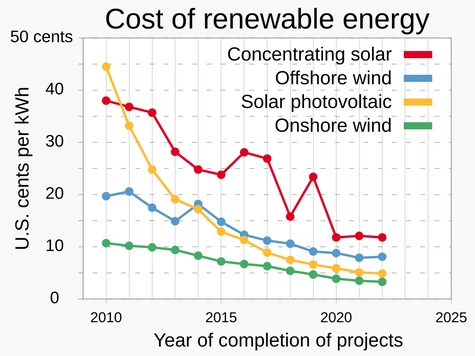
Solar Energy - The Cheapest Energy Source In The World
As the demand for solar energy systems has grown, so has the scale of production. Large-scale manufacturing has enabled more efficient production, reducing material and labour costs, and these costs are expected to keep falling.
Renewable energy and climate experts are hailing this as a huge win against the fossil fuel industry, which is becoming increasingly economically unviable.
The rapid growth of the solar power sector has led manufacturers to build stockpiles, with capacity nearly twice that of demand. This oversupply, especially in China, the world's largest producer of solar cells, has driven prices down. Bad news for manufacturers, but great news for facilitating the global energy transition.
A stumbling block for the solar sector has always been the cost of solar energy storage. As commercialisation and wider deployment increase, the cost of lithium-ion batteries has decreased. Since the early 2000s, the cost of lithium-ion batteries has dropped by nearly 90%.
Solar Power For A Better World
The sun's immense power exceeds humanity's energy needs several times over. Governments are waking up to the vast potential of the solar sector. At current growth rates, solar power will account for more than half of global electricity generation by 2050.
We must ensure that the extraction of raw materials used to produce solar technology is sustainable and has minimal impact. With increased efficiency and strong environmental regulations, the solar sector could be one of the best tools we have in achieving Goal 7 of the SDGs by 2030 -
“Ensuring access to affordable, reliable, sustainable and modern energy for all.”
Solar power plays an important role in the development of emerging countries. Approximately 675 million people still do not have access to electricity - Four out of five of them are in Sub-Saharan Africa.
One in four people still use unsafe and inefficient cooking systems. Solar lamps let children work on their homework after dark, and solar cookers let families cook without polluting their homes with dangerous emissions.
Investing in these technologies and distributing them to those most in need can be life-changing.
Modern renewables power 40% of all electricity, but that figure remains low for heating and transport. Work still needs to be done to improve solar power efficiency, storage, and widespread application in these sectors.
Solar thermal energy, solar roads, cars, and ships have already been invented. Given the industry's current rate of development, we expect these percentages to be much higher in the coming years.
Author: Rachael Mellor 13.08.24 (Updated 19.05.26) licensed under CC BY-ND 4.0
For more information on Solar Power see below ⬇️
More Resources
Curated Directory & Deep-Dive Resources on SOLAR Energy
- News 27
- General Info 40
- Organizations 25
- Solar Power Plants & Projects 65
- Companies & Industry Network Federations 27
- Feed-in Tariffs 20
- Photovoltaics: Sun into Electricity 24
- Sun into Heat 20
- Solar energy storage and on-site consumption 36
- Solar Cookers 54
- Solar Lamps 19
- Solar Cars
- Solar Planes 20
- Solar Roads 30
- Solar Ships 40
- Solar Energy Costs 41
- Sun into Homes - Light 6
- Selected Articles 211