
BREXIT - EU Referendum 2016
Critical analysis of the fallout from the UK’s exit from Europe. False promises, weak deals, and economic disaster.
➡️ BREXIT ONE DECADE LATER – Regrets, False Promises & Financial Failure
The term Brexit refers to the United Kingdom's withdrawal from the European Union. The process began with a referendum in 2016. It took 4 years of negotiations for the withdrawal process to be completed.
The campaigns in the lead-up to the vote were profoundly controversial. Voters were misled by false promises, fear-mongering, media bias, and highly emotional rhetoric. There were also allegations of foreign interference, spending controversies, and data manipulation.
Driven by promises of increased sovereignty, economic prosperity, and control over immigration, 52% of voters opt to leave the EU. A decade later, many of these promises remain unfulfilled, the economy is weakened, and the country has been suffering from a cost-of-living crisis since 2021.
Jump straight to our resources on ➡️ BREXIT
Explore our comprehensive guides on -
-
Brexit Analysis & Fallout
-
Key Political Issues in the UK
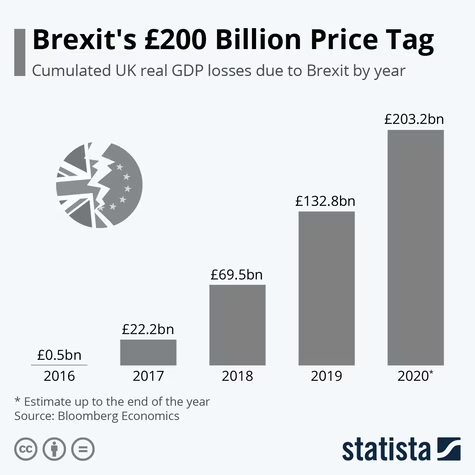
One of the hardest pills to swallow was that despite such bold claims of prosperity and control, a unified, comprehensive plan never even existed. The long post-referendum negotiations gave way to economic uncertainty, reduced investment, trade barriers, political instability, labour shortages, and supply chain disruptions.
The referendum passed with such a small majority. With turnout at 72.2%, the result meant that about 37.4% of the total British public decided the outcome.
Statistics revealed that younger voters were much more likely to vote Remain than older voters. While 60% of those aged 65 and over voted to leave,
73% of 18-to-24-year-olds voted to remain. Despite their strong preference for Remain, voter turnout among younger age groups was low. Current polling suggests that the generational gap has widened even further.
The False Promises
-
Economic Prosperity - Voters were promised that leaving the EU would lead to a stronger, more independent economy. In reality, Brexit has caused significant economic strain. By 2025, estimates suggest that Brexit has reduced UK GDP by 6–8% and investment by 12–18%. GDP is roughly 4–8% lower than a "remain" scenario. Since 2019, the estimated cost of lost tax revenue is £40 billion.
-
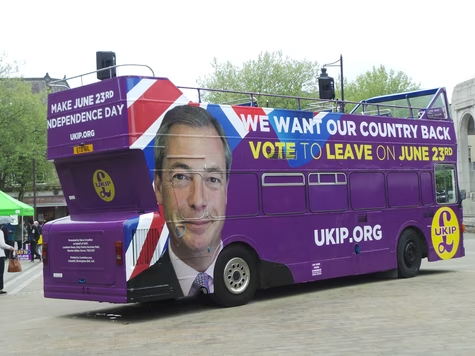
The £350m-a-Week NHS Promise - The Leave campaign bombarded voters with promises of a revived NHS, infamously plastered all over buses. Savings of £350 million a week were to be redirected to the NHS in a claim later found to be inaccurate. Instead, the NHS is in crisis due to chronic underfunding, severe staff shortages, record waiting lists, and industrial action focused on poor working conditions and pay.
-
Trade & Red Tape - Freedom from EU bureaucracy was supposedly going to result in a simplified trading environment and greater sovereignty for British businesses. Conversely, leaving the EU single market and customs union resulted in increased red tape, border bureaucracy, import checks, customs declarations, and non-tariff barriers for businesses, contributing to a substantial drop in trade with the EU.
-
Reduced Immigration - Immigration was the most polarising issue of the referendum. One of the main tactics used by the Leave campaign relied on scaremongering about immigrants pushing the country to breaking point. They promised to end free movement, take control of British borders, and dramatically reduce net migration. EU net migration fell sharply post-Brexit; however, overall immigration reached record highs. The number of people crossing the English Channel in small boats has actually increased.
-
Lower Costs - By eliminating EU tariffs, reducing red tape, and allowing independent trade deals, the government promised lower prices for food and energy. This did not materialise. Electricity costs, in fact, doubled by 2023.
-
Self-Regulation - The 'Take Back Control' campaign did result in the UK gaining the freedom to create its own laws. In practice, however, this has had little real-world impact, and many businesses struggle to navigate the new regulations. EU standards have become global standards, therefore UK firms must still comply in the same way as before. By exiting the EU, the UK lost its influence in shaping EU rules, and it no longer has the EU behind it in negotiations with other major powers.
The Fallout – BREXODUS
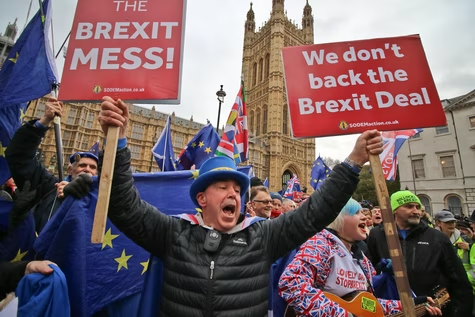
Brexit has resulted in significant economic losses for Britain. The term "Brexodus" was given to the departure of people, companies, and investment from the UK after the referendum.
Economic uncertainty, currency devaluation, and stricter immigration policies have continued this downward trend.
-
In 2026, GDP is estimated to be 4-8% lower than in a "remain" scenario.
-
The average Briton in 2023 was estimated to be almost £2,000 worse off due to Brexit.
-
Investment is 12-18% below its previous potential. The UK is falling behind its G7 counterparts due to ongoing uncertainty and rising trade costs.
-
Estimates suggest Brexit is resulting in losses of £100-200 billion annually.
-
Trade exports and imports are expected to be 15% lower in the long term than they would have been if the UK had remained in the EU.
-
Extra customs requirements have added £7.5 billion in costs a year.
-
Ending free movement between the EU led to roughly 330,000 labour shortages in early 2023 alone. Agriculture, hospitality, healthcare, and transport have been the most affected.
-
Construction material costs have increased by 60% due to trade barriers and labour shortages.
-
London's economy is estimated to have shrunk by £30 billion.
-
The unique trading status of Northern Ireland continues to cause trade tensions and political instability.
Calls to Rejoin
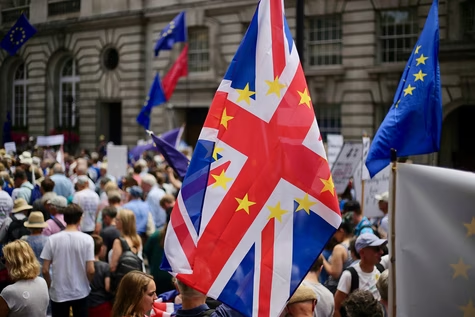
A decade later, public calls for the UK to rejoin the EU persist. As of May 2025, only 30% of Britons believe that leaving the EU was the right decision. Just over half, 55%, believe that it was wrong.
When asked about how they think Brexit has gone, more than six in 10 believe it has gone badly. This figure includes around a third of voters who backed leaving.
Regardless of how they voted, the majority feel that the way Brexit has been handled, from the campaigning to the negotiations, was done poorly. Many blame the Conservative Party for failing to manage the exit process and for not taking full advantage of being outside of the EU.
This sentiment is even stronger among the young generations. Over 80% of 16- to 24-year-olds would vote to rejoin the EU in a new referendum. These people were not old enough to vote at the time, but it affects their futures the most.
Current prime minister Keir Starmer says he is working to reset the UK's relationship with Europe to strengthen cooperation on defence, security, energy, and the economy.
The reset aims to reduce post-Brexit trade barriers, particularly for food, farm exports, and electricity. Currently, the Green Party are the only party campaigning to rejoin the EU.
The UK is now also actively shifting away from its special relationship with the U.S. Given President Trump's increasingly volatile actions, distancing itself from overdependence on the once-favoured ally is wise.
The relationship between Starmer and Trump has grown increasingly strained after Starmer refused to bow down to U.S. pressure to become involved in the offensive against Iran.
The Future of Britain
If another referendum were held today, polls show that a significant percentage of those who voted to leave would now vote to rejoin the EU.
As Britain continues to grapple with the aftermath of Brexit and years of austerity measures imposed by the Conservative government, Britons are calling for change.
In March 2026, the largest-ever anti-far-right protest took place in London, drawing around half a million people. The protest was a counter march to rising anti-immigrant sentiments, racism, and dangerous politicians such as Reform UK's Nigel Farage.
Hate and division are on the rise in the UK, and this demonstration proved that there are far more people with dignity, compassion and a respect for human rights. The march was supported by left-wing politicians Jeremy Corbyn, Zarah Sultana, Zack Polanski, Diane Abbott, and Andy Burnham.
A new EU referendum seems unlikely, but the popularity of alternative parties such as the Greens and Your Party suggests a shift in public sentiment. Moves to bring the country closer to the EU would certainly be welcome news to the majority.
Author: Rachael Mellor, 09.04.26 licensed under CC BY-SA 4.0
For further reading on Brexit see below ⬇️
More Resources