RENEWABLE Energies
Explore over 1,500 resources on renewable energies, from solar to wind power, and join the shift towards a sustainable future with Better World Info.
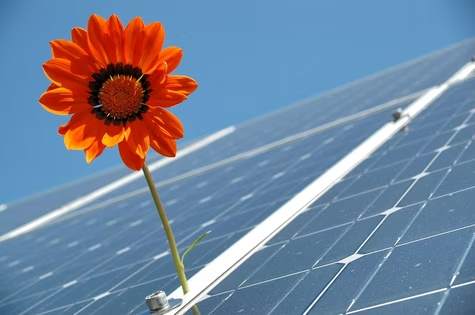
➡️ RENEWABLE ENERGY – The Energy Transition & The Shift From Fossil Fuels
Explore the world of renewable energy and learn how you can actively support the global transition. Our green energy guide offers you in-depth information on the climate crisis, sustainable development, and clean technologies like solar and wind power. Connect with hundreds of valuable resources, initiatives, and organisations – for genuine environmental protection, reduced carbon emissions, and a sustainable future.
Jump straight to our resources on ➡️ Renewable Energy
*****
General Information
Derived from natural, unlimited resources, renewable energy has been hailed as a green alternative to burning fossil fuels.
Unsustainable and with a high environmental and climate impact, the current energy industry must adapt and invest in renewable technologies to meet the increasing global energy demand while dramatically reducing carbon emissions.
Despite the pressing need to switch to less harmful energy sources, renewable energy still only accounts for 30% of the world's energy. Increasing by 10% since 2011, the sector is growing quickly, and investments in new power generation are now dominated by renewable energies.
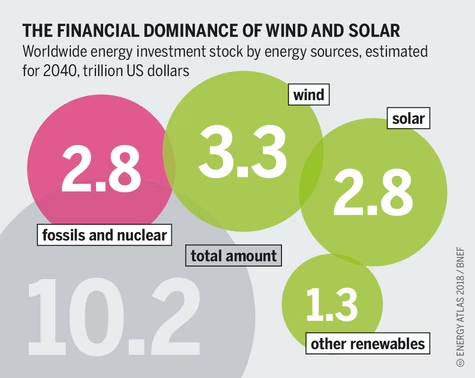
In 2025, 67% of the record $3.3 trillion spent on total global energy went to the clean energy industry.
To dramatically cut our dependence on fossil fuels and meet CO2 emission guidelines, it is estimated that by 2050, 77% of our planet's energy supply must come from renewable energy sources. Some countries, such as Iceland, are already almost entirely reliant on renewable energy.
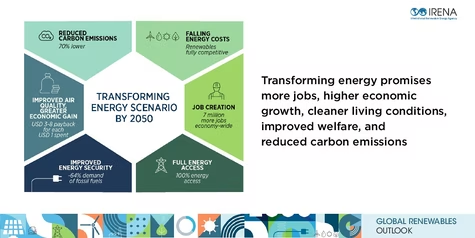
The shift to renewable energy helps reduce environmental damage, cuts air pollution, promotes energy security, lowers energy costs for consumers, reduces the risk of energy wars, creates jobs, and lessens inequalities.
“Energy is essential for development, and sustainable energy is essential for sustainable development” - Tim Wirth, former president of the UN Foundation.
For up-to-the-minute updates from green energy experts, make sure to follow our Twitter lists on fossil fuel divestment and renewable energy.
German speakers can visit our partner site Bessere Welt Info for an in-depth guide of over 1,700 resources on Erneuerbare Energien from a European perspective.
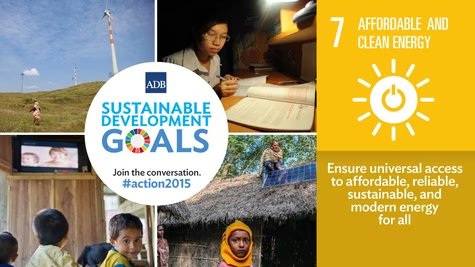
Renewable Energy Sources Explained
-
SOLAR POWER – Leading the Renewable Boom
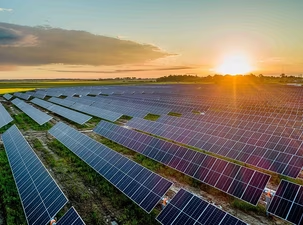
Commercialised more than 60 years ago, solar energy is the fastest-growing renewable energy sector. The sun is the most abundant energy source on Earth, and solar technology has become much more affordable; however, this clean energy source still accounts for only 7% of global electricity generation.
The solar panel industry has created a vast number of jobs, the panels are long-lasting, and can function for 4 decades. Solar also provides the cheapest electricity in history. It is estimated that solar electricity generation will surpass gas by 2030 and coal by 2033.
The potential for solar energy in the developing world is vast, as geographically, they have optimal access to long, uninterrupted days of sunlight. Lack of foreign investment, climate debt, and poor grid integration are major barriers to unlocking solar development potential in many parts of the world.
China has emerged as the world's largest producer of solar electricity and is home to 15 of the world's largest solar plants. As of 2025, they produce nearly 40% of the world's total solar capacity, and control over 80% of the global manufacturing supply chain for solar components.
The USA, Japan, and India are following closely behind for energy output.
Important considerations for the solar industry are the high demand for critical minerals (copper, lithium, silicon, silver). The issues of environmental sustainability and ethical sourcing have created somewhat of a green paradox.
For the industry to remain truly ‘clean’, careful steps must be taken to ensure sustainable extraction methods, recycling, water management, and mitigation strategies are properly implemented.
Explore more on solar power plants, photovoltaics, feed-in tariffs, solar energy storage, the costs of solar energy installation, and important organisations.
-
WIND POWER – Turbines & Offshore Wind Farms
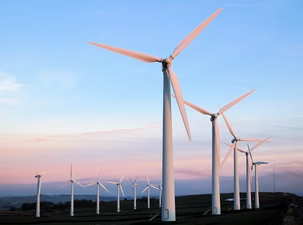
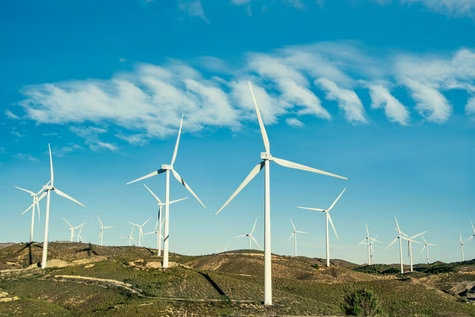
Wind energy is both cost-effective and sustainable. China is again the world's largest supplier and producer of wind energy, both onshore and offshore, accounting for over 40% of global capacity.
Wind turbines can stand as tall as the Statue of Liberty, and as technology becomes more efficient and cheaper, harnessing wind power is becoming a more attractive option. The cost of producing electricity from wind has fallen 90% since the 1980’s.
Offshore wind generates more energy than onshore, however installation costs remain high. They can generate up to 15MW, compared with onshore turbines, which are limited to 5MW.
Hornsea 2 in the UK is currently the world's largest offshore wind farm. The potential for offshore development remains largely unexploited due to high maintenance costs and unsuitable water depths.
The largest onshore wind farm in the world is the Jiuquan Wind Power Base in China, home to 7,000 turbines with a capacity of 20 GW.
The growth of the wind sector is staggering; in 2025, global energy capacity increased by 40% from the previous year. Wind energy is also important in the growing green employment sector. By 2030, it is estimated that wind energy will employ four million people.
Wind power also fits into the circular economy, as turbines are easy to recycle after decommissioning. Energy companies can turn blades into useful community assets, such as bike shelters and children's playgrounds.
Considerations regarding wind energy include the visual impact of turbines, the intermittent nature of wind, noise pollution, disruption to natural habitats, and potential dangers to wildlife. Wind generation sites are also often in remote locations, so long transmission lines and expensive infrastructure are often needed to deliver electricity to populations.
-
HYDROELECTRICITY – Harnessing Water & Related Costs
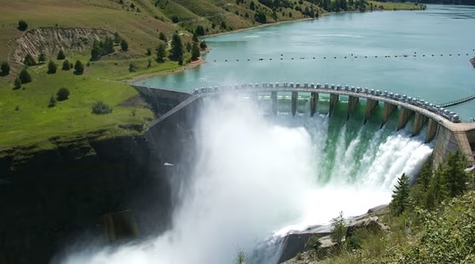
Hydroelectric energy uses dams and reservoirs to harness the energy of moving water. It is the most common form of renewable energy, responsible for generating 50% of the world's renewable electricity and 17% of the world's total electricity supply.
The world's largest hydroelectric plant is the Three Gorges Dam in China, with generators capable of producing a gigantic 22.5 GW of power.
Although hydro power is the most reliable and consistent form of renewable energy, its nature makes it highly vulnerable to the effects of climate change, particularly drought.
There are many costs to be considered when turning to hydro power as a solution. Although water power is clean, there are very serious consequences to building such large-scale dams and hydro plants.
Large quantities of water and land are needed for projects to be feasible. The man-made reservoirs then drastically alter the natural environment and landscape, often resulting in negative environmental impacts.
They reduce river flows, raise water temperature, reduce water quality, and cause sediment buildup. Some hydro plants have been found to be massive carbon and methane emitters due to the decomposition of submerged vegetation.
Manmade reservoirs also cause large-scale displacement of communities. It is estimated that between 40 and 80 million people have been displaced directly by dams and reservoirs.
Communities that live downstream are affected even more severely, with 472 million people suffering from food insecurity, and flooding threatening their homes and livelihoods.
Due to their enormous cost and the various social and economic impacts, even countries with vast supplies of water are cautious about untapping the full potential of hydroelectricity.
-
BIOFUELS – Green Alternative or Environmental Disaster?
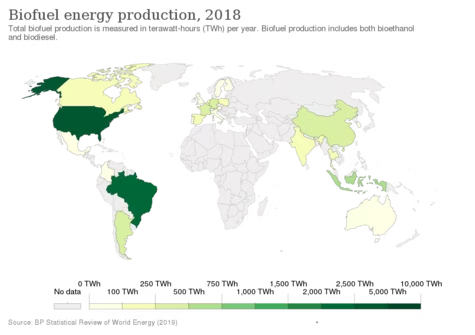
Biofuels are a type of renewable energy that uses living materials, such as plants, algae, and animal waste, to produce fuel from biomass in a short period of time. The most common biofuels are corn ethanol, biodiesel, and biogas from organic waste such as manure.
Biofuels work in a similar way to fossil fuels, burning on ignition to release energy. Hailed by energy companies as the climate solution we have been looking for, millions have been invested into further research to optimise biomass energy production and turn it into viable fuel.
There are, however, glaring issues with using biofuels as a replacement for fossil fuels. As things stand, biofuels' efficiency is still much lower than that of fossil fuels. So much so that the production of ethanol actually creates a net energy loss. This is an extremely wasteful use of resources, as huge amounts of arable land are dedicated to producing bio-crops rather than food.
Three-quarters of the world's arable land is already used to meet our planet's food and timber needs. By 2050, this demand is expected to rise by 70%. There is also a huge need to preserve areas as natural ecosystems to protect freshwater supplies, prevent biodiversity loss, and sequester carbon.
Dedicating land to bio-crops further increases competition for land, pushes up food prices, and contributes to food insecurity. These types of crops, by nature, are also major causes of soil erosion, deforestation, fertiliser runoff, and the salination of nearby water sources.
Scientists are looking into algae as a potential way forward, as it can be cultivated on land unsuitable for most other crops. Algae do not require freshwater and could yield more than other current biofuel crops. The potential for biofuels to become more circular by making full use of agricultural, domestic, and industrial biowaste is something that needs greater exploration.
Progress In The Energy Transition – Successes & Challenges
Sustainable Development Goal 7 is about ensuring ‘access to affordable, reliable, sustainable and modern energy for all.’ The sustainable aspect of this goal refers to the shift away from reliance on dirty fossil fuels toward cleaner, greener renewable sources.
The United Nations admit that they are failing to meet their targets and are ‘woefully off track’ to reaching them by the 2030 deadline.
International public financing for clean energy in developing countries has been falling year on year, even before the COVID-19 pandemic. The available funding also benefits only a small number of countries, with just 19 nations receiving 80% of the financing.
Renewable energy contributes just 14% towards heating and 4% towards transport. Although renewable electricity in these sectors has increased from 26% in 2019 to 28% in 2020, current progress is insufficient to reach global energy targets.
The average cost of renewable electricity worldwide in 2024 was $0.044 per kWh for solar photovoltaics and $0.034 per kWh for onshore wind. The same figure for natural gas was $3 per MMBtu.
Despite clean energy being the cheapest it has ever been, developing countries still remain locked into fossil fuel dependency. It is estimated that $2.4 trillion a year is needed in the energy sector for developing countries to meet their climate goals by 2030.
Renewable energy sources often have high start-up costs, and access to clean energy projects in developing countries is limited. On top of high electricity prices, the energy transition is stalling. Without affordable alternatives, phasing out fossil fuel energy production becomes impossible.
Large wind and solar projects also need to be placed in remote locations for optimal efficiency. This requires a host of contracts and permits, as well as powerlines and infrastructure to deliver electricity to towns and cities.
Unfortunately, in most developing countries, the clean energy transition still faces significant challenges.
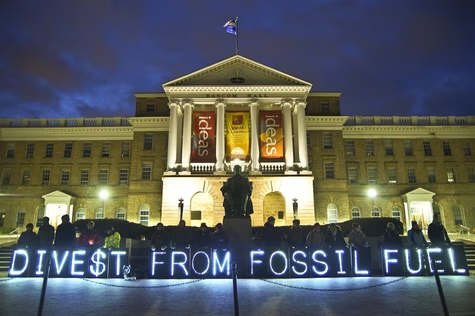
The multi-billion-dollar fossil fuel industry wields significant political power. The U.S. spends $37.5 billion a year propping up these oil and gas giants through subsidies, tax breaks, and other loopholes. This is a huge diversion of funds which should be going into further development of the promising renewable sector. There is a huge need for increased governmental investment in research, subsidies, loan assistance, and development.
The fossil fuel industry has dedicated the last half a century to misleading the public and downplaying its contribution to climate change. The risks of global warming were identified as early as the 1970’s, but to protect their own interests, climate misinformation campaigns were used to prevent a switch to renewable energy.
Their attempts to derail the renewable energy switch continues with intense and widespread industry lobbying that serves to weaken green policies and delay the transition. Between 2021 and 2024, over 5,300 lobbyists from 859 fossil fuel organisations have gained high-level access to the COP conferences.
The industry spends roughly $120 million annually on U.S. lobbying, which seriously influences their energy policy.
The disconnection between science and policy is a huge barrier to a just and timely transition. Emissions fees, polluters, taxes, and a ban on subsidies to polluting industries would be effective solutions to this issue.
A further barrier to the energy transition is the misconception that renewable energy is unreliable. Modern grid technologies, diverse energy sources, and improved energy storage have allowed countries to prove that 100% reliance on renewable energy is possible.
In 2017, tests conducted in California under the Solutions Project confirmed that solar and wind power can enhance grid reliability, meaning that, with grid integration, it is perfectly feasible to operate safely and reliably using renewable sources.
Our ability to limit global warming depends on our ability to make drastic changes within the next decade. Decarbonising on a global scale is no small feat. It will involve job loss, skills retraining, socially just transitional policies, significant investment, and the inclusion of communities most vulnerable to the effects of climate change.
Electrification is a monumental task that involves updating energy grids, transport and heating systems, industrial and agricultural practices, and decentralisation. An inclusive and just transition is needed, along with governmental support, strict policies, international cooperation, and backing from energy giants.
Fund Renewable Energy For A Better World
Better World Info aims to increase awareness of the vast potential of the renewable energy sector and to illustrate the urgency of a global energy transition.
International cooperation and the sharing of technological advancements are essential to promote the use of renewable energy worldwide and, in turn, reduce our dependency on fossil fuels. The energy transition not only offers the opportunity to mitigate the climate crisis but also to help the poorest nations to develop faster and to create a sustainable future for generations to come.
The upfront costs of renewable installations can seem daunting, which is why funding is a crucial component of making the energy transition a reality. Investments in renewable energy will have significant long-term gains.
It is estimated that reducing pollution and climate-related disasters will save the world a staggering $4.2 trillion per year. The cost of business as usual far outweighs the investments needed to avoid a climate catastrophe.
Governments and policymakers need added pressure from climate scientists, activists, organisations, developing nations on the frontlines of climate change, and concerned citizens. We demand that the climate debt be repaid and that a greener future be possible for everyone.
“If you really think that the environment is less important than the economy, try holding your breath while you count your money” - Guy McPherson, natural resource and ecology scientist.
Author: Rachael Mellor, 05.04.24, latest update 15.07.26) licensed under CC BY-SA 4.0
For further reading on Renewable Energy see below ⬇️
More Resources
Curated Directory & Deep-Dive Resources on RENEWABLE Energies
- News 28
- General Info 56
- Organizations 36
- SOLAR Energy 706
- WIND Power 293
- WATER Power 218
- Clean Energy 67
- Biogas, Biomass & Biofuels 253
- Hydrogen Power 47
- Geothermal Energy 18
- Transitional Energy 6
- Germany as Pioneer 15
- Green Companies 10
- Olympics 2000 2
- Solutions Project 27
- Energy Democracy
- Selected Articles 214
- Energy Transition 151