
International DAY of PEACE - September 21
Discover the UN International Day of Peace on Sept 21. Explore global peace initiatives like Peace One Day, history, events, and ways to support peace efforts worldwide.
INTERNATIONAL DAY OF PEACE, September 21: Invest In Peace - For Everyone, Everywhere, Every Day
Discover the vital contributions of the International Day of Peace and learn how you can get involved. Our guide offers you in-depth information on the importance of peace funding, education, diplomacy, and disarmament.
Connect with hundreds of valuable resources, initiatives, and organisations – for improved international relations and our right to a safe, equal, and thriving world.
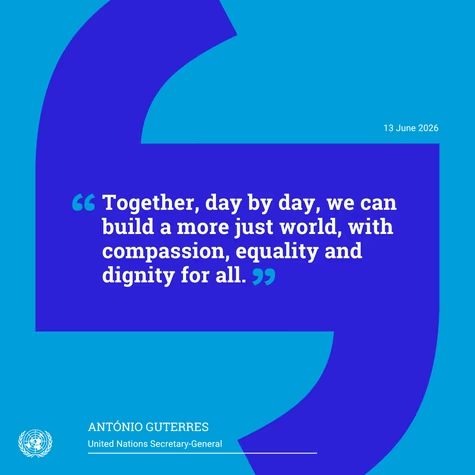
“Peace is not just made at conference tables, but in classrooms, neighbourhoods, and everywhere people meet with open minds and open hearts. Together, day by day, we can build a more just world, with compassion, equality and dignity for all” - UN Secretary-General António Guterres.
Jump straight to our resources on the ➡️ International Day of Peace
*****
General Information
International Day of Peace is a global initiative endorsed by the United Nations to promote peace and end conflict. Established in 1981, this day calls on nations to lay down arms and observe a day of global ceasefire and nonviolence.
Observed annually on September 21st, the International Day of Peace comes at a critical time as our world grows increasingly volatile and traditional international relations break down. As conflict disrupts millions of lives worldwide, we must keep fighting for human rights, justice, and a more tolerant world.
International Day of Peace is marked with vigils, commemorations, parades, peace walks, moments of silence, speeches, peace conferences and workshops, peace education events, and intercultural and interfaith dialogues.
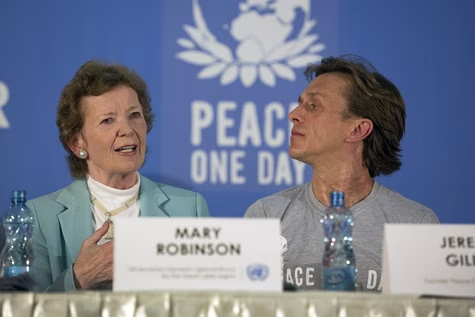
Explore our comprehensive guides to the Peace Day UN Initiative and the UK nonprofit ➡️ Peace One Day, which are dedicated to informing, inspiring, and engaging people toward peaceful action, along with many other initiatives supporting Peace Day, such as Be The Peace, the Unity Foundation, Peace 365, and Pathways to Peace.
Please share our wonderful resource on Twitter, Bluesky, Instagram, Facebook, and LinkedIn.
In 2024, the world marked the 25th anniversary of the UN General Assembly’s adoption of the Declaration and Programme of Action on a Culture of Peace. The resolution includes the following aspects:
- Culture of peace through education
- Sustainable economic and social development
- Respect for all human rights
- Equality between women and men
- Democratic participation
- Understanding, tolerance, and solidarity
- Participatory communication and the free flow of information and knowledge
- International peace and security
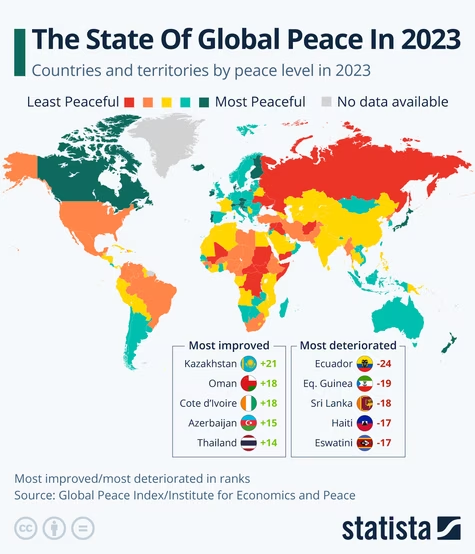
The Global State Of Peace
The world is currently enduring a period of rising geopolitical tensions and prolonged conflicts. There are currently 56 active conflicts - the most since World War II. 92 countries are involved in conflicts outside their borders.
The Global Peace Index 2024 revealed that the world has become less peaceful in the last 16 years. Global conflict rates increased 12% in 2023, adding to the 32% increase in 2022. One in six people are now living in an area of active conflict.
The world is getting more violent, and civilians are always the first to suffer. As of May 2024, there were more than 120 million people forcibly displaced as a result of conflict, persecution, violence, or human rights violations. There were more civilian casualties recorded in 2023 than in any year since 2010. Those who do not lose their lives are living without security, shelter, clean water, electricity, food, medical assistance, employment, education, and, in many cases, dignity.
Explore our extensive guides to current conflicts in Gaza, Ukraine, Sudan, Syria, the Democratic Republic of Congo, Myanmar, Ethiopia, Iran, Nagorno-Karabakh, and Yemen.
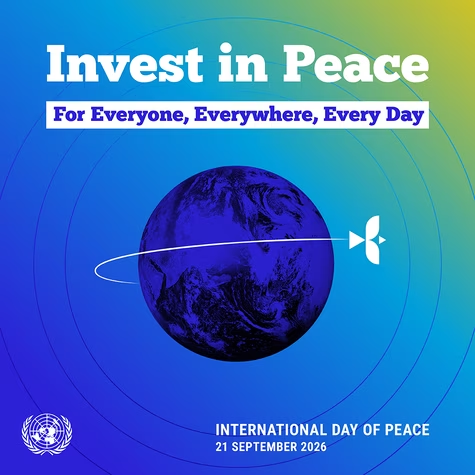
2026 Theme - Invest In Peace
Despite the need for peace having never been so urgent, peacebuilding still remains desperately underfunded.
The world currently spends roughly $2.89 trillion annually on its militaries, compared with just $5.4 billion on UN peacekeeping operations.
This means that for every $1 invested in building and maintaining peace, governments spend over $500 on preparing for and waging war - this is completely nonsensical, as governments continue to flood the world with weapons and soldiers. Peace simply does not stand a chance.
The UN funding for the 2025-2026 fiscal year actually went down from the previous year! Meanwhile, the highly profitable war industry enjoyed its 11th consecutive year of growth.
Against all odds, the United Nations reminds us that we can all be 'everyday architects of peace' and that peace does not have to be built in conference rooms.
We, the people, drive local action, grassroots campaigns, and build a culture of peace on our own streets, from the ground up.
This International Day of Peace, we can all take small steps towards peace:
- Give your time to help someone else. Many small acts of kindness add up to help create a community of giving.
- Use your voice. Start conversations about the urgent need for tolerance, non-violence, and disarmament.
- Educate yourself. Use platforms like Better World Info to stay informed and help spread positivity.
- Host a Peace Circle to discuss action-oriented solutions, different perspectives, and important topics about peace.
- Share important resources like our guides to peace, nonviolence, and disarmament with your colleagues and peers.
As Gandhi once said, "You must be the change you wish to see in the world."
*****
To achieve peace, we must compete against high-level corruption, the global arms industry, injustices, censorship, human rights abuses, and persecution. Through diplomacy, the combined efforts of peace groups, and peace education, we can work with law and order and governmental institutions for a more peaceful world.
We all have a right to peace. Global leaders have a duty to make long-term concerted efforts to create stability, tolerance, and understanding. While politicians commit to a military-first approach, weapons proliferation, the arms trade, and bloating military budgets, peace does not stand a chance.
Days like the International Day of Peace highlight the need to reduce conflict and promote harmony across the globe, not just for a day, but for a lifetime. Peace funding must be prioritised over warmongering.
As conflicts become longer, more complex, and deadlier, there has never been a more pressing time for international cooperation and diplomacy.
Author: Rachael Mellor, 23.08.24, latest update 28.08.26, licensed under CC BY-SA 4.0
More Resources