Health
Comprehensive directory on global health equality. Explore expert guides on disease prevention, public health policies, and healthy lifestyles.
GLOBAL HEALTH – Achieving Health Equity & Universal Healthcare
Discover the vital world of global health and learn how you can actively contribute to a healthier world for all. Our comprehensive health guide offers you in-depth information on healthcare systems, public health initiatives, epidemic prevention, and health equity.
Connect with hundreds of valuable resources, campaigns, and organisations – for advanced disease control, improved global health policies, and a sustainable, healthier future.
Jump straight to our resources on ➡️ Global Health
*****
General Information on Health
Good health is crucial to living a fulfilling and happy life. The World Health Organisation (WHO) estimates that up to 3.5 billion people – almost half the world's population – lack access to the health services they need.
Disparities in healthcare are a troubling form of inequality. Everyone has the right to sanitation, clean air, affordable medication, and access to trained medical professionals and quality infrastructure, free from discrimination and judgment.
The world is significantly off track to meet most of the Sustainable Development Goal 3 targets. 'Good Health and Well-being' must become a priority for governments and leaders as targets remain unmet.
Significant areas of concern are maternal and child health, communicable and noncommunicable diseases, and universal health coverage.
Privatisation, austerity policies, health worker shortages, lack of social funding, the influence of Big Pharma, poor diets, the global food crisis, and the Coronavirus pandemic have all contributed to the setback of global healthcare goals.
There is an urgent need to strengthen global health systems and align health and politics. Adequate funding, education, research, and intervention are desperately needed to eliminate health disparities in low-resource settings around the world.
"In health there is freedom. Health is the first of all liberties," - Swiss philosopher Henri-Frederic Amiel
German speakers should visit our sister site, Bessere Welt Info, for 15,000 links on ➡️ Gesundheit.
*****
Guide to Common Diseases
With over 15,000 resources, curated by a physician, we provide essential information on prevention, developments in treatment, organisations, and the latest research on the world's most deadly diseases.
Regarding infections, learn about Coronavirus, swine flu, mpox, malaria, AIDs/HIV, and other sexually transmitted diseases. There are also topics dedicated to cancer, psychiatry, neurology, diabetes, cardiology, and mental health.
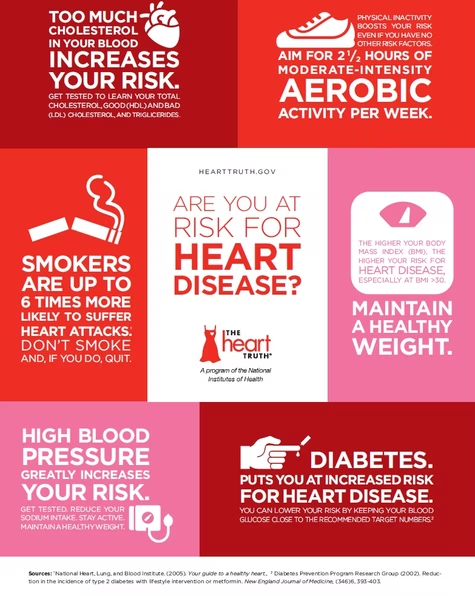
Chronic diseases are the leading cause of death worldwide. In the U.S., heart disease and cancers are responsible for 40% of all deaths. Ischaemic heart disease is responsible for 16% of the world's total deaths.
Noncommunicable diseases accounted for 74% of deaths globally in 2019. People living in low-income countries are far more likely to die of a communicable disease. The figures are falling significantly, but even easily preventable diseases such as diarrhoea rank in the top 5 causes of death in developing nations.
Discover our special section dedicated to common diseases in children, including important organisations, health portals, and information on Down syndrome, autism, and ADHD.

Promoting Healthy Lifestyles & Disease Prevention
Coined by the Dutch philosopher Desiderius Erasmus, the phrase 'prevention is better than cure' has become a fundamental principle of public health strategies worldwide. Simple everyday lifestyle choices dramatically reduce our chances of falling ill.
Health is, of course, different for everyone, so we have created comprehensive guides for men, women, senior citizens, and children. Below, we outline some important measures to help us take greater control of our health and improve our overall well-being.
-
We are what we eat! A balanced, healthy diet is crucial for good physical and mental health. It is important to eat a variety of different food groups, to consider our nutritional intake, and to limit our consumption of sugar and processed foods.
Find further information on vegetarian and vegan diets here.
-
Physical activity is especially vital in today's society, where many of us spend our working days sedentary. Shockingly, only 28% of Americans meet the CDC's physical activity guidelines. This is having serious ramifications on obesity levels, rates of cardiovascular disease, diabetes, and even depression.
Exercise is a known mood lifter and boasts many other benefits. Check out our fitness, sport, yoga, and exercise guides for older adults.
-
Avoid smoking and excessive alcohol consumption. Although the global number of smokers has significantly fallen, 22% of the world's population still uses tobacco.
Smoking-related illnesses include cancer, heart disease, stroke, diabetes, and lung diseases. Harmful use of alcohol kills more than 3 million people every year. The health and social costs of alcohol abuse are extraordinary.
-
Effective stress management. The vast majority of people report experiencing high levels of stress in their daily lives to the point of becoming overwhelmed or unable to cope.
If not managed correctly, it can lead to a variety of health problems, including depression, anxiety, and cardiovascular disease. Methods we can practice from home and incorporate into our lives include yoga, meditation, mindfulness, and relaxation techniques.
-
Protection against infections. The best way to protect ourselves from infections is by maintaining a high level of personal hygiene.
Simple habits such as washing hands thoroughly and regularly, avoiding close contact with sick people, preparing food safely, and staying up to date with vaccinations all make a big difference in our ability to prevent and fight infections.
Health Care in the Developing World
Health issues vary from country to country and are worsened by poor funding, medical staff shortages, inadequate education, weak infrastructure, and inadequate health policies.
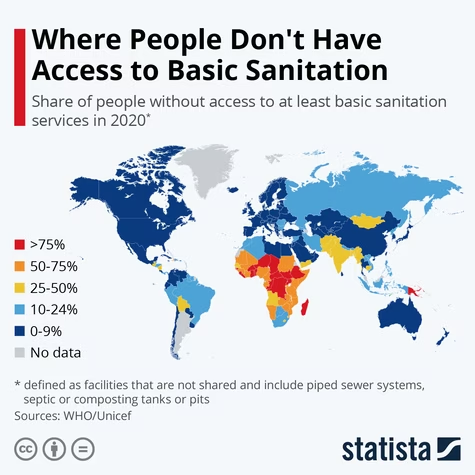
One of the biggest challenges in developing countries is the lack of basic health services and resources. An estimated 3.6 billion people lack access to clean water and basic sanitation. Contaminated water is linked to the transmission of infectious diseases such as cholera, dysentery, hepatitis A, and typhoid.
Massive shortages of healthcare workers contribute to health inequality.
The WHO estimates that by 2030, an additional 10 million healthcare workers will be needed, primarily in developing countries. Even in countries with adequate staffing, their distribution is limited to urban areas, leaving rural areas seriously understaffed.
More than 3 billion people worldwide cannot reach a healthcare facility within one hour on foot. This geographical barrier leaves low-income families vulnerable and makes them much less likely to seek medical care when needed.
Infectious diseases remain a significant problem in low-income countries. More than 90% of deaths from AIDS, diarrheal diseases, tuberculosis, and malaria occur in developing nations.
The spread of these treatable diseases must become a top priority to end healthcare inequality. Other serious issues in developing countries include a lack of maternal care, malnutrition, and sexually transmitted diseases.
To improve healthcare worldwide, countries must work together, provide greater investment, and ensure that everyone has the right to health and access to medicine, regardless of their country of birth or economic status.
We need to urgently scale up our efforts to provide universal health coverage. Half of the world still lacks access to health services, and 100 million people have been pushed into extreme poverty due to health expenses.
Even rich countries such as the U.S. still do not guarantee affordable, accessible healthcare. Roughly, eighty-five million Americans either don't have any form of health insurance or are underinsured.
Around 30% of American adults skip medical treatment because they cannot afford it. These figures are even higher in Black and Hispanic populations.
This system puts $69 billion of annual profit before people and is replicated in other developed countries. In the UK, the once-celebrated NHS is being systematically dismantled and sold to private healthcare companies for the highest price.
The Next Pandemic & New Global Health Threats
Global threats to health change over time. The world's biggest threat to our health is undoubtedly climate change, the effects of which are being felt across the globe.
One in four deaths can now be attributed to preventable environmental causes, of which climate change is exacerbating. We examine various consequences of climate inaction, including extreme weather events, drought and famine, floods, and heat waves. Find further information on climate change mitigation, solutions, climate refugees, and how to keep the 1.5°C goal within reach.
Air pollution now accounts for 7 million premature deaths annually. The situation is so bad that 99% of the planet's population breathes air every day that exceeds the WHO-recommended limits. Low and middle-income countries suffer from the highest levels of dangerous exposure.
Many parts of the world are also in the midst of a mental health crisis. One in every four people will struggle with mental health in their lifetimes, and 350 million people worldwide suffer from depression.
Underfunding, lack of support and access to treatment, poor awareness of mental illnesses, and growing isolation are just a few factors which have contributed to the magnitude of this crisis. Devastatingly, suicide is the third leading cause of death among 15-19 year-olds.
Conflict, war, and persecution have forcibly displaced 71 million people who are living as refugees or asylum seekers. One in three of these experience high levels of mental health disorders, and there is a huge lack of psychosocial support for these people, as the majority are located in low-income countries with scarce services.
Arguably, the biggest threat to all life on Earth is that of nuclear weapons. Even their mere existence poses a threat to current and future generations. As the most dangerous weapon on Earth, we must fight for nuclear disarmament and bring the world back from the brink of destruction.
Another major concern is the next pandemic. Experts agree that the world will face another global pandemic, such as Coronavirus - it is just a matter of when. In the meantime, the focus must remain on preparedness and strengthening global defences and response systems for such health emergencies.
Noncommunicable diseases, including diabetes, cancer, and heart disease, now account for 70% of deaths worldwide, 15 million of which are premature. These diseases are driven by five risk factors: tobacco use, lack of physical activity, alcohol abuse, poor diet leading to obesity, and air pollution.
Finally, antibiotic resistance - now regarded as one of the greatest threats to human health - was directly responsible for 1.3 million deaths in 2019 and was a contributing factor in 5 million deaths. Driven by the overuse of antibiotics in humans and animals (Big Meat), antibiotic resistance puts the gains of modern medicine at risk, making infections more complicated to treat and medical procedures riskier.
Other significant threats to human health include war and conflict and their associated humanitarian crises, increasing militarisation, and endless weapons proliferation.
Universal Healthcare For A Better World
A world without universal healthcare creates vast inequalities, divisions, and suffering. We must break the cycles of poverty and poor health and ensure that quality, affordable, and people-centred healthcare is available to everyone.
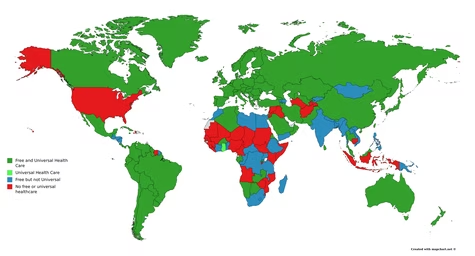
The map on the left shows in green the parts of the world with universal health care, red for those without, and blue for those where healthcare is free but not universal.
"Without health care, how can children reach their full potential? And without a healthy, productive population, how can societies realise their aspirations?" - UNICEF Executive Director Anthony Lake
We must value our health and take measures to protect and care for it. By taking small steps towards a healthier lifestyle, ensuring we get enough sleep, reducing our stress levels, exercising, and scheduling regular checkups, we can all enjoy healthier and happier lives.
We believe that no one should get sick just because they are poor.
Good health should not be reserved for the rich. It is the same as any other human right, and the SDGs play an essential role in ensuring greater health equality. Access to safe drinking water, sanitation, nutritious food, adequate housing, education, and safe working conditions all contribute to a healthier planet and population.
"The enjoyment of the highest attainable standard of health is one of the fundamental rights of every human being without distinction of race, religion, political belief, economic or social condition" - Constitution of the WHO
*****
As a collaborative platform, Better World Info invites experts, NGOs, and activists to get involved!
Share your valuable resources, such as studies, reports, and campaigns, with our community and help spread the word about Better World Info.
We are a constantly expanding project dedicated to disseminating reliable, critical, and investigative information – for an informed, inquisitive, and critical world.
Author: Rachael Mellor, 25.01.24, latest update 07.07.26, licensed under CC BY-SA 4.0
More Resources
Curated Directory & Deep-Dive Resources on Health
- Global Health 519
- Health in General 1422
- Healthy Lifestyle 1414
- Info by Disease 15938
- Health & Politics 294