
World Nature Conservation Day - July 28
World Nature Conservation Day - July 28 raises awareness on preserving ecosystems. Join us in making impactful choices for a sustainable future.
Celebrating World Nature Conservation Day, July 28 - Reflecting on Our Relationship with Nature
World Nature Conservation Day is observed every year on July 28 to raise awareness about the critical need to protect and preserve our natural resources and ecosystems, safeguard our biodiversity, and fight climate change. A healthy and sustainable environment is the foundation for a stable and productive society.
Jump straight to our resources on ➡️ World Nature Conservation Day
Established at the United Nations Conference on the Human Environment held in Stockholm in 1972, World Nature Conservation Day has been an important part of environmental work for more than 5 decades. It also marks the anniversary of the adoption of the UNESCO World Heritage Convention. Signed by nearly 200 countries, this landmark international treaty unites nature conservation and cultural preservation.
Please share this valuable resource via Bluesky, Facebook, Instagram, and LinkedIn
Why Is Conservation so Important?
Our planet's resources, clean water, fresh air, fertile soil, diverse wildlife, earth minerals, etc, are all finite. In 2025, Earth Overshoot Day was July 24th. This indicates that humanity is using resources 1.8 times faster than ecosystems can replenish them.
The steady shift of this date to earlier in the year illustrates increasing rates of consumption and a widening gap between human demand and the planet's biocapacity.
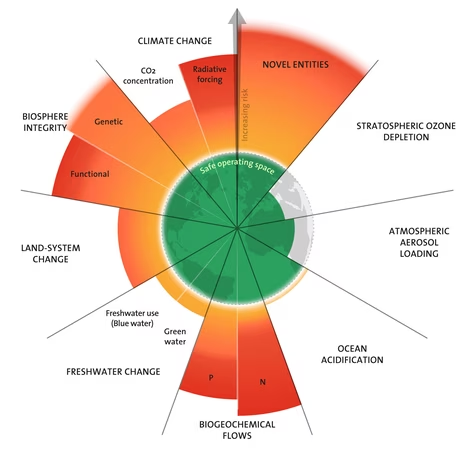
The Planetary Boundaries Framework measures human pressure on nine critical Earth systems that support life on the endangered species and maintaining balanced ecosystems. As of September 2025, we officially crossed 7 of the 9 Planetary Boundaries, significantly increasing the risk of abrupt, potentially irreversible environmental change.
The breached boundaries are -
Climate change, biosphere integrity, land system change, freshwater use, biogeochemical flows, ocean acidification, and pollution.
Conservation of our natural world helps to:
- Preserve Biodiversity: Habitat protection, sustainable agriculture, reducing pollution, and consumption to safeguard Earth's life-support system.
- Combat Climate Change: Healthy forests, oceans, and wetlands act as massive carbon sinks.
- Ensure Resource Security: Safeguarding fresh water, agricultural land, and essential earth minerals for future generations.
- Support Human Health: Reducing pollution prevents diseases and improves overall quality of life.
What are the Main Areas of focus this Nature Conservation Day?
- Forestry - Forests are essential to the survival of our planet and all life on it. They absorb roughly 30% of global fossil fuel emissions and support over 80% of terrestrial biodiversity. Despite their known importance, the world still loses approximately 10 million hectares of forest annually. Priorities include reforestation, halting illegal logging, and protecting existing woodlands.
- Water Conservation - Preserving our fragile freshwater ecosystems maintains essential biodiversity, supports agriculture, ensures resilience to climate and drought, and provides future generations with the fundamental human right to clean freshwater. Approximately 25% of all freshwater fauna are currently threatened with extinction. More than half of all river systems globally have been heavily impacted or fragmented by human activities. Priorities include reducing water waste, protecting marine life, and cleaning up waterways.
- Soil Protection - Soil is the living engine of terrestrial ecosystems. It supports the growth of 95% of our food, is the largest terrestrial carbon sink, and filters our water. As the foundation of nature conservation, healthy, living soil is essential for life on Earth. Up to 33% of the Earth's soils are already degraded. Scientists have warned that if trends continue, 95% of the planet's land could become degraded by 2050. Priorities include preventing erosion, avoiding chemical overuse, and practising sustainable farming.
- Wildlife Management - Wildlife conservation plays an important role in conserving threatened species and habitats, protecting biodiversity, stabilising food webs, and ensuring species can adapt to environmental changes. WWF’s latest Living Planet Report revealed that the average size of wildlife populations has fallen by a dramatic 73% since 1970. Priorities include combating poaching, preserving natural habitats, and supporting biodiversity.
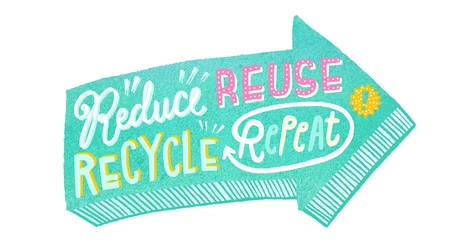
Nature Conservation - How You Can Make an Impact
You don't need to be a scientist, a conservationist, or a politician to make a difference. Small, daily choices add up to massive change:
- Reduce, Reuse, Recycle: Try to live by this principle as closely as possible. Think before you buy. Do I really need this? Can I borrow it from a friend instead? Cut down on single-use plastics. Properly sort your waste and utilise local recycling services. Repair items where possible.
- Conserve Energy & Water: Turn off lights when leaving a room, wash laundry on a lower temperature, turn down the thermostat, and hang your clothes to dry. To save water, fix leaky taps, take shorter showers, install water butts to collect rainwater for the garden, and load only full appliances in the kitchen.
- Support Local & Sustainable: Buy seasonal produce to reduce your food carbon footprint and food waste; create a compost pile in the garden; explore your local farmers' markets; support eco-friendly brands; buy second-hand where possible; and sell or donate what you no longer use.
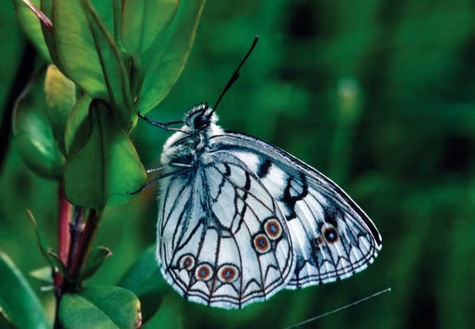
- Plant Native: If you have a garden or balcony, plant native flowers to support local pollinators, such as bees and butterflies. They also provide vital habitats for and food for local wildlife. Native flora uses less water and fertiliser and requires less maintenance.
- Spread the Word: Use your voice on social media to spread Better World Info’s campaign. Share our resource with your family, friends, and colleagues. Join community clean-up events to help spread the message of World Nature Conservation Day.
"The greatest threat to our planet is the belief that someone else will save it." - Explorer and ecosystem protection advocate Robert Swan.
Author: Rachael Mellor, 12.07.26, licensed under CC BY-SA 4.0
More Resources
Curated Directory & Deep-Dive Resources on World Nature Conservation Day - July 28
- The Deep 519877
- World Nature Conservation Day on X 519882
- World Nature Conservation Day - July 28 - National Today 363154
- World Conservation Day | July 28 - National Day Calendar 363155
- World Nature Conservation Day 28th July 2025: Highlights from the BMC Series - Springer Nature 29.07.25 520474
- World Nature Conservation Day: How a large, flightless parrot rebounded from the verge of extinction - Mongabay 28.07.25 519881
- Five Ways to Celebrate World Nature Conservation Day - Greenpeace 28.07.24 519878
- Nature Conservation Day 2024: preserving nature to protect our future - Bird Life 28.07.24 519880
- World Nature Conservation Day 2023: History, significance and theme - CNBC TV 7/23 363153
- World Nature Conservation Day: Promote the sustainability and resilience of natural resources - Stellenbosch University 28.07.22 520473
- World Nature Conservation Day: These 5 communities of India preserve ecology in their own distinct ways - Down To Earth 27.07.22 520705
- World Nature Conservation Day: 4 ways we're doing our bit - AE Expeditions 26.07.22 519879