
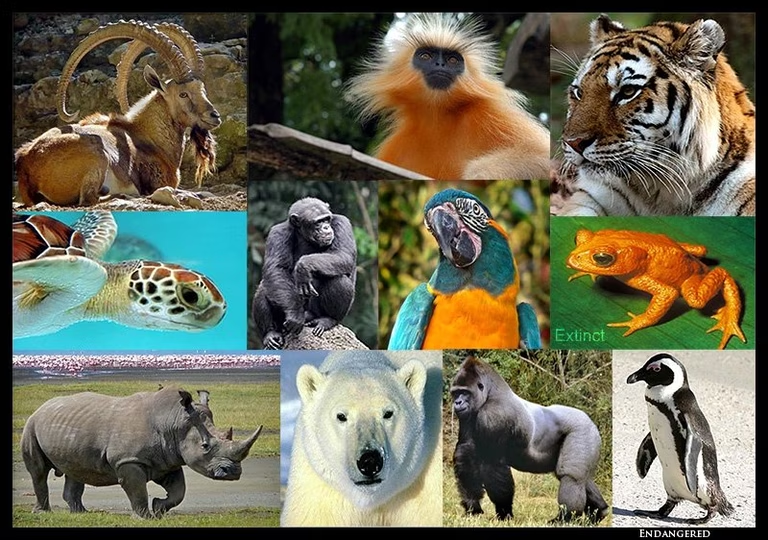
Endangered Species
Explore our complete guide to at-risk plants and animals. Learn about extinction threats, vital conservation projects, and the groups protecting wildlife.
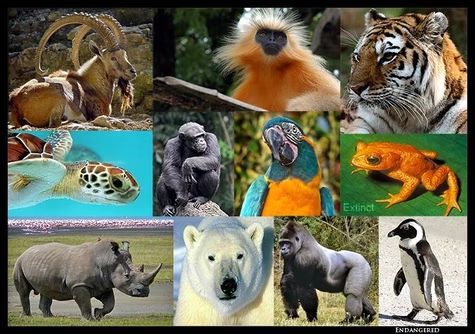
ENDANGERED ANIMALS - The Consequence Of Habitat Loss, Poaching & Climate Change
Earth is home to approximately 2.17 million described animal and organism species.
According to the International Union for Conservation of Nature (IUCN), almost 50,000 species are currently threatened with extinction.
Global wildlife populations have plummeted by an average of 73% between 1970 and 2020. Current species loss is estimated to be 1,000-10,000 times higher than the natural extinction rate.
Protecting endangered animals starts with preserving their natural habitats. As human expansion and deforestation fragment ecosystems, wildlife is left with dwindling space and resources, pushing countless species toward extinction.
Coupled with the effects of climate change, the biodiversity crisis, intensive agricultural practices, conflict, and the merciless illicit wildlife trade, many species are under threat like never before.
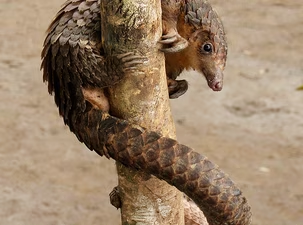
Pangolins, Amur Leopards, Sunda tigers, mountain gorillas, Bornean and Sumatran orangutans, black rhinos, African elephants, hawksbill turtles, and the Yangtze finless porpoise are among the world's most critically endangered animals.
The northern white rhino is one of the world's most endangered species. Only two remain out of the entire population: a mother and daughter who live in Kenya’s Ol Pejeta Conservancy.
To prevent the further eradication of entire species, we must ramp up conservation efforts, monitor populations, restore degraded environments, clamp down on illegal wildlife trading, and invest heavily in science-driven efforts to reverse such widespread biodiversity loss.
Hot Topics

More Resources
Curated Directory & Deep-Dive Resources on Endangered Species
- The Convention on International Trade in Endangered Species of Wild Fauna and Flora 32265
- WWF - Endangered species directory 290387
- US Fish & Wildlife Service - Endangered species 290389
- WWF Australia 290412
- IUCN - Species and Climate Change 290437
- Defenders of Wildlife - Endangered species act 290409
- Nat Geo - Photo Ark & Joel Sartore 290433
- Endangered Species Act of 1973 - Wikipedia 290415
- IISD - Protecting Endangered Species 290405
- Science Direct 290411
- Smithsonian Mag 290410
- Washington Post 290413
- Endangered Species International 290403
- BBC 290408
- Mongabay 290391
- Endangered species - Guardian 273236
- Nat Geo - Endangered Species in the Spotlight 290400
- Endangered Species & Wildlife - Public News Service/Environment 249785
- WWF - The US Endangered Species Act 290414
- Endangered species - Wikipedia 264583
- Extinction risk from climate change - Wikipedia 290441
- 10 Easy Things You Can Do To Save Endangered Species - Endangered 264585
- Global Warming and Endangered Species Initiative 290439
- @LostSpeciesDay - Nov30, a day to explore extinct & critically endangered species. 264581
- Podcast: Endangered - Short Tales For The Nearly Forgotten 245216
- Endangered Species database - banned and protected database (UK) 32276
- World Rhino Day: What does it take to save a species? - Mongabay 22.09.26 523490
- ‘Should we leave them to die?’ The battle over how to save orangutans from the curse of palm oil - Guardian 19.05.26 516400
- Endangered Species Day highlights wildlife wins — and mounting losses - Mongabay 15.05.26 516201
- Emperor penguins are now endangered amid climate change and melting ice - Mongabay 09.04.26 513466
- Antarctic fur seals now endangered as climate change reduces krill for pups - Mongabay 09.04.26 513465
- Endangered monarch butterflies recover despite threats - DW 04.04.26 512724
- Lab-made jaguar: Is cloning a solution to extinction? - Mongabay 30.03.26 512514
- Small ray of hope for Sri Lanka’s sawfish, now feared ‘functionally extinct’ - Mongabay 27.03.26 512518
- Indonesia takes action against mining firms after floods devastate population of world’s rarest ape - Guardian 23.01.26 506446
- Greek tragedy: the rare seals hiding in caves to escape tourists - Guardian 17.12.25 501500
- It’s the world’s rarest ape. Now a billion-dollar dig for gold threatens its future - Guardian 09.12.25 506442
- IUCN upholds long-tailed macaques’ endangered status after complaint - Mongabay 15.10.25 494557
- Scientists to attempt to rear swallowtail butterflies from eggs frozen in nitrogen - Guardian 02.10.25 491225
- World’s smallest snake rediscovered in Barbados 20 years after last sighting - Guardian 24.07.25 481550
- Nairobi’s lions are almost encircled by the city. A Maasai community offers a key corridor out - Guardian 25.06.25 475676
- Many native New Zealand species face threat of extinction, report finds - Guardian 08.04.25 464103
- New Study Calls for Uplisting Emperor Penguins to Threatened on IUCN Red List - ENN 25.03.25 462864
- Can communities living side by side with wildlife beat Africa’s national parks at conservation? - Guardian 28.01.25 475675
- A quarter of freshwater animals threatened with extinction, finds major new study - Conversation 08.01.25 452323
- One-quarter of freshwater fauna threatened with extinction - Nature 08.01.25 452324
- 'Landmark Victory': US Proposes Endangered Species Protections for Monarch Butterfly - CD 10.12.24 446642
- Scientists are racing to save South Asia’s butterflies from the threat of extinction - Mongabay 31.07.24 425916
- The Awkward Truth About Extinction - Atlantic 09.07.24 422276
- ‘We rarely see them now’: just how vulnerable are Vanuatu’s dugongs? - Guardian 04.07.24 421223
- Boom in mining for renewable energy minerals threatens Africa’s great apes - Guardian 03.04.24 407162
- Weak Biden Endangered Species Rules a 'Massive Missed Opportunity' - CD 28.03.24 405532
- Study identifies species with a long history but short future amid threats - Mongabay 28.03.24 404650
- Death tolls mount as elephants and people compete for land in Sri Lanka - Guardian 19.03.24 403068
- New Study Reveals Insight Into Which Animals Are Most Vulnerable to Extinction Due to Climate Change - ENN 08.03.24 402755
- Migrating species crucial to planet under threat, says UN - BBC 12.02.24 397401
- Report: State of Wildlife: the World’s Migratory Species of Animals are in Decline, and the Global Extinction Risk Is Increasing - UN 12.02.24 401173
- Sri Lanka: What's killing so many of the country's iconic elephants? - BBC 06.02.24 396963
- How Technology and Economics Can Help Save Endangered Species - ENN 22.12.23 391188
- 5 Big Ideas for Improving the Endangered Species Act - Mother Jones 20.12.23 391169
- Grizzly Bear Poachers Flout the Endangered Species Act — and Get Away With It - Intercept 20.12.23 391174
- Grizzly Bear Poachers Flout the Endangered Species Act — and Get Away With It - Intercept 20.12.23 395921
- For 50 years, the Endangered Species Act has been one of our most valuable environmental tools. Can it survive today’s attacks? - Mother Jones 20.12.23 391168
- The ESA has been a key environmental tool for 50 years. But can it protect species from today’s political attacks and climate shocks? - Mother Jones 20.12.23 391170
- Scientists Relaunch Campaign to Save the Endangered Axolotl - CD 25.11.23 386086
- Scientists discover why dozens of endangered elephants dropped dead - Guardian 25.10.23 380224
- U.S. Endangered Species List Gets 21 Species Smaller (in the Bad Way) - Gizmodo 19.10.23 385579
- Study Finds Human-Driven Mass Extinction Is Eliminating Entire Branches of the Tree of Life - ENN 22.09.23 373776
- I have studied emperor penguins for 30 years. We may witness their demise in our lifetime - Guardian 28.08.23 368495
- Threatened and Endangered Species of the Southeastern United States - ENN 13.06.23 352536
- ‘Shocking’ levels of pangolin deaths from electric fences - Mongabay 02.06.23 350001
- Senate passes resolutions to cancel Biden endangered species protections - Washington Examiner 11.05.23 345698
- Idaho threatens lawsuit if US doesn't delist grizzly bears from the Endangered Species Act - Phys.org 11.05.23 345699
- Molecular markers identify cell types in the testes of domestic and endangered cat species - Phys.org 11.05.23 345700
- Protection of critically endangered species of animals - Gov. Hong Kong 10.05.23 345701
- Maine Flower Becomes Endangered Species Act Success Story - Center for Biological Diversity 09.05.23 345702
- New Prague Zoo exhibition highlights trade in endangered species - Radio Prag 09.05.23 345703
- Should The Taiwanese Humpback Dolphin Stay On The US Endangered Species List? - Deeper Blue 06.05.23 345704
- Biden Administration Sued for Failing to Protect Endangered Species Habitat From Harmful Pesticides - Center for Biological Diversity 04.05.23 345705
- A New Cloned Horse Offers Hope for Endangered Species - Wired 04.05.23 345706
- Nearly 60 species added to Michigan’s threatened, endangered list - WILX 01.05.23 345707
- Rewilding Endangered Species Can Help Us Mitigate Climate Change - The Good Men Project 30.04.23 345708
- Breaking: New threats to grizzlies, wolves and Endangered Species Act emerge in Congress - Human Society 28.04.23 345709
- Bi-State Sage Grouse Get Another Chance for Endangered Species Act Protections - Center for Biological Diversity 27.04.23 345710
- Two Missouri Crayfish Receive Endangered Species Protection - Center for Biological Diversity 26.04.23 345711
- Rare birds from a critically endangered species hatch at Columbia’s Riverbanks Zoo - The State 26.04.23 342323
- Wetland-Dependent Desert Flower Protected Under Endangered Species Act - Center for Biological Diversity 24.04.23 342316
- Video: Georgia Aquarium’s efforts to save endangered species highlighted - Atlanta News 22.04.23 342317
- Deforestation in Borneo threatens three endangered, endemic plant species - Mongobay 21.04.23 342320
- Southern Resident Orcas Move Closer to Oregon Endangered Species Protections - Center for Biological Diversity 21.04.23 342318
- This World Earth Day, learn about the world’s endangered species in British photographer Graeme Green’s latest book, ‘The New Big 5’ - The Hindu 21.04.23 342322
- Small cats face big threats: Reasons to save these elusive endangered species - Mongabay 19.04.23 342321
- 49 Endangered Hawaiian Species to Gain Lifesaving Habitat Protections - Center for Biological Diversity 17.04.23 342324
- Activists weaponize Endangered Species Act to oppose hunting grizzly bears - The Washington Times 17.04.23 342325
- New Jersey's environmental agency called itself out for destroying two endangered birds' protected habitats while creating one for another species - Business Insider 15.04.23 342326
- This biologist uses microwave radiation to save endangered species - SN Explores 14.04.23 342327
- Video: Fight for survival: The battle to save the last Tapanuli orangutans - Mongabay 13.04.23 341354
- Texas Lists Two Critical Pollinator Flowers as Endangered Species, Practically Guaranteeing Milkweed Recovery - Good News Network 13.04.23 340568
- Threatened Bat Species in Vermont Now Endangered as Deadly Fungal Disease Cuts Population Down - Nature World News 11.04.23 340569
- Texas Flower Threatened By Urban Sprawl Wins Endangered Species Act Protection - Biological Diversity 10.04.23 340570