
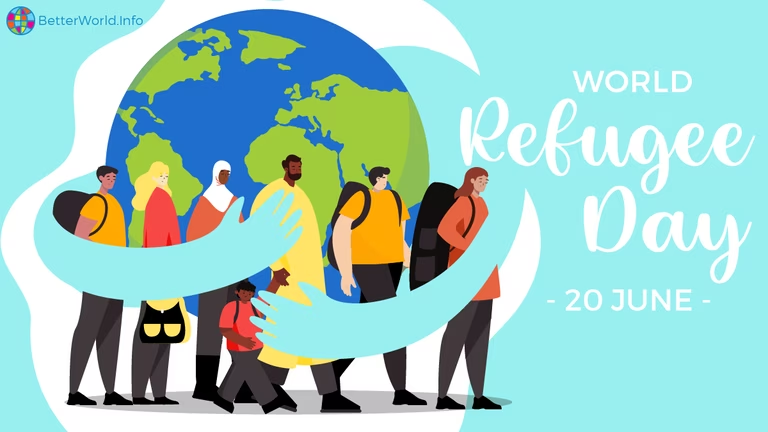
World Refugee Day - June 20
Explore World Refugee Day 2026. Discover the history behind June 20, the official theme "Until Everyone Is Safe," and key ways to advocate for safety.
WORLD REFUGEE DAY, June 20 – Honouring Refugees Around The World
Discover the challenging reality of refugees and learn how awareness days like Refugee Day actively support them. Our guide offers you in-depth information on the challenges refugees face, rising rates of forced displacement, and the great need for asylum seeker protection.
Connect with valuable resources, initiatives, and organisations – for genuine improved humanitarian assistance, legal protections, and a safer future for everyone.
Jump straight to our resources on ➡️ World Refugee Day
*****
General Information
Founded by the United Nations and supported by the UNHCR, World Refugee Day is an opportunity to raise awareness of the challenges and importance of refugees worldwide.
International days such as this help to foster empathy and understanding, encourage support for humanitarian efforts, and promote inclusive policies to aid with the careful management of complex refugee crises.
The 2026 theme is ‘Until Everyone Is Safe.’
Please share this resource via ➡️ Twitter, Bluesky, Facebook, Instagram, and LinkedIn
“Safety is not just the absence of violence. It means legal protection, shelter, health care, education, the right to work, and the chance to rebuild and live in dignity. No one is safe until the most vulnerable among us are.” - UNHCR.
Refugees & Migrants - Know The Facts
- According to the IRC, as of 2025, the number of forcibly displaced people was 118 million, 50 million of whom are children. These figures have almost doubled in the past decade.
- Approximately 67% of refugees live in neighbouring countries to their own, breaking the media narrative of huge refugee influxes from faraway places.
- Approximately 68% of refugees are hosted in poor and middle-income countries. Iran is currently the single biggest host country, followed closely by Türkiye and Germany.
- More than half of refugees come from just 5 countries - Venezuela, Ukraine, Syria, Afghanistan, and Sudan.
- The world's largest displacement crisis is happening in Sudan, where 15 million people have fled their homes.
- The year 2016 was the peak of the European refugee crisis, where nearly 5.2 million refugees and migrants reached European shores. The Mediterranean Sea remains the most deadly migration route in the world. In 2025, it was estimated that 2,185 migrants died while attempting to cross the sea.
- The Mexico-United States border crisis peaked between 2021 and 2024. An estimated 7.2 million migrants were encountered during this period.
- Refugee women and children are disproportionately vulnerable to human trafficking, sexual and gender-based violence (SGBV), exploitation, and severe psychological trauma.
-
More than half of the world's displaced population remains inside their own countries as Internally Displaced People (IDPs). Displacements are driven primarily by conflict, violence, and climate-related disasters.
What Causes People To Become Refugees?
The majority of history’s refugees have been the direct or indirect product of war and conflict. In more recent years, refugees are more likely to face a combination of difficult and related circumstances which render their home countries unsafe and uninhabitable.
Common causes refugees flee include:
- Hunger - 20 million people in North Africa and the Middle East are facing extreme hunger and famine caused by drought. Widespread food insecurity has driven people from their homelands in search of food and drinking water.
- Climate - By 2050, an estimated 1.2 billion people will be climate refugees, displaced by natural disasters exacerbated by climate change and other serious ecological threats. Despite this, climate change is not yet a valid reason for an asylum claim.
- Religion - Persecuted for their beliefs or ethnicity and chased out by government-sponsored genocide. Examples include Palestinians in Gaza, Rohingya Muslims in Myanmar, Christians in the CAR, and Hindu’s in Pakistan.
- Sexual orientation - In some countries, members of the LGBTQI+ community are subject to violence, targeted killing, torture, physical attacks, arbitrary detention, denial of rights, and discrimination in education, employment, and healthcare.
Repressive regimes and conflict inevitably bring with them violations of human rights and the creation of large-scale humanitarian crises. As the biggest losers of war, civilians face limited access to education, housing, energy, food, employment, and safe shelter.
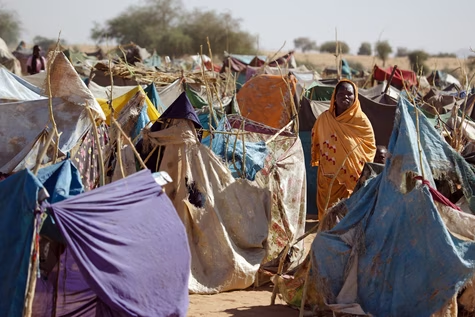
In search of safety and a better quality of life, many refugees end up living in refugee camps in deplorable conditions. Overcrowded, these camps struggle to provide even basic facilities for those in dire need. Intended only as temporary solutions, refugees can spend decades living in them while they wait to return home or try to navigate asylum bureaucracy.
International Laws Protecting Refugees
The term refugee was first defined in international law in the 1951 Refugee Convention, which was introduced after WWII and the forcible displacement of 50 million people - the first great refugee crisis of the 20th century. 149 countries have signed the convention, which outlines states' legal responsibility to protect refugees and grant them the right to seek asylum.
The legal challenges faced by refugees are immense, worsened by language barriers and insufficient documentation. As such, many refugees remain stuck in limbo. Refugees can fall victim to human trafficking, modern-day slavery, and other forms of exploitation. In some countries, they are detained by authorities immediately on arrival.
A key provision of the convention is the principle of non-refoulement, which prohibits states from returning individuals to a country where there is a risk of persecution, torture, or any threat to their lives or freedoms. Regardless, governments can try to avoid responsibility and claim risks to national security or funding constraints.
Supporting Refugees For A Better World
World Refugee Day reminds us that welcoming and integrating refugees is a global responsibility. It is important that countries around the world step up their efforts to protect refugees and give them the opportunity to build new lives. This requires improved cooperation between governments, NGOs, and the international community.
Given that there have never been more forcibly displaced people at any point in human history, the urgency of refugee rights is even more poignant.
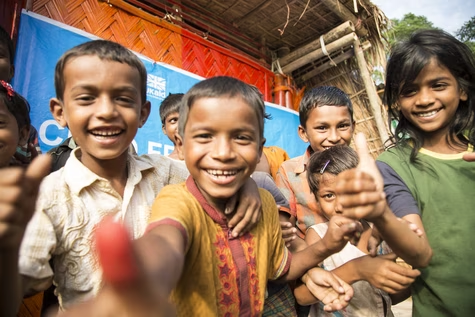
Refugees are people with stories, dreams and hopes. They have lost family members, become separated from loved ones, uprooted from everything they have ever known, and endured horrific experiences. Yet they are strong and resilient, bringing valuable skills, experiences, and cultural diversity to their host communities.
Social integration is an essential part of improving refugee success stories. Willingness to adapt by the refugees and efforts by host communities can help eliminate hostilities and issues created by racism, xenophobia, and discrimination.
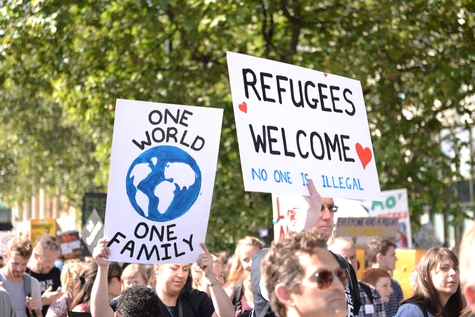
This World Refugee Day, let’s prioritise human rights and dignity. Refugees are not anonymous; they are individuals seeking safety and protection.
Author: Jasi 19.06.23 licensed under CC BY-SA 4.0 - translated and edited by Rachael Mellor 12.06.24, latest update 31.08.26
More Resources
Curated Directory & Deep-Dive Resources on World Refugee Day - June 20
- World Refugee Day Info 32
- Videos - WRD 20
- Articles - WRD 125
- Twitter - WRD 65