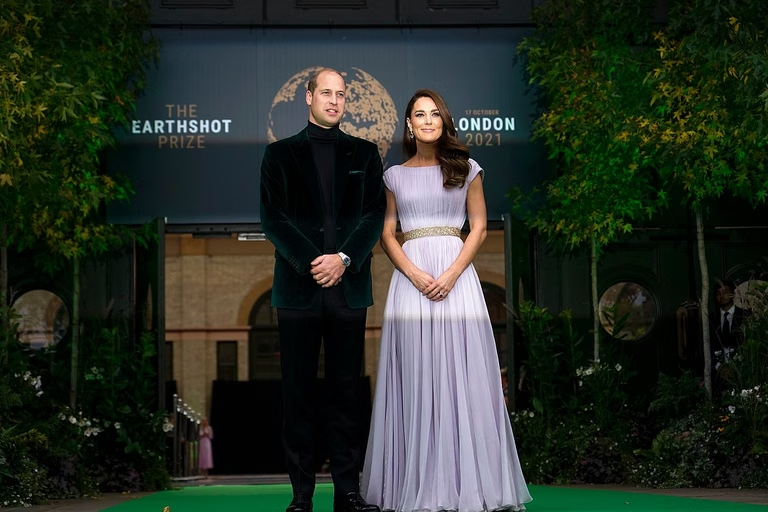
Earthshot Prize 2026
Explore the 2026 Earthshot Prize winners crowned in Mumbai: Bhutan, Ørsted, Mahindra Last Mile Mobility, Niue Ocean Wide Trust, and PFAS-Free France.

EARTHSHOT PRIZE 2026 - Meet The Worthy Winners
Every year, the Earthshot Prize awards five of the most dedicated game-changers leading the way in environmentalism. They are chosen by Prince William and the Earthshot Prize Council, which includes the actress Cate Blanchett, Queen Rania of Jordan, Sir David Attenborough, and many other environmental and climate advocates from around the world.
Each is honoured with £1 million to support and expand their work.
The award was founded by HRH Prince William and was launched in 2020 alongside biologist and natural historian David Attenborough. The award was first presented in 2021 and will be given annually until 2030. The 2026 ceremony was held in Mumbai, India, on November 17.
Jump straight to our resources on the ➡️ Earthshot Prize 2026
Share this useful guide on Bluesky | Instagram | Facebook | LinkedIn 🔄
*****
What Are The Five Earthshots?
The Earthshots are five simple yet ambitious goals to find and fund solutions to the planet's biggest challenges by 2030. The five goals include -
- Protect & Restore Nature
- Clean Our Air
- Revive Our Oceans
- Build a Waste-Free World
-
Fix our Climate

Who Are The 2026 Earthshot Laureates?
-
Bhutan - Protect & Restore Nature
Bhutan’s massive drive to protect nature has made it a world leader in conservation and environmental law. Its efforts began as early as 1969, when it passed the Bhutan Forest Act and later established its first formal forest policy in 1974.
When the Constitution of the Kingdom of Bhutan was enacted in July 2008, it enshrined forest protection in the constitution.
The constitution mandates that at least 60% of Bhutan remain forested; current coverage is even higher at 70%. Over 51% of the country is designated as national parks, wildlife sanctuaries, and biological corridors.
“Globally, scientists say 30% of the world’s highest-value ecosystems need real protection by 2030, and the loss of untouched forest needs to fall close to zero.” - Earthshot Prize.
Absorbing more carbon dioxide than it emits, Bhutan is one of three carbon-negative nations alongside Suriname and Panama.
Their commitment to safeguarding the natural world benefits more than just them. These massive swaths of forest help regulate freshwater systems across downstream Asia, where 1.6 million people rely on this reliable, clean water source.
In 2025, the government launched Restore Bhutan. This project aims to restore 50,000 hectares of degraded forests, farmland, and urban landscapes by 2023. They will work alongside the Department of Forests and Park Services, the Bhutan Trust Fund for Environmental Conservation, the Bhutan Ecological Society and Conservation International.

-
Mahindra Last Mile Mobility - Clean Our Air
Mahindra Last Mile Mobility are one of India’s biggest three-wheeler manufacturers. Around 90% of these vehicles are used commercially; they help millions earn a living by moving people and goods along the last stretch of their journey.
Traditionally, these vehicles run on fossil fuels and are a significant source of urban air pollution. Low-income communities living near busy roads feel it the most.
Their work to improve air quality by transforming supply chains has resulted in the sale of over 400,000 zero-emission EVs, electrifying 33% of India's three-wheeler segment and averting roughly 185,000 metric tonnes of CO₂ emissions.
They produce affordable EVs at scale and have built an infrastructure of 10,000 public charging points, along with responsible battery recycling plans to support it. They also offer accessible financing, financial advice, and accident insurance.
With lower running and maintenance costs, drivers' take-home income has increased by 25–30%. They have also trained 500 women to drive and repair electric three-wheelers, giving them independence and their own income-generating roles.
-
Niue Ocean Wide Trust - Revive Our Oceans
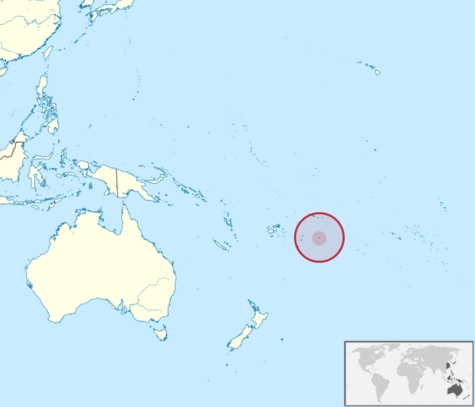
Founded by Indigenous Niuean siblings Coral and Brendon Pasisi, NOW is a public-private partnership between the Government of Niue and the local non-profit Tofia Niue.
They have worked to ensure that 100% of Niue’s 327,000 km² ocean territory is protected. This includes a 127,000 km² strict no-take Marine Protected Area that bans fishing across 40% of the nation's waters.
Niue’s marine territory is 1,200 times the size of its landmass, and it sits in an area known as the Blue Pacific. This is one of the world’s healthiest marine ecosystems and supplies half the world’s tuna.
The region faces immense pressure from illegal fishing and overexploitation, as well as the catastrophic impacts of climate change, such as rising sea levels and ocean acidification.
Individuals, companies, and governments can sponsor 1 km² of ocean for 20 years for roughly $140 to help fund ongoing enforcement, compliance, and marine monitoring. Rather than relying on individual grants, this secures permanent protection of the Pacific Ocean for future generations.
The trust uses a blend of local indigenous knowledge and modern science to help govern the project, with advisory committees across all 14 of Niue's villages.
Funds from the Trust are also used to cover nationwide cyclone insurance, higher education scholarships, and ocean safety and PADI diving training for half of the island's senior high school students.
-
PFAS-Free France - Build a Waste-Free World
French politician and environmentalist Nicolas Thierry began a campaign to curb the use of toxic PFAS forever chemicals in 2022. He was joined by a coalition of scientists, other members of Parliament, over 200,000 citizens, and environmental NGOs.
This campaign led to the world's first national law banning PFAS. In February 2025, the French National Assembly banned the manufacture, import, and sale of cosmetics, ski wax, and most clothing containing PFAS. The ban, which took effect in January 2026, has forced industries to redesign their products and cut pollution at the source.
PFAS refers to the chemical substances Perfluoroalkyl and Polyfluoroalkyl. There are over 10,000 different man-made variations which are extremely resistant to biodegradation. They were invented in the 1930s and 40s for military and industrial use because of their high durability.
Their heat resistance, strength, and ability to repel grease and water meant that they found their way into everyday household items. PFAS chemicals are now so prevalent in our environment that they have been found everywhere from Mount Everest to the deepest oceans.
Companies became aware of the serious risks of PFAS in the 1960s, but it was hidden from the public until the late 1990s. It has been found to cause immune dysfunction, increased risk of cancer, various reproductive implications, and developmental issues in children.
The annual health costs associated with PFAS exposure in Europe range from €52 to €84 billion.
“No single country can solve a problem this widespread alone. But without a nation willing to move first, industries have had little reason to change.” - Earthshot Prize.
This new law also mandates the nationwide tracking of PFAS discharges and places a tax on polluting companies, which will be required to fund clean-up efforts. The goal is to end industrial PFAS emissions into water sources within five years.
Other countries, including the UK, Italy, and the Netherlands, are discussing following suit and implementing their own national bans modelled on the French framework.
-
Ørsted - Fix our Climate
Ørsted, previously known as Dong Energy, was one of Europe’s most coal-intensive utilities. As Denmark's dominant state-backed energy provider, it was responsible for roughly one-third of the nation's total carbon emissions.
Stricter EU climate targets, public protests, and the collapse of European gas prices in 2012 forced the company to adapt its business model. They committed to transforming their energy mix from 85% fossil fuels to 85% renewables in 30 years.
Proving to all energy companies that it is possible, they achieved this 20 years ahead of schedule. In 2017, they sold off their entire oil and gas business and closed their final coal-fired power station in 2024.
Building the world's first offshore wind farm in 1991, Ørsted has become a global renewable energy leader, cutting operational emissions by over 98% since 2006.
“Deep transformation like this is rare in the oil, gas and coal industry, with most fossil fuel companies adding a renewable division at the edges, rather than changing what sits at the centre of the business.” - Earthshot Prize.
Ørsted has now installed more than 10 GW of offshore wind, enough to power around 22 million people’s homes around the world. They have a further 8.1 GW under construction across Europe, the United States and Taiwan.
Ørsted was the first energy company with a validated 2040 net-zero target. This covers its entire supply chain, actively mandating green electricity use among all its manufacturing suppliers.
They have also committed to net-positive biodiversity impacts on all new projects from 2030 onward, and already integrate marine habitat restoration and artificial reefs into their offshore developments.
This pioneering company also works with North Sea governments to help shape sustainable policies throughout the energy industry, while retraining workers and creating apprenticeships so local communities can move with the change. To help communities adapt to the change, they are also retraining workers and creating apprenticeships. Across Europe, the offshore wind industry now supports close to 100,000 jobs.
*****
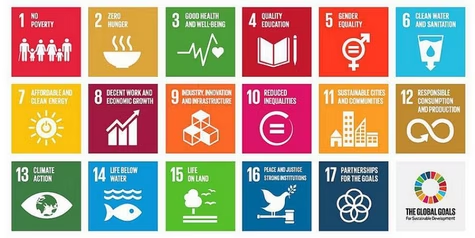
Inspired by the Sustainable Development Goals (SDGs), the Earthshot Prize has now grown into one of the most prestigious environmental prizes. Funded by philanthropists such as the Aga Khan Development Network, Bloomberg Philanthropies, Greenpeace, and the Bezos Earth Fund, the organisation was officially declared a charity in 2022.
Efforts have now expanded to include the Earthshot Prize Global Alliance, which supports all 15 finalists, alongside a Fellowship Programme that helps them develop their ideas by networking and partnering with businesses and organisations within the alliance.
Stay tuned to follow developments of these inspiring companies, initiatives, and nations.
Author: Rachael Mellor, 19.11.26, licensed under CC BY-SA 4.0
More Resources
Curated Directory & Deep-Dive Resources on Earthshot Prize 2026
- The Earthshot Prize Winners 2026 527489
- The Earthshot Prize - Mumbai 2026 527537
- Earthshot Prize Winner - Bhutan 527538
- Forest Carbon Partnership - Bhutan 527540
- WWF - Bhutan: committed to conservation 527542
- Earthshot Prize Winner - Mahindra Last Mile Mobility 527547
- Mahindra Last Mile Mobility 527546
- Mahindra Last Mile Mobility Limited - Wikipedia 527548
- Earthshot Prize winner - Ocean Wide Trust 527555
- Niue Ocean Wide (NOW) Trust 527554
- Blue Nature Alliance - Partner Profile: Niue Ocean Wide 527556
- Bezos Earth Fund - Niue Ocean Wide Trust 527558
- @Niueoceanwide 527566
- Niue Nukutuluea Multiple-Use Marine Park - Wikipedia 527562
- Earthshot Prize winner - PFAS free France 527574
- Ørsted and Kingdom of Bhutan among £1m climate solution award winners - Business Green 18.11.26 527534
- Bhutan Wins 2026 Earthshot Prize for Protecting 70% Forest Cover - I Am Renew 18.11.26 527539
- Keeping last-mile first - Economic Times 18.11.26 527551
- Value in natural capital - Economic Times 18.11.26 527557
- The five Earthshot Prize winners awarded £1million each to tackle climate crisis - Independent 18.11.26 527560
- French forever chemicals slayer dreams of worldwide ban - AFP 17.11.26 527579
- French MP's campaign against forever chemicals wins Earthshot Prize - Le Monde 17.11.26 527583
- Video: 'It's Surreal!' – Earthshot Winner Celebrates Ocean Conservation Award With William and Kate - APT 17.11.26 527563
- William and Kate celebrate Earthshot Prize winners in Mumbai - BBC 17.11.26 527533
- Video: The Prince of Wales's speech at The Earthshot Prize Awards 2026 in Mumbai - The Earthshot Prize and The Prince and Princess of Wales 17.11.26 527535
- Video: Mahindra Last Mile Mobility CEO On 40% Electric Three-Wheelers, Earthshot Prize & Clean Air - NDTV Profit 17.11.26 527549
- Video: Prince William and Princess Kate Join Global Gathering in Mumbai - The Tribune 17.11.26 527536
- Mahindra Last Mile Mobility targets 1 million EVs on roads by 2031 - Economic Times 17.11.26 527550
- Forever chemicals don’t have to be a forever problem - Telegraph 17.11.26 527580
- Mahindra Last Mile Mobility and Uber Partner to Accelerate 3W EV Adoption Across India - Mahindra 16.11.26 527552
- Video: Small country. Massive impact - Earthshot Prize 07.10.26 527543
- Video: France bans Forever Chemicals - Earthshot Prize 06.10.26 527577
- Video: Small nation, big ocean: How Niue safeguards a piece of the largest ocean on Earth - Earthshot Prize 05.10.26 527561
- PFAS ban in France: what already applies and what the EU is preparing - Project Celsius 10/26 527581
- Niue's ocean conservatory journey - LinkedIn 10/26 527565
- France: Ban on ‘forever chemicals’ (PFAS) comes into force - Eco-Institut 06.01.26 527582
- France Implements Major PFAS Restrictions - UL Solutions 01.01.26 527578
- France PFAS Ban Decree 2026: Sales Restrictions Tightened - TUV SUD 01/26 527575
- Case study: Niue Ocean Wide (NOW) Trust - UNFCCC, 2026 527559
- PCRIC Meets NOW (Niue Ocean Wide Trust) to Explore Coastal Protection Solutions - PCRIC 24.10.25 527573
- How Bhutan Embedded Environmental Protection in Its Laws - JSW Law 21.10.25 527544
- France bans PFAS in certain goods - Eur Eau 20.02.25 527576
- Video: 2024 Niue Ocean Wide Trust - Tia Soakai 13.11.24 527571
- Amazon introduces global last-mile fleet programme in India featuring EVs - Your Story 07.11.23 527553
- Niue is a small island with plans for a big impact in ocean conservation - ABC 07.11.23 527564
- How Bhutan could provide the blueprint for climate-smart forest economies - WEF 15.12.22 527541
- This Pacific island is protecting 100% of its ocean territory - WEF 08.06.22 527569
- Tiny Pacific island nation declares bold plan to protect 100% of its ocean - Guardian 30.05.22 527572
- Sustainable Niue Ocean Wide – Conservation, Management and Development - Islands Business 28.06.21 527570
- Bhutan Water Vision 2025 - FAO 01.01.14 527545
- Niue Announces New Initiative to Finance Ocean Protection - Blue Nature Alliance 527567
- Anyone Can Adopt a Patch of Ocean! The Island Nation of Niue Raises US$18 Million Globally to Protect the Sea - Blue Trend 527568