
Antalya 2026 / COP31
Explore our guide to COP31 in Antalya. Discover key global climate finance goals, updated NDCs, and the diplomatic and logistical debates surrounding it.
COP31 in Antalya 2026
Scheduled to convene from November 9 to 20, 2026, in the Mediterranean city of Antalya, the 31st Conference of the Parties (COP31) marks a critical juncture in the global effort to translate diplomatic pledges into tangible climate action. Operating under an unprecedented shared-leadership framework formalised at COP30 in Belém, Türkiye assumes the mantle of host and formal COP President, overseeing summit operations and the Global Climate Action Agenda; at the same time, Australia has been designated to lead the high-stakes political negotiations.
Set against the backdrop of a region increasingly vulnerable to climate-driven extreme weather and water stress, the upcoming summit aims to bridge the gap between political intent and real-world implementation by confronting critical mandates on equitable fossil fuel transitions, post-2020 climate finance, and global urban resilience.
The conference is expected to be a pivotal moment for moving the global climate agenda from pledges to real-world implementation. Key focus areas include mitigation and decarbonisation roadmaps, climate adaptation and resilience, corporate climate target setting and reporting and climate finance and investments, in addition to strengthening adaptation frameworks, especially for vulnerable regions like the Mediterranean and Pacific Island nations.
Jump straight to our resources on the ➡️ COP31 in Antalya 2026!
*****
The Shared Presidency Model
The dual-leadership model governing the 31st United Nations Climate Change Conference (COP31) in Antalya represents a structural evolution in multilateral climate diplomacy. Forged out of geopolitical realities to end an extended bidding deadlock among the members of the Western European and Others Group (WEOG) at COP30 in Belém, the agreement cleaves the traditional powers of the COP Presidency into two separate roles.
This bifurcation of power between Türkiye and Australia dismantles the historical precedent of a single sovereign nation wielding absolute control over both the logistical staging and the intergovernmental text of the summit.
Turkiye : The Action President
- The Global Climate Action Agenda: Türkiye is tasked with driving the thematic days, mobilising private sector financial commitments, and steering the Marrakesh Partnership.
- Logistical and Normative Control: By controlling the physical space, scheduling, and side-event approvals, Türkiye wields significant soft power in shaping the optics and narrative of the COP.
Australia : The President of Negotiations
- The Pacific Island Vector: A cornerstone of Australia’s original bid was its commitment to co-hosting alongside Pacific Island nations. As head negotiator, Canberra faces great pressure in being able to address the existential concerns of Small Island Developing States (SIDS), including loss and damage funding and speedy divestment from fossil fuels.
This dual-leadership model also comes with its fair share of institutional risks. If the "Action President" and the "Negotiation President" misalign on the urgency of fossil fuel phase-outs or the mechanisms of debt-free climate finance, the bifurcated model risks descending into bureaucratic fragmentation, diluting accountability and stalling consensus with vulnerable nations caught in the fray of competing national priorities.
*****
Core Focus Areas & Objectives
Often dubbed an "Implementation COP" and a "COP of the Future," the conference centres on turning past global promises into trackable, real-world progress. Anchored by the core pillars of dialogue, consensus, and action, COP31 establishes a rigorous mandate to operationalize the Paris Agreement across four primary fronts:
- Energy Transition: Continuing the push to transition away from fossil fuels, scale up renewable energy resources, and build resilient energy grids.
- Climate Finance: Addressing post-2020 financial mechanisms, scaling up funding from all sources, and operationalizing support for adaptation and loss-and-damage funds.
- National Climate Plans (NDCs): Reviewing updated Nationally Determined Contributions and National Adaptation Plans submitted by countries under the Paris Agreement.
- Cross-Cutting Themes: Integrating circular economies, sustainable agriculture, food security, and green industrial transformations into international policy.
Laying out the summit agenda at an UN event in September, President-designate Murat Kurum made it clear that the targets include cutting energy-use intensity in buildings by at least 25% and increasing the global circular-material-use rate to at least 15% by 2035. He further added that achieving the aforementioned targets could have the potential to reduce global emissions by 8.5-10 gigatons of CO2 by 2035.
Timeline and Lead-Up Events
- Pre-COP Meetings: Important regional preparatory meetings are scheduled to take place in the Pacific (including in Fiji and Tuvalu) to ensure island nations have direct input into the agenda before delegates gather in Antalya.
- Conference Dates: The official summit runs from November 9 to November 20, 2026, bringing together tens of thousands of delegates, government officials, scientists, and civil society observers.
*****
Work in progress. Suggestions and collaboration welcome!
*****
Want to know more about ➡️ COP30 in Belem 2025, Brazil which ended without mentioning fossil fuels?
Learn more about the ➡️ Santa Marta Conference on Transitioning away from Fossil Fuels in April 2026 which offered some hope.
*****
Decoding Türkiye's Presidency at COP 31
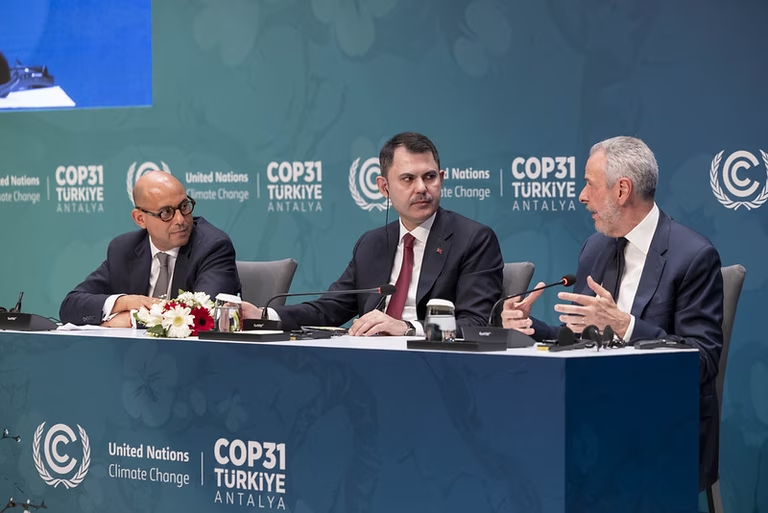
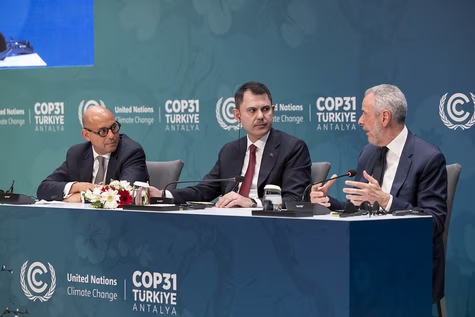
The decision to award the presidency to Türkiye came after a diplomatic compromise reached at COP30 in Brazil, resolving a prolonged hosting dispute between Türkiye and Australia. Under the agreement, Türkiye will manage all operational and logistical responsibilities as the physical host and COP31 President, driving the Global Climate Action Agenda. In a rare shared leadership model, Australia will act as the "President of Negotiations," tasked with leading the formal intergovernmental negotiations.
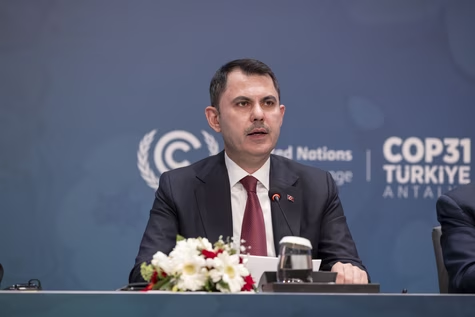
The President-designate of COP 31, Murat Kurrum who is currently serving as the Environment Minister of Turkey, declared that the intention of Turkey’s presidency is to find a common ground to build a safer world and a more secure global economy for humanity as climate impacts rapidly worsen. Under the troika approach, the Presidency is working in close coordination with two former hosts of the COP, namely Azerbaijan (COP 29 Presidency) and Brazil (COP 30 Presidency) respectively.
Turkiye is positioning COP 31 as the ‘implementation COP’, focusing on translating climate pledges into bankable actions. This was outlined in a speech by President-designate Kurum ahead of the New York Climate Week earlier this year. Turkiye aims to focus on four main priority areas of engagement: mitigation and decarbonisation roadmaps, climate adaptation and resilience, corporate climate target setting and reporting and climate finance and investments.
In addition to emission cuts, Turkiye intends to leverage its unique, and often contentious, geopolitical positioning to help overcome the constant impasse on global climate finance. Historically, Turkey has bristled at its classification as an "Annex I" country, a developed one, according to the landmark 1992 UN Framework Convention on Climate Change (UNFCCC), which it claims unjustly excludes it from accessing climate funds as an emerging economy. Being positioned as an important mediator between the developed countries of the Global North and the developing ones of the Global South will allow for implementing the New Collective Quantified Goal (NCQG) in terms of climate finance.
This is important because, along with the public sector, the private sector and international financial institutions are supposed to mobilise a substantial share of the sum needed for a clean energy transition and adaptation, estimated at around $100–275 trillion by 2050.
In the words of UN Global Compact Türkiye Chairperson Güliz Öztürk, “The Role of the Private Sector in Combating Climate Change Is Increasing Every Day”.
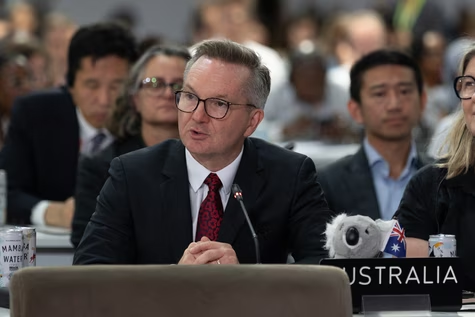
Australia at the Helm: Why the Negotiation Presidency is Critical
Prior to the signing of the Paris Agreement, the world was hurtling toward a catastrophic 4°C of global warming; today, that trajectory has been wrestled down to 2.6°C. While past climate change conferences have sparked the energy revolution and innovation has provided the means, brute economics is now driving it forward. Clean energy solutions are no longer the environmental mandate; they are affordable, dependable, and represent the fastest-growing area for investment in the world.
Australia represents a living example of this transition in action. By the end of 2025, renewable energy has provided well over half of Australia's electricity needs. Today, 1 in 3 Australian homes generate their own power from rooftop solar panels. The summit is a critical opportunity to accelerate implementation, ensuring the 1.5°C threshold remains a concrete target rather than a receding hope.
As President of Negotiations, Australia will work with countries to build consensus and make progress across all negotiating issues. Australia is also working with the past presidencies to deliver on key initiatives like the Belem Mission to 1.5 and the Global Implementation Accelerator.
The Belém Mission to 1.5°C sets the mandate for nations to upgrade their Nationally Determined Contributions (NDCs) from abstract targets into aggressive, trackable economic roadmaps. international community's final, coordinated diplomatic push to close the implementation gap before the 1.5°C window irrevocably slams shut. In this light, the Global Implementation Accelerator acts as the operational engine to achieve these targets by facilitating the required capital, technological knowhow and expertise.
"This won't be an easy negotiation, COP31. No one should pretend it will be, but in one way, that's why I'm looking forward to it so much, because hard negotiations can lead to very good outcomes, as recent days have shown", said Chris Bowen during the official joint ministerial press conference at COP30 Belem.
DRAFT by Google Gemini, partly edited by Dr. Norbert Stute. Date: 19.08.26, Update: 20.08.26. Planned to be authored by Tanuj Samaddar.
More Resources
Curated Directory & Deep-Dive Resources on Antalya 2026 / COP31
- COP31 Antalya 2026 Türkiye - Official Website 521710
- COP31 - Conference Overview 521711
- COP31 - Green Zone 521712
- UN Climate Change Conference - Antalya, November 2026 - UNFCCC 521713
- 2026 UN Climate Change Conference (UNFCCC COP 31) - IISD 521714
- 2026 United Nations Climate Change Conference - Wikipedia 521709
- Halkların İklim Zirvesi 2026 - Instagram 521893
- Halkların İklim Zirvesi Antalya 2026 - Peoples’ Climate Summit 521894
- Towards COP31: Right to cooling under the shadow of energy poverty - Bianet 26.09.26 523667
- Pacific islands seek backing for new regional fund ahead of COP31 - Climate Home News 28.08.26 522305
- PM Tarique Rahman set to visit Türkiye for COP31 summit in November - Climate Watch 28.08.26 522304
- COP31: Antalya summit to test climate promises, finance and just transition - Climate Watch 25.08.26 522110
- Two fossil states to co-host COP31 in November - Green Left 24.08.26 522111
- Cyprus will be included in COP31 meetings after Turkey assurance, Commission says - Contexte 24.08.26 522112
- As marine heat breaks records, countries seek ocean roadmap at COP31 - Climate Home 20.08.26 522069
- Agricultural land in Antalya paved to make parking lots for COP31 summit - Bianet 17.08.26 521891
- Why Is the EU Warning Turkey Over Cyprus Before COP31? - Modern Diplomacy 26.06.26 521890
- Dispatch from Istanbul: Why Turkey is throwing its weight behind ‘zero waste’ ahead of COP31 - Atlantic Council 12.06.26 521889
- Interview: 2026 Peoples’ Climate Summit in Antalya, Turkey - Internationalist Standpoint 11.05.26 521892
- Towards COP31 Climate Summit: How will civil society be able to participate in the conference? - STGM 30.03.26 521895