Christianity
Explore an extensive directory on Christianity. Discover resources on Jesus Christ, the Bible, theology, church history, and diverse global denominations.
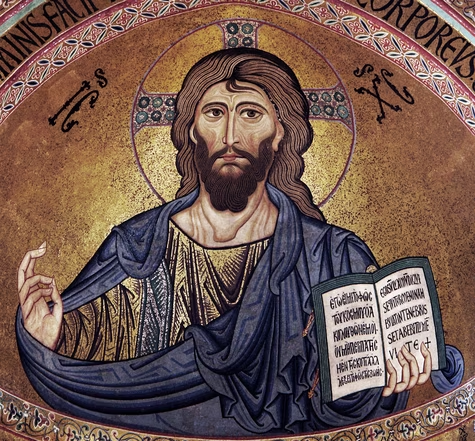
CHRISTIANITY & THE TEACHINGS OF JESUS – The World's Largest Religion
Discover the world of Christianity and explore its core message of profound love and redemption. Our comprehensive guide offers you in-depth insights into the inspiring historical work of Pope Leo, Christian pacifism, the shifting trends behind the modern decline of Christian followers, and the crucial, growing need for global religious tolerance.
Connect with hundreds of valuable resources, initiatives, and organisations – for genuine interfaith dialogue, improved understanding, and a more inclusive, harmonious future.
Jump straight to our resources on ➡️ Christianity
*****
General Information
With over 2.4 billion followers, mostly in the Americas, Sub-Saharan Africa, and Europe, Christianity is the most popular religion. The Bible is the primary text and comprises the Old and New Testaments.
Originating in the 1st century AD from the teachings of Jesus Christ in Palestine and Israel, it slowly began to spread throughout the Roman Empire. Soon after, Christianity split into various branches, including the Roman Catholic and Orthodox Churches.
The discovery of America in the 15th century furthered its international reach. Protestant movements later appeared after the Reformation in the 16th century. Today, Christianity is a globally widespread religion with diverse customs and traditions.
"Do all the good you can, by all the means you can, in all the ways you can, in all the places you can, at all the times you can, to all the people you can, as long as ever you can." - 18th-century English cleric and theologian John Wesley
Explore our resources on the Catholic, Protestant and Orthodox Churches, Christmas and Easter, liberation theology, and the Vatican.
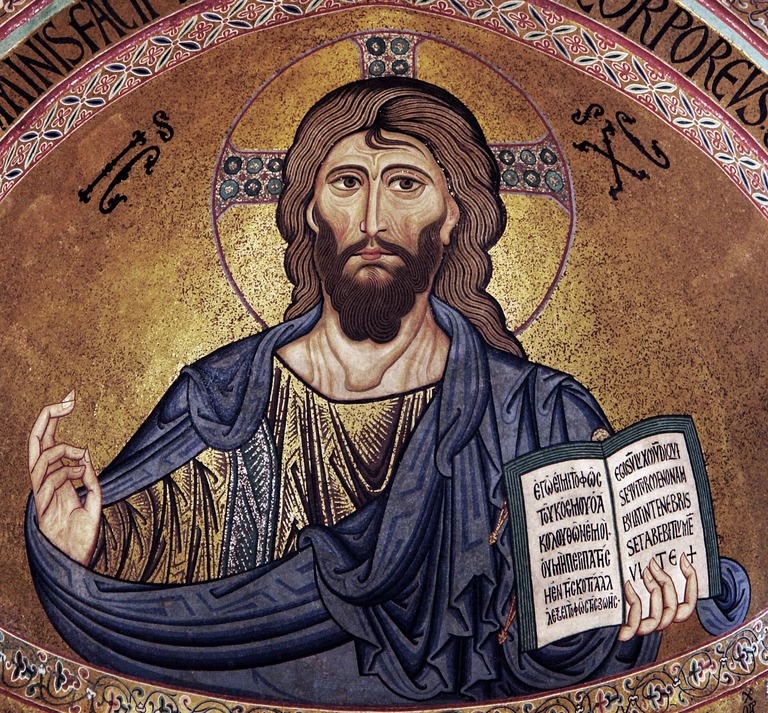
Christianity is a monotheistic religion based on the teachings and life of Jesus Christ. Its central principle is the belief in Jesus as the Son of God and the Saviour of humanity.
Christianity emphasises love, redemption, salvation, hope, and charity. Jesus serves as a role model on how to live our lives. He teaches us how to live with compassion, humility, and love.
These rich and varied traditions of Christianity can be seen in the different denominations and communities that exist worldwide.
There are 1.3 billion Catholics, 300 million Protestants, and 600 million Evangelicals. Smaller denominations include Orthodox Christians, of which there are 260 million, Methodists, of which there are 80 million, and Mennonites, of which there are 1.5 million.
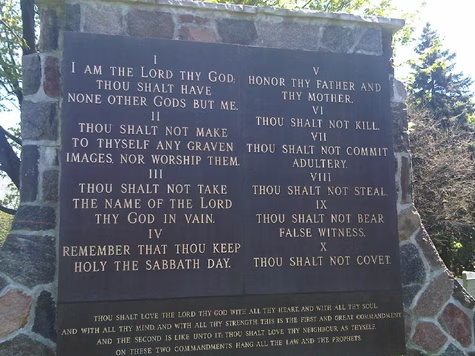
The Bible & The Ten Commandments
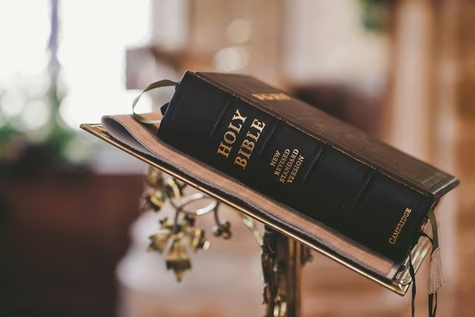
For Christians, the Bible is not only a religious text but also a guide to morality, faith, and practice. It tells the story of God's relationship with humanity, contains the teachings of Jesus Christ, and offers spiritual guidance.
While the Bible is interpreted differently across Christian traditions, it remains a central pillar of the faith and influences culture, art, and ethics worldwide.
The Ten Commandments are fundamental moral and ethical principles in Christianity. According to biblical tradition, they were given by God to Moses and include instructions such as reverence for God, love of our neighbours, and ethical behaviour.
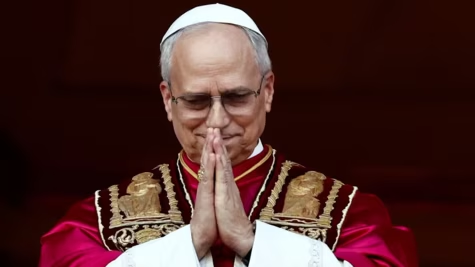
Protestant & Catholic Churches
The Protestant and Catholic churches are two of the largest Christian denominations. They have different beliefs, practices, doctrines, and structures.
The Catholic Church emphasises the authority of the Pope as a spiritual leader and the centre of unity. It places great importance on the sacraments, the veneration of saints, and Marian devotion.
The Catholic Mass is a central act of worship which brings devotees together. It involves a sacrificial meal and a sacramental celebration of the Eucharist. Bread and wine are interpreted as the body and blood of Jesus Christ, which represent his sacrifice and resurrection.
The Protestant Church views the Bible as the highest authority and places less emphasis on hierarchy. It highlights the individual relationship with God and the personal interpretation of Scripture. The Eucharist is understood as a symbolic remembrance of the Last Supper, and the liturgy varies from traditional to contemporary.
The structure of the Protestant Church is generally less centralised, and there are various denominations within the church. In contrast, the Catholic Church has a clear organisational structure with bishops and dioceses.
Despite these differences, both denominations share a belief in Jesus Christ as our Saviour and emphasise important values such as love, charity, and justice. The separation between the Protestant and Catholic churches dates back to the Reformation in the 16th century, when Martin Luther and other reformers began questioning church practices and doctrine.
Important in this context is ecumenism. This is a movement that aims to promote cooperation, understanding, and unity among the various Christian denominations and churches, regardless of their differences in doctrine and practice.
Major Christian Celebrations
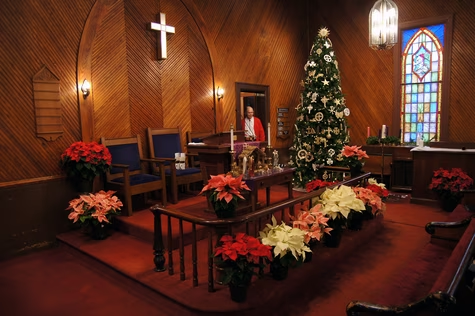
Religious holidays play a central role in the Christian calendar. Prominent Christian holidays include Christmas, Easter, Pentecost, and Ascension Day.
These days are characterised by spiritual celebrations, church services, and family gatherings. In addition to the major holidays, regional festivals and saints' days are also significant.
These holidays offer believers opportunities for reflection and serve as cultural anchors that strengthen the community and preserve historical traditions. Christian holidays all place importance on compassion, solidarity, and charity.
Christmas celebrates the birth of Jesus Christ, the Son of God, who came to Earth to provide salvation, love, light, and peace. Held on December 25th, it is a major festival commemorating the Nativity where Jesus was born in Bethlehem to the Virgin Mary.
Easter is the most significant festival in Christianity. It commemorates the resurrection of Jesus Christ three days after his crucifixion. It is celebrated on the first Sunday after the Paschal full moon in March or April and follows the 40-day fasting period of Lent.
Celebrations are marked with dawn services, church vigils, and the lighting of the Paschal candle, which represents light coming into the world.
The Separation of Church & State
The relationship between church and state has historically been characterised by coexistence, separation, and interaction. Different societies have developed varying models for defining the boundaries between religious authority and political power.
While some countries strive for a clear separation of church and state, others cooperate closely or have official state religions. When the two are not separated, the church can influence legislation, policy, and civil rights.
Religious institutions lobby governments on legislation concerning abortion, contraception, and LGBTQ+ rights to align state laws with their religious interpretations.
Evangelical groups in the U.S. are highly active in mobilising voters and lobbying the Republican Party. They hold significant weight when it comes to policies on reproductive rights.
Religious freedom is a fundamental human right that imposes a duty on the state to act with neutrality and ensure that individuals of all faiths can practice their religions without discrimination. When state and religion become entwined, the lines blur, especially when lobbying is involved.
The Church & Money
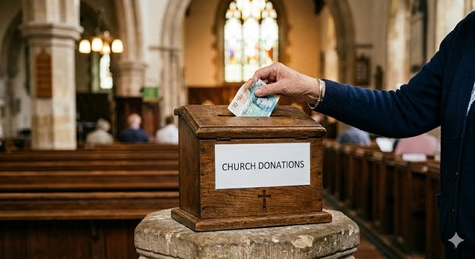
Churches and religious organisations rely on financial support to fund their activities, services, and charitable projects. This can raise ethical questions, particularly regarding transparency, financial accountability, and the potential misuse of funds.
The Catholic Church is one of the wealthiest and most financially influential organisations in the world. The Church of Jesus Christ of Latter-day Saints is also considered exceptionally wealthy, with assets estimated at $200-$300 billion in 2025.
Churches across the world own trillions in property and other wealth across Western countries. In developing countries, it is not unusual to see opulence and squalor side by side as churches sit adorned in gold and their believers next door live in rudimentary accommodation.
In contrast, the non-profit status of churches puts them in a prime position to support organisations combating hunger, poverty, and social injustice.
While the vast majority of donations are spent on church operations, a 2016 study estimated that U.S. religious activity contributes $1.2 trillion in socioeconomic value to the U.S. economy every year, including faith-based charities, hospitals, and schools.
Churches also organise soup kitchens, provide shelter for the homeless, and promote educational programs. Their commitment is based on the ethical imperative to help those in need and contributes to strengthening social networks and alleviating human suffering.
Influential Christians Throughout History
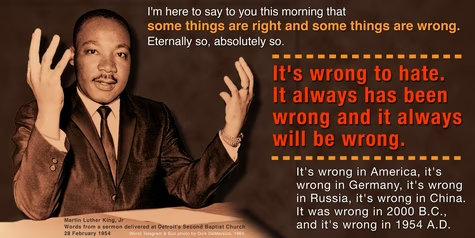
Famous Christians and role models have inspired the world through their faith and actions. People like Martin Luther King Jr. championed equality and peace, while Mother Teresa helped those in need with her compassion.
Theologian Dietrich Bonhoeffer stood up against injustice. Florence Nightingale, a pioneer of modern nursing, felt called by God to serve. She went on to transform nursing into a respected profession and established healthcare standards that have saved countless lives.
C.S. Lewis remains one of the most influential 20th-century writers, theologians, and literary scholars. His literary works brought Christianity to the masses and continue to influence readers today.
These figures embody values such as compassion, forgiveness, and a commitment to social change. Their legacy inspires others to work for the well-being of others and practice Christian values in their daily lives.
Controversies Within Christianity
Critics of Christianity often point to historical crimes committed in the name of religion, such as the Crusades, religious persecutions, and missionary colonisation. Internal conflicts and divisions have also led to a multitude of denominations, calling into question the unity of the faith.
Some accuse Christianity of hindering modern scientific progress or being backward on social issues, particularly regarding gender equality and LGBTQ+ rights. Criticism often targets institutional power, dogmatism, and the tensions between religious ideals and actual practice.
The modern Church faces considerable criticism due to allegations of abuse. Incidents of sexual abuse by clergy have shaken the trust of many believers and severely damaged the reputation of the church.
The institutional cover-up of these widespread incidents undermines the Church's credibility and ignores the suffering of the victims. Transparent investigations, appropriate punishment of perpetrators, and improved protection of children and young people within the Church are paramount.
Although in the last 2 decades, there have been an increasing number of criminal prosecutions, civil settlements, and sanctions, the response overall has been inadequate and severely delayed. There is a great need for accountability and reform within the church.

Modern Christianity & The Future
Western Christianity faces a crisis of confidence and dwindling numbers. The decline in traditional institutional adherence in developed nations signifies a shift in demographic strength from the West to the Global South.
In the UK and North America, Christianity is no longer the default cultural identity, with the majority of individuals stating they have no religious affiliation. Traditional denominations are likely to continue shrinking, and an overhaul of existing church structures will become necessary.
Christianity, however, is flourishing in Africa, Asia, and Latin America. The vast majority of the world's Christians now live in the Global South.
Christianity is increasingly using technology to connect communities and make worship services more accessible. This will affect worship, evangelism, and communities, potentially challenging traditional ecclesiastical structures and pastoral authority.
To counter cultural and social challenges and remain relevant, the church will likely place a renewed focus on social justice, environmental protection, and interfaith dialogue. The church could become more involved in global humanitarian efforts, peace diplomacy, and engage with contemporary ethical issues.
More flexible faith practices and less formal structures could appeal to younger generations. The future of Christianity is likely to be less Western, less institutional, more diverse, and more deeply involved in social issues.
Whichever direction the church takes, it is certain that family, spirituality, and the love of our neighbours will remain central to devotees.
Author: Jasmin, 09.08.23, translated and edited by Rachael Mellor 03.04.26, latest update 16.07.26, licensed under CC BY-SA 4.0
More Resources
Curated Directory & Deep-Dive Resources on Christianity
- General Info 4
- Liberation Theology 29
- PROTESTANT Church 34
- CATHOLIC Church 1130
- Ecumenical Movement 34
- ORTHODOX Church 137
- Church of England 24
- OTHER Christian Churches 183
- Practicing Christians 33
- Famous Christians 32
- Church from below 18
- Feminist Theology 30
- Christian Pacifism 36
- Christmas & Advent 187
- Easter 45
- Various 25