
International Day of NON-VIOLENCE - October 2
Explore essential peace resources, events, and news for the International Day of Non-Violence on October 2. Celebrate Gandhi’s birthday and promote global tolerance.
INTERNATIONAL DAY OF NONVIOLENCE, Oct 02 - Promoting A Culture Of Peace On The Birthday of Gandhi
Discover the International Day of Non-Violence and learn how peaceful resistance has proven more effective at driving positive change than conflict. Our guide offers you in-depth information on Mahatma Gandhi’s legacy, nonviolent movements, and creating a culture of peace.
Connect with hundreds of valuable resources, news sources, and organisations on nonviolence, peace, peacebuilding, pacifists, and conflict resolution.
Jump straight to our resources on ➡️ International Day of Nonviolence
“There are many causes I would die for. There is not a single cause I would kill for.” - Mahatma Gandhi.
*****
General Information
International Day of Nonviolence was established by the United Nations General Assembly in 2007. The day is dedicated to promoting peace around the world and rejecting all forms of violence.
This date in October was chosen to coincide with the anniversary of Mahatma Gandhi's birth. Gandhi was a leader in the struggle for Indian independence from British rule; he was renowned for his unwavering commitment to non-violence and civil disobedience.
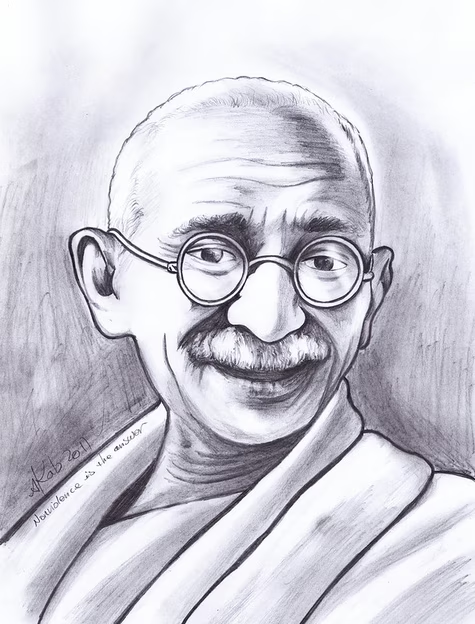
His methods of peaceful protest became a powerful tool against oppression and continue to influence civil rights movements worldwide. His enduring legacy is a symbol of peaceful resistance and the power of non-violent action.
Gandhi embraced the religious concept of ‘Ahimsa’, the ancient Indian principle of nonviolence, and applied it to all spheres of life.
“Ahimsa is the highest duty. Even if we cannot practice it in full, we must try to understand its spirit and refrain as far as is humanly possible from violence.” - Mahatma Gandhi.
The International Day of Nonviolence aims to spread the message of non-violence, tolerance, and understanding through public awareness campaigns and education.
It reminds us of the power of dialogue over aggression and violence. As individuals, we can all embrace empathy, compassion, kindness, and respect in our everyday lives.
This year marks Gandhi's 157th birth anniversary.
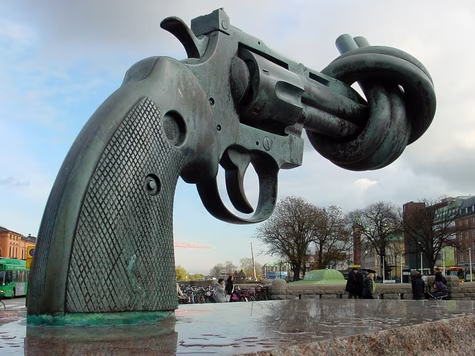
Nonviolence Works!
Nonviolent protests are twice as likely to succeed as armed conflicts. A study by Erica Chenoweth, a political scientist at Harvard University, revealed that this is the most powerful way to reshape politics by a long way.
Civil resistance by ordinary members of the public leads to political change 53% of the time, compared to 26% for violent protests. She also found that, to succeed, protests need active participation from 3.5% of the population.
Nonviolent protests have succeeded in achieving radical change in Czechoslovakia, Serbia, South Africa, Ukraine, Georgia, Tunisia, Sudan, Algeria, the Philippines, and many Baltic nations.
This type of action tends to attract around four times as many participants as campaigns which involve violence. They bring in a much broader demographic, and there are few barriers to participation. This fact alone dramatically increases the chances of success.
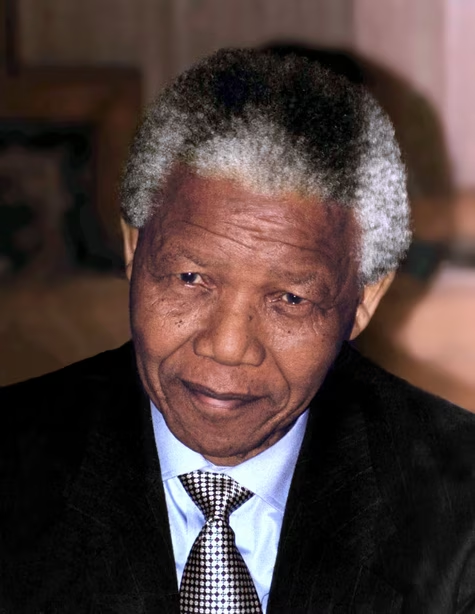
Historical heroes of nonviolence include Suffragette leader Susan B. Anthony, U.S. civil rights campaigner Martin Luther King Jr, South African anti-apartheid activist Nelson Mandela, and Rosa Parks, who initiated the Montgomery bus boycott.
Campaigns that promote violence lean on the backing of young, healthy men and the risks of participation are much higher. This is not to say that nonviolent campaigns do not carry their own risks, as seen in China’s brutal response to the peaceful pro-democracy protests at Tiananmen Square in 1989.
Traditionally, security and police are less likely to respond with violence to peaceful protesters; however, we are witnessing a worrying global upward trend in the use of force, deployment of military personnel, and arrests at nonviolent demonstrations.
“Rather than seeing peaceful protest as a democratic means of participation, too often governments resort to repression to suppress protests and silence people’s voices” - Clément Voule, UN Special Rapporteur on the Right to Peaceful Assembly and Association.
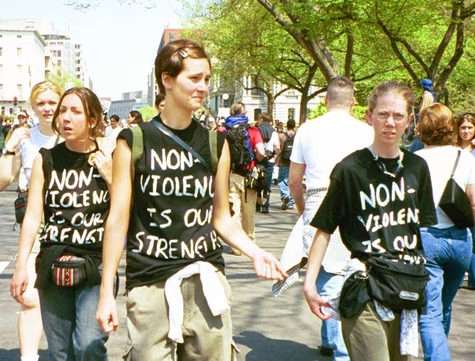
Modern Examples Of Nonviolence
Influenced by the social justice and human rights advocates of past generations, modern-day nonviolent campaigns draw on their successes and use modern tools such as social media and digital coordination to spread their message to the masses.
Below we list some inspiring examples of modern nonviolent campaigns:
The Cockroach Movement (India) -
Driven by social media and grassroots organising, this youth-led uprising represents a major shift in India’s climate of fear, as widespread opposition to Prime Minister Narendra Modi’s 12 years in power quickly gained momentum.
Gen Z transformed a petty insult into the now globally recognised "Cockroach Movement." Online activism manifested into one of the largest youth-led mobilisations in recent Indian history. They are taking a stand against systemic corruption, exam leaks, rampant unemployment, and a bleak future under Modi.
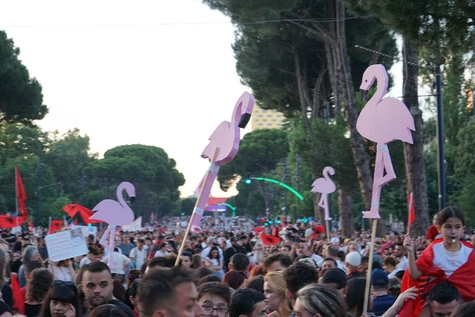
The Flamingo Revolution (Albania) -
After draft design documents for the construction of luxury resorts worth $6.5 billion on the uninhabited Sazan Island and the pristine Zvërnec Peninsula were leaked online, demonstrations quickly gained momentum.
Backlash to this project began as an environmental protest in May 2026, as construction would seriously threaten legally protected wetlands and coastal biodiversity in this extremely fragile environment.
Allegations of corruption involving Prime Minister Edi Rama and his administration quickly turned the protests into anti-government and anti-corruption demonstrations.
The Flamingo Revolution has now become a country-wide protest movement that has been going strong for two months with no sign of slowing down.
The Sunflower Movement (Taiwan) -
This student protest movement was driven by anger over the government’s attempts to force through a trade deal between Taiwan and China, which was conducted in a shroud of secrecy. The Cross-Strait Service Trade Agreement (CSSTA) was thought to increase economic reliance on China and further threaten Taiwan's sovereignty.
For 24 days, they occupied the parliament of Taiwan. With the help of the now Cyber Ambassador, Audrey Tang, they amplified their impact by using digital tools to stream, translate, and broadcast activist demands. Tang turned the protest into a digital, transparent event and helped bridge the gap between protesters and the government.
The protest ended when the controversial bill was withdrawn.
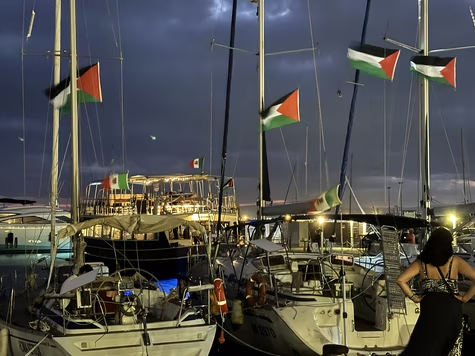
The Gaza Freedom Flotilla -
The first large multi-ship flotilla took place in 2010, with 6 more large-scale campaigns taking place since then. These peaceful missions, organised by the Global Sumud Flotilla and the Freedom Flotilla Coalition, aim to break the Israeli naval blockade of Gaza and deliver lifesaving humanitarian aid to the desperately struggling population in Gaza.
In spring 2026, more than 70 boats and 3,000 participants from 100 countries set sail in a powerful symbol of solidarity with Palestinians and their plight against Israel’s genocide campaign. The ships set sail from various points in Europe but were quickly intercepted by the Israeli Defence Forces (IDF) off the coast of Crete on April 30th. This resulted in the detention of 181 activists.
They were not successful in their mission, but they sent a powerful message to the world that the conditions imposed on Gaza by Israel are unacceptable.
Black Lives Matter -
The rising issue of police brutality against the Black community in the U.S.A., and the murder of George Floyd by a Minneapolis police officer, sparked the historic worldwide protests. At its peak in 2020, they drew an estimated 15-26 million demonstrators in the U.S. alone, making it the world's largest protest ever.
Black Americans face significantly higher rates of police stops, use of force, and fatal shootings compared to white Americans.
The BLM organisation was established in 2013 with the goal of ending systematic racial discrimination in the justice system and promoting equality in Black communities.
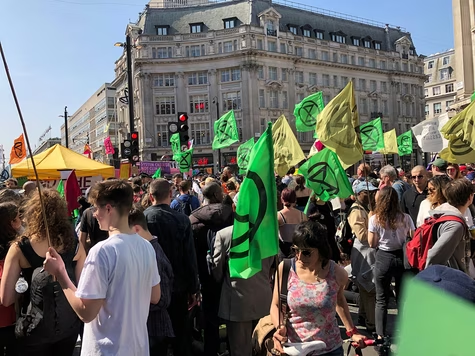
Extinction Rebellion -
This international environmental movement uses nonviolent civil disobedience to raise awareness of critical planetary issues and force governments into action. They focus on issues such as climate change, biodiversity loss, climate injustice, climate debt, the fossil fuel industry, and greenhouse gas emissions.
Their biggest demonstration to date took place in London in 2023 and drew 60,000 demonstrators to demand stronger government action on climate change. Taking place over 4 days, the event was supported by environmental heavyweights Greenpeace and Friends of the Earth.
Although climate action has since stalled, the UK Parliament became the first nation to declare a climate emergency. They now have an active presence in over 40 countries, and they work hard to keep important environmental topics at the top of public agendas.
Rejecting Violence
As the world becomes a darker and more dangerous place, never before has there been a greater need to stand up for peace and nonviolence.
History repeatedly proves that nonviolence is a far superior strategy for change. Yet, global authoritarian powers in the Middle East, the U.S., Congo, Russia, Sudan, and Myanmar continue to use military might to the same end - years of endless human suffering.
An estimated 2 billion people - a quarter of humanity - live in areas affected by violent conflict. The world is currently experiencing the highest number of armed conflicts since 1945 (the end of WWII), and with a 65% increase in conflict-affected areas since 2021, hopes for peace are dwindling.
Awareness days such as International Day of Nonviolence and International Day of Peace play a vital role in showing the world that peace is possible.
Better World Info honours the bravery of conscientious objectors and war resisters around the world, as well as the exemplary peace organisations fighting to end the military madness and make the world a more tolerant and compassionate place.
This Day of Nonviolence, let’s highlight the success and strength of nonviolent campaigns, the impact of peace education, and our individual right to say no to war.
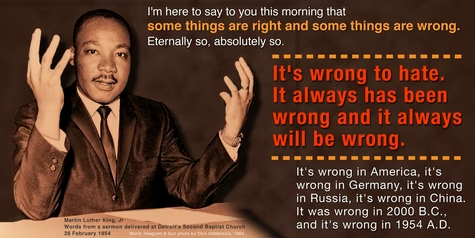
“At the centre of non-violence stands the principle of love” - Martin Luther King Jr.
Author: Rachael Mellor, 01.10.26, licensed under CC BY-SA 4.0
More Resources
Curated Directory & Deep-Dive Resources on International Day of NON-VIOLENCE - October 2
- International Day of Non-Violence 2 October 375076
- United Nations - International Day of Non-Violence 75675
- UN News Centre - Nonviolence Search 75680
- Wikipedia - International Day of Non-Violence 75687
- Please RETWEET to share ! 75677
- Our FACEBOOK post - please share 308225
- Our INSTAGRAM post - please share 308224
- United Nations Messengers of Peace 75678
- United Nations Messengers of Peace - Wikipedia 491514
- YouTube Search 491510
- Google News 491509
- #InternationalDayofNonviolence 308144
- #InternationalNonviolenceDay 308074
- #NonviolenceDay 75682
- #InternationalNonviolenceDay - YouTube 308070
- #BuildPeace 75683
- #GandhiJayanti 75684
- #nonviolence 375325
- @WagingNV 75685
- Google Images ! 75688
- Google Search 75689
- Gandhi Jayanti (India) - Wikipedia 75690
- Gandhi Jayanti - Vancouver 75691
- Secretary-General's message on the International Day of Non-Violence - UN 02.10.26 523991
- Tweet: Understanding journeys into and out of armed groups is key to prevention that works. On the International Day of Non-Violence, UNIDIR reaffirms our mission to help par… 523992
- A placard and a statute: observing the International Day of Non-Violence - Jurist 02.10.26 523990
- Why the UN marks October 2 as the International Day of Non-Violence - WION 01.10.26 523989
- Mahatma Gandhi Showed Best Way to Counter Injustice Lies in Tools of Dialogue, Non-violence, Secretary-General Says in Message for International Day - UN 24.09.26 523606
- Zakaria El Hamel Turns Non-Violence into Action Across the MENA Region - Times Of Israel 04.10.25 492309
- Video: International Day of Non Violence 02.10.25 491511
- Video: Commemoration of International Day of Non-Violence - UN 02.10.25 491723
- Video: Gandhi Jayanti 2025: Celebrating 156 Years Of The Man Who Made Non-Violence A Weapon | WION 02.10.25 491513
- Tweet: “People who think nonviolence is easy don’t realize that it’s a spiritual discipline that requires a great deal of strength, growth, and purging of the self…” - @TheKi… 491722
- The Secretary-General Message on the International Day of Non-Violence - UN 01.10.25 491512
- Thursday's International Day of Non-Violence highlights the remarkable power of peaceful protest - United Nations 02.09.25 494029
- Message for the International Day of Non-Violence - UNIS 02.10.24 433904
- Commemoration of the International Day of Non-Violence - UNPO 02.10.24 433905
- Statement by the Community for Human Development on the International Day of Nonviolence - Pressenza 02.10.24 433906
- Tweet: #InternationalDayofNonviolence is observed every year on Oct 2, in celebration of Gandhi’s birthday. Today, we reflect on the way toward #nonviolence. - @PaxChristi 02… 433907
- Tweet: Today is the International #DayofNonViolence. We can all do our part to achieve peace in our communities – from promoting mutual respect and understanding to advocati… 433909
- The International Day of Non-Violence serves as global reminder of Mahatma Gandhi’s enduring philosophy of peace and non-violence - The Statesman 02.10.24 433902
- Tweet: International Day of Non-Violence! Together with feminist movements, we fight sexist violence and demand a comprehensive framework to combat gender-based violence. - @… 433908
- Tweet: On International Day of Non-Violence, join @UNVolunteers who actively promote peace and stability among people. Together, let's build a world where #peace thrives. - @… 433910
- International Day of Non-Violence: Violence against grassroots politicians has a chilling effect on local democracy - Council of Europe 01.10.24 433903
- Marking International Day, Secretary-General Says Gandhi Believed Non-Violence More Powerful than Any Weapon, Urges Support for ‘That Noble Vision’ - UN 27.09.24 433355
- Secretary-General's Message on the International Day of Non-Violence - UN 02.10.23 375326
- Tweet: The day marks the birthday of Mahatma Gandhi - a leader who remained committed to the principle of non-violence, even in the most difficult circumstances. - @UNGeneva … 375330
- Tweet: On this day, the UN International Day of #NonViolence, we honor Mahatma #Gandhi's legacy and the power of non-violence in shaping a better world. - @WorldBeyondWar 02… 375329
- Statement by the Community for Human Development on the occasion of the International Day of Nonviolence - Pressenza 01.10.23 375328
- Mahatma Gandhi & Non-Violence - Kashmir Images 01.10.22 308146
- Video: International Day of Non-Violence Speech by Ananya S of Grade IX 10/22 308072
- International Day of Non Violence Video 2021 - Geneva Centre for Human Rights Advancement 308068
- UN chief reiterates call for global ceasefire, marking International Day of Non-Violence - UN News 10/20 218065
- Video: International Day of non-violence 2020 - Geneva Centre for Human Rights Advancement 308069
- Learning the way of peace: a teachers' guide to peace education - UNESCO 2001 - 09/19 188203
- Video: International Day of Non-Violence featuring Ramachandra Guha 9/19 308071
- 150 Years of Celebrating The Mahatma - DSEL 188201
- Documentary Trailer: From India with love - 06/17 188202
- International Day of Non-Violence 2014: 10 Mahatma Gandhi Quotes to Mark the UN Event 10/14 75693
- International Day of Non Violence: Exploring solutions to end violence against children - UNICEF 10/13 75694
- Life On The Line: Can Humanity Survive? - Counter Currents 25.09.13 75695
- Commemorating International Day of Non Violence 2012 with Tushar Gandhi and Shri Satpal Khattar 75696
- Arun Gandhi urges practice of nonviolence, personal peace - YouTube 2/12 75698
- UN declares 2 October, Gandhi’s birthday, as International Day of Non-Violence 6/07 75699
- International Decade for a Culture of Peace and Non-Violence (2001-2010) 75679