High Seas Treaty 2023
Explore our guide on the UN Oceans Treaty or BBNJ Agreement. Now ratified, this treaty is a pivotal step to protect oceans, curb overfishing, reduce pollution, and ensure biodiversity.
United Nations ➡️ HIGH SEAS TREATY – Legally Binding Regulation of the Marine Wild West
The high seas are international waters that fall outside any nation's jurisdiction, making them rife with unchecked fishing, pollution, and other environmentally destructive activities.
Beginning 200 nautical miles from the coastline, the high seas cover roughly two-thirds of the ocean. Previously, just 1% of these waters were adequately protected.
On January 17, 2026, the High Seas Treaty officially came into force. This landmark win for our planet's oceans is a legally binding framework that will protect marine life, enable the establishment of Marine Protected Areas (MPAs), regulate the fishing industry, and support developing countries in building sustainable relationships with the ocean. The treaty is officially called the Biodiversity Beyond National Jurisdiction Agreement (BBNJ) and is also more commonly known as the UN Oceans Treaty or High Seas Treaty.
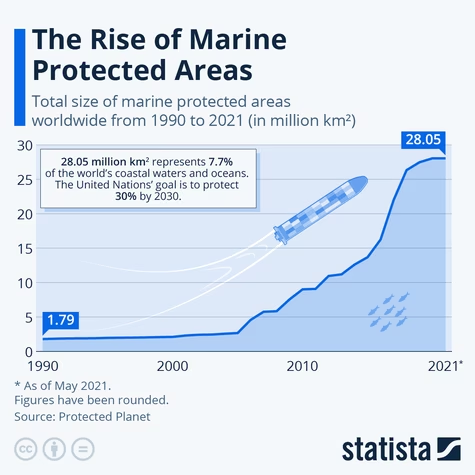
In 2020, the EU committed to protecting 30% of its seas by 2030, following advice from marine experts. This new treaty is an important step towards achieving those goals and avoiding irreversible damage to marine biodiversity and the blue economy.
Discussions began after December 2017 when the UN General Assembly voted to establish an intergovernmental conference and undertake formal negotiations for a new legally binding instrument. The resulting treaty was the recipient of the 2025 Earthshot Prize.
"At a time when multilateralism seems at an all-time low, we can celebrate this Treaty as an example of the good that can be achieved if we choose to collaborate." - Inge Relph, Global Choices
Jump straight to our resources on the ➡️ High Seas Treaty
Explore our comprehensive guides on -
-
Our Guide to Water & Oceans
-
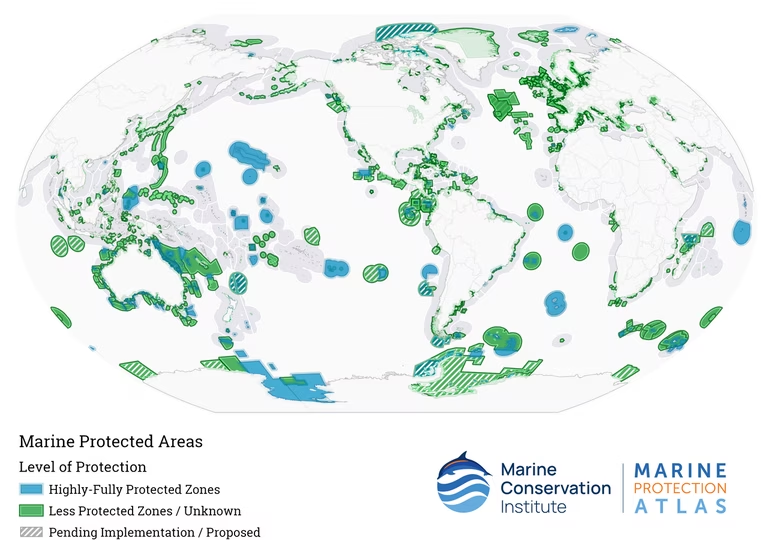
Marine Protected Areas - MPAs
Here you find our posts on The High Seas Treaty: Twitter, Bluesky, Facebook, Instagram, and LinkedIn - Please share!
*****
The Ocean Crisis
-
Through photosynthesis, oceans produce 50-80% of the Earth's oxygen.
-
The ocean is 30% more acidic than in pre-industrial times. This change in pH is severely impacting ocean ecosystems, including coral reefs and other shell-building organisms.
-
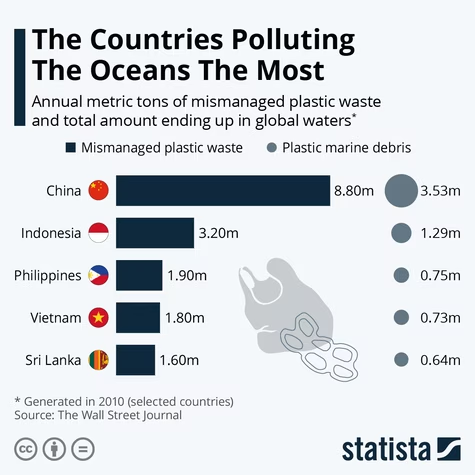
More than 12 million metric tons of plastic enter our oceans every year. Pollution and entanglement now effects 60% of marine mammals. Without action, by 2050, there could be more plastic in the sea than fish.
-
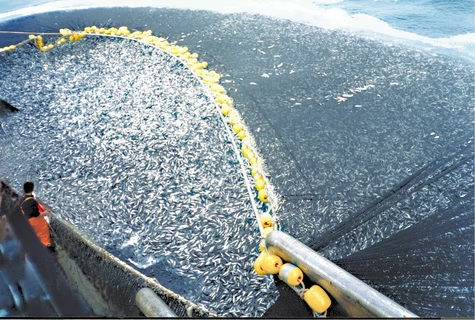
An estimated 37.7% of fish stocks are overfished. More than 50% marine species face extinction by 2100 if current trends continue.
-
The ocean surface is warming 4 times faster than it was 40 years ago. The year 2024 was the warmest on record for the oceans.
-
Sea levels rose 22,8 cm between 1901 and 2024.
-
The triple planetary crisis - climate change, biodiversity loss, and pollution – has put every part of the ocean under threat.
-
There are now roughly 500 marine dead zones, which, driven by pollution, are depleted of oxygen and can no longer support life.
Ratification
As of January 2026, 83 countries have officially ratified the treaty, including China, the EU, and 16 European member states. Some 145 countries have signed the agreement with the intent to ratify eventually. Once ratified, countries become legally bound to implement measures to protect marine life in international waters.
Of interest, Russia is the only large influential nation to have neither signed nor ratified the agreement. Citing that the restrictions would be detrimental to their own national interests in relation to economic activity in the Arctic and its ocean resource exploitation. The USA has signed but is unlikely to ratify the treaty under Trump.
While the UK, India, Japan and Germany have signed, they have not yet completed ratification. Slow legislative processes, complex domestic legislation, and a lack of prioritisation are stalling action and delaying the vital protections that the ocean so desperately needs.
Main Components of the Treaty
Now officially in force, the ratified countries have agreed to:
-
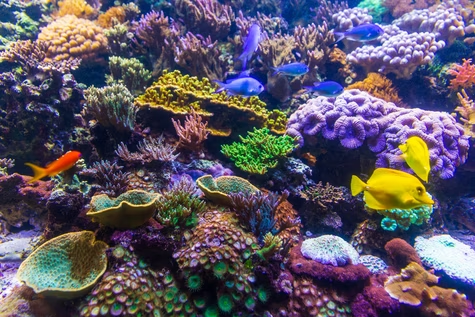
Create Marine Protected Areas (MPAs) in international waters, and implement other area-based management tools. These defined geographical areas are dedicated to marine biodiversity and ecosystem conservation. There is now a clear pathway for proposing new zones.
-
Conduct environmental impact assessments for activities that could harm marine ecosystems, as well as for solutions such as carbon removal. These assessments will be shared between ratified nations and will help to establish international standards. They will also assist with monitoring to facilitate a greater understanding of ocean ecosystems and their relationship with climate change.
-
Sustainably and responsibly manage the use of ocean resources by establishing rules for the shared benefits of marine resources.
-
Share knowledge and technology, especially with low-income countries, to promote conservation, sustainable management, and equal participation in high seas governance.
Ocean Treaty COP
Now legally binding, this new era of ocean governance is just the start. We must now establish institutions, decision-making processes, and ways of accessing and monitoring progress.
Many of these details will be agreed upon at the upcoming Conference of the Parties, scheduled to take place in autumn 2026. The focus will be on turning the text into visible action with the goal of protecting 30% of the world's oceans by 2030.
Once the first MPAs are established, various scientific bodies can work on implementing changes such as fishing bans and other rules, which will be voted on. Mandatory assessments will be agreed upon for shipping, deep-sea mining, marine carbon dioxide removal, and other issues.
This first COP will also formally establish the treaty's permanent bodies and secretariat, which will be responsible for administering the treaty and ensuring its success.
*****
Our ability to achieve the Sustainable Development Goals and to ensure a healthy planet for future generations depends on the success of the High Seas Treaty.
We must commit to the sustainable management of our marine ecosystems and resources. International cooperation will be key as the ocean crisis transcends national borders.
The number of nations opting to ratify the treaty and the speed at which they signed up is a testament to the power of diplomacy. The treaty reflects years of perseverance and is a powerful example of what is possible when nations and people work together.
Our oceans regulate the climate and weather systems, act as massive carbon sinks, and support more than 100 million livelihoods worldwide. Let's keep fighting for a strong and inclusive High Seas Treaty, for our health, our planet, and for the generations who will inherit it in future years to come.
Author: Rachael Mellor, 21.01.26 licensed under CC BY-SA 4.0
For further reading on the High Seas Treaty see below ⬇️
More Resources
Curated Directory & Deep-Dive Resources on High Seas Treaty 2023
- WWF: Landmark High Seas Treaty agreed, ushering in new rules for two-thirds of the ocean - WWF 04.03.23 353896
- Ocean biodiversity: global agreement on protection and sustainable use of resources and biodiversity in high seas - European Commision 04.03.23 337619
- United Nations secures High Seas Treaty protecting 30 per cent of world's oceans - ABC 04.03.23 353917
- Nations Agree on Language for Historic Treaty to Protect Ocean Life - NY Times 04.03.23 353910
- Nations Agree on Historic Global Oceans Treaty - Green Peace 04.03.23 353921
- UN Talks to Protect High Seas Approach Finish Line - VoA 03.03.23 353909
- Crucial high seas treaty stuck over sharing of genetic resources - Guardian 03.03.23 353868
- Differences remain as talks to protect high seas enter final day - Al Jazeera 03.03.23 353873
- World’s Oceans at Risk: U.N. Members Meet Again to Reach Consensus on High Seas Treaty - Foodtank 03/23 353920
- As New Ocean Treaty Session Continues, Intergovernmental Conference Speakers Warn Discussions Exceed Mandate, Vulnerable Countries’ Needs Not Addressed - UN 02.03.23 353879
- ‘The most important talks no one has heard of’: why the high seas treaty matters - Guardian 28.02.23 333574
- Delegates come close, but fail again to clinch high seas protection treaty - Mongabay 29.08.22 303514
- How a Global Ocean Treaty could protect biodiversity in the high seas - Global Issues 08.06.20 209299
- New High Seas Treaty could be a gamechanger for the ocean - EcoWatch 09.05.20 207138
- UN poised to move ahead with landmark treaty to protect high seas - Guardian 22.12.17 176132
- Kristina Gjerde - Wikipedia 505373