
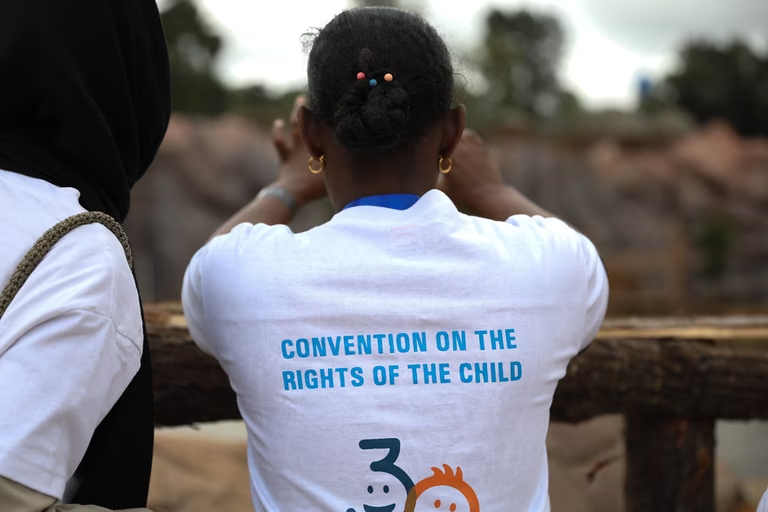
Convention on the Rights of the Child
Explore the impact of the Convention after almost 4 decades, its connection to the Sustainable Development Goals, and the work still to be done.
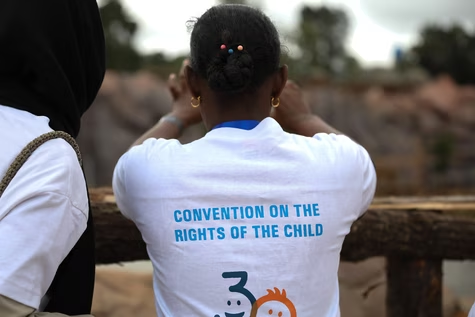
➡️ CONVENTION ON THE RIGHTS OF THE CHILD (UNCRC) - Children's Rights = Human Rights
Child rights are human rights. Yet despite this, in many places around the world, these rights are repeatedly and systematically disregarded, denied, and attacked.
The Convention on the Rights of the Child is the most widely ratified human rights treaty in history. It outlines 54 articles covering all aspects of a child's life and then sets out their civil, political, economic, social, and cultural rights for all people under 18.
These rights are vitally important for upholding children's dignity and for ensuring their well-being and development. All children, regardless of their age, race, gender, religion, wealth, birthplace, or any other factor, have the right to live free of fear and want.
Signed and ratified by 196 countries, the treaty is monitored by the UN Committee on the Rights of the Child. The U.S. is the only UN member state that has not ratified the treaty. These countries are required by law to ensure the described rights are available to all children.
Jump straight to our resources on the ➡️ UNCRC
Explore our comprehensive guides on -
-
Children's Rights Organisations
-
UNICEF – The United Nations Children's Fund
Adopted on 20 November 1989, the UNCRC is the most comprehensive statement of children's rights ever produced. It provides a universal set of standards to be adhered to by the parties that have ratified it.
The rights outlined by the Convention must be upheld without discrimination of any kind, irrespective of the child's or their parent's or guardian's race, colour of skin, gender, language, religion, place of birth, disability, or any other status.
Under the Convention, children benefit from special protection measures that allow them to develop their personalities, abilities, and talents to the fullest, grow up in a loving environment, and be informed about their rights.
UNICEF are the only organisation that works with children that is officially recognised by the Convention.
The Committee on the Rights of the Child are responsible for the monitoring and implementation of the Convention. They are an elected body of independent experts. They also review reports submitted by governments on the status of children's rights in their countries and then make recommendations to States. They can also request international assistance from other governments and organisations, such as UNICEF, if extra support is needed.
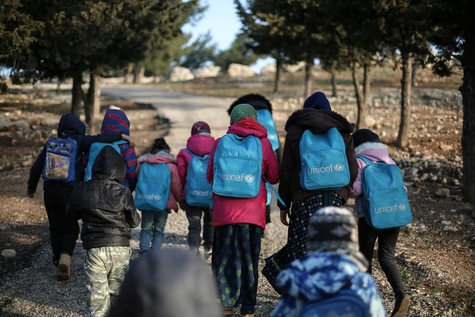
As Set Out In The Convention, Every Child Has The Right To:
-
Life, survival & development
-
Medical care & nutritious food
-
Freedom of information - from newspapers, social media, the radio or TV, etc.
-
Support from their government if needed
-
Rest & play
-
Free from work that is dangerous
-
Be raised by their parents if it is safe to do so
-
Freedom of thought
-
Protection from violence, abuse or neglect
-
An education
-
Freedom to express their opinions
Connection to the Sustainable Development Goals (SDGs)
The 2030 Agenda is a plan of action for people, planet and prosperity. It created 17 Sustainable Development Goals, which were adopted by the United Nations member states in 2015. These goals are universal, apply to all countries regardless of their level of development, and require global cooperation.
The SDGs share much common ground with the UNCRC and operate as separate yet mutually reinforcing entities. Many of the SDGs directly address the articles laid out in the UNCRC, and it is widely accepted that the goals cannot be achieved without upholding children's rights. The UNCRC provides the legal framework for working towards the goals.
The SDGs explicitly address child rights in the following goals:
-
Goal 1 – No Poverty
-
Goal 2 – Zero Hunger
-
Goal 3 – Good Health & Well-being
-
Goal 4 – Quality Education
-
Goal 5 - Gender Equality
-
Goal 16 – Peace, Justice & Strong Institutions
Other goals, such as clean water, climate action, and life on land, also directly affect children's quality of life and their ability to thrive, but do not specifically mention children.
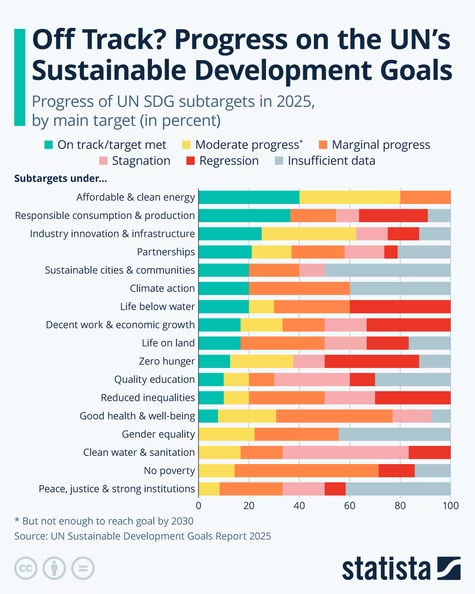
The UNCRC serves as a crucial legal benchmark for interpreting and implementing the SDG targets, but, devastatingly, with just four years to go and only 15% of the SDGs on track to be achieved, much remains to be done for children.
The 2024 SDG Report revealed that progress on 50% of the targets is weak, and 30% have either stalled or actually worsened - a reassessment and expansion of the SDGs is urgently needed.
Successes of the UNCRC
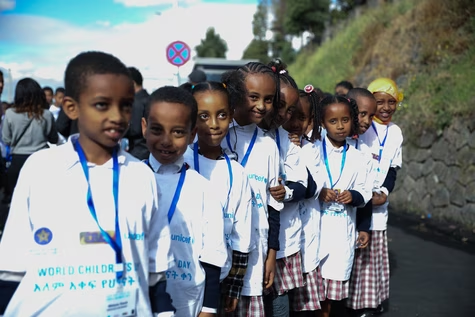
Almost four decades have passed since the adoption of the Convention, and it has helped to improve the lives of millions of children as child rights principles have been gradually incorporated into legislation. The Convention has helped to:
-
Establish interdepartmental and multidisciplinary bodies which work to address child rights.
-
Develop national agendas for children.
-
Put in place ombudspersons and commissioners for children's rights.
-
Restructure of budgets to include children's rights.
-
Address discrimination and other barriers to children's rights.
-
Create opportunities to empower children and encourage them to express their views.
Serious Issues Faced by Children
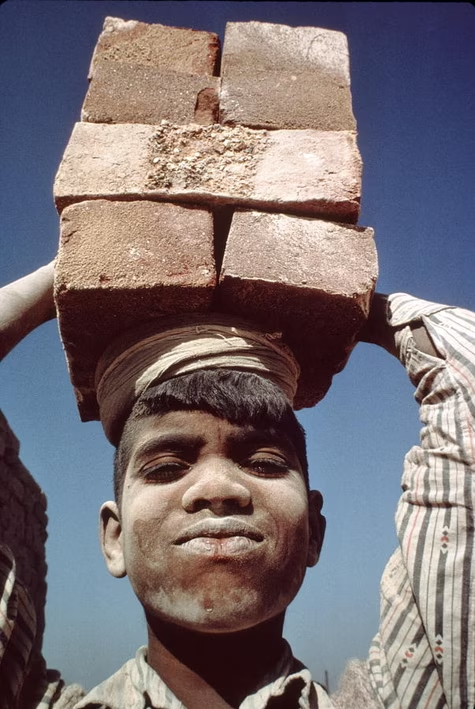
Climate change, poverty, deepening inequalities and intensifying conflict are hampering efforts to improve the lives of children. Global crises such as COVID-19, the climate crisis, economic instability, war, and environmental disasters disproportionately affect children.
An estimated 356 million children are still living in extreme poverty. These children are at the highest risk of having their rights violated, often by their parents, who will do anything just to survive.
-
Two in three children under five live in severe food poverty.
-
One hundred sixty million children are victims of child labour and slavery—three out of four work for their own families.
-
Globally, 64 million primary school-aged children are out of school.
-
One in five girls worldwide is married before the age of 18.
-
Children with disabilities are 10 times less likely to attend school and face limited access to health services.
-
Over 230 million girls and women worldwide have undergone female genital mutilation. The practice serves no benefits, only harm, and serious long-term health implications.
-
An estimated 150 million girls and 73 million boys experience sexual assault annually.
-
Between 2005 and 2022, more than 105,000 children were recruited by armies, the actual number of cases is believed to be much higher.
-
One in five children is currently living in areas affected by armed conflict.
-
At the end of 2024, the total number of children displaced by conflict and violence rose to 48.8 million.
-
Estimates suggest that there are up to 150 million street children worldwide.
Conclusion
The UNCRC is our reminder that children's rights are not optional. We have obligations and responsibilities that we all must honour and respect. The role of society, communities, and families in promoting and protecting children's rights must not be understated.
Children are human beings and, as such, have their own legal rights. They are neither the property of their parents nor helpless objects of charity.
The Convention serves as an excellent guide in national and international policy-making and implementation. With today's young people facing numerous challenges, upholding children's rights has never been more critical.
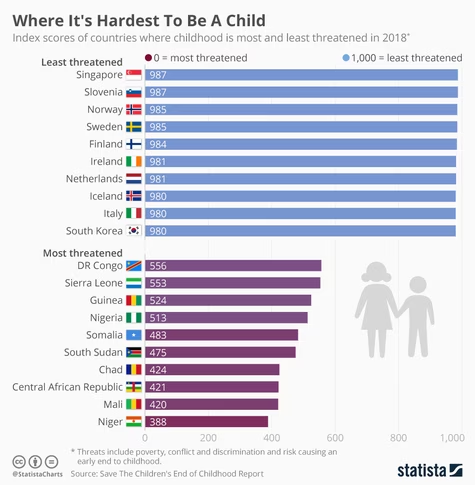
Poverty, discrimination, conflict, and marginalisation leave millions of the most disadvantaged children at risk. These children are the most vulnerable to the physical, physiological and health impacts of our planet's current polycrises.
Not only are millions of children's rights being threatened today, but they also have to worry about the world they are inheriting in the future.
As the next generation, young people hold the key to shaping our future. We must ensure they are heard, supported, and given every opportunity to reach their full potential.
Author: Rachael Mellor, 06.03.26 licensed under CC BY-SA 4.0
For further reading on UNCRC see below ⬇️
More Resources
Curated Directory & Deep-Dive Resources on Convention on the Rights of the Child
- OHCHR 510372
- UNICEF 510373
- Save the Children 510374
- UN Convention on the Rights of the Child (1989) - Wikipedia 478920
- Convention on the Rights of the Child - Frequently Asked Questions - ai USA (Archive) 478921
- U.S. ratification of the Convention on the Rights of the Child - Wikipedia 510375
- Assessing the impacts on child welfare practice of important articles of the UN convention on the rights of the child: A comparison of Australia, Canada and the USA - Science… 510383
- No US State Meets Child Rights Standards - HRW 07.09.23 510376
- UN Concluding Observations Demonstrate Scale of Failure to Meet Children’s Rights Requirements - Children's Law Centre 02.06.23 510381
- 30 years of child rights: Historic gains and undeniable achievements, but little progress for the world’s poorest children - UNICEF 17.11.19 510379
- The UNCRC: The Voice of Global Consensus on Children’s Rights? - T&F 01.05.18 510382
- Journal: UN Convention on Rights of the Child: Inherent Weaknesses - JSTOR, 2001 510380
- To Ratify or Not to Ratify the UN Convention on the Rights of the Child: Gains and Losses - Ora 510377
- Why Is the U.S. Still the Only Member of the U.N. That Has Not Ratified the Convention on the Rights of the Child? - Farzad Law 510378