
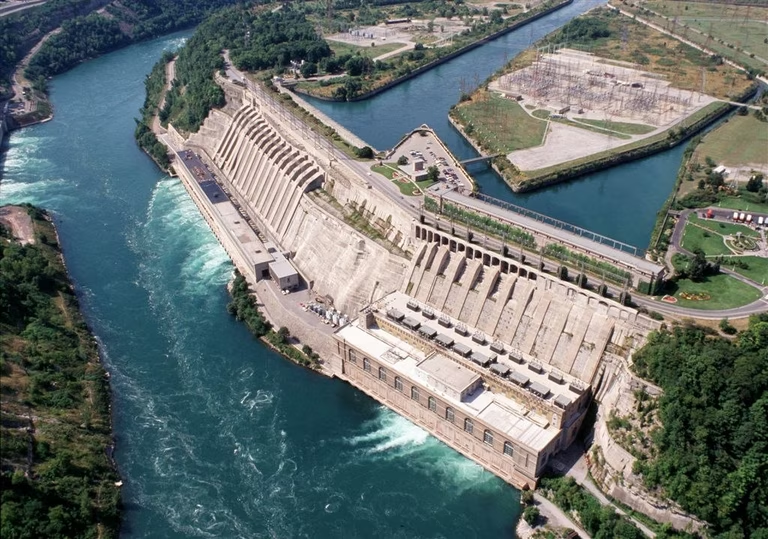
Hydroelectric Energy
Hydropower is the world's top renewable electricity source. Explore mega-dam projects, their engineering marvels, and their massive environmental and human impacts.
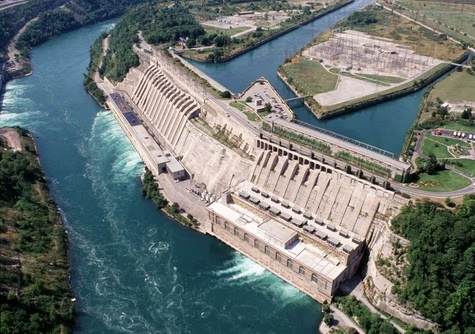
➡️ HYDROELECTRIC POWER – The World's #1 Renewable Energy Source
Hydroelectric energy uses dams and reservoirs to harness the power of water in motion. It is the most common form of renewable energy, providing 50% of global renewable capacity. It accounts for 15% of the world's total electricity generation.
Although hydropower is a green alternative to fossil fuels, there are many costs to consider, especially for large-scale dams. Their construction causes very serious and permanent environmental and social damage.
Jump straight to our guide on ➡️ Hydroelectric Energy
Explore our comprehensive resources on -
- Rivers and dams
- The Three Gorges Dam, China
- Renewable Energy Guide
- The Energy Transition
Impoundment, diversion, and pumped storage are the three main types of hydropower plants. The most common method of power generation involves the construction of dams on rivers. Water is released from the reservoir, which flows through turbines, spinning generators to produce power.
China accounts for 30% of global hydroelectric output and is home to the world's largest hydropower plant. The Three Gorges has generators capable of producing a gigantic 22.5 GW of power. Brazil, the U.S., Canada, and Russia also have huge hydropower installations.
PROS -
- Hydroelectric power is clean. Hydro plants do not produce any air pollution or greenhouse gases during operation.
- It provides a consistent and stable supply of power. Plants are capable of meeting large-scale energy demands with a predictable output that can be adjusted to meet electricity fluctuations.
- They consistently outperform intermittent renewables such as solar and wind installations, providing essential grid stability.
- Once a hydroelectric complex is constructed, the costs of operation and maintenance are relatively low. The average cost of electricity from hydropower projects in 2022 was $0.06 per kWh, making it the lowest-cost source of electricity in many markets.
- Hydroelectric facilities can operate for decades, even up to a century, as dams and hydro plants are built to be incredibly durable.
- Dams can help with water management for irrigation, water storage, and flood control purposes. They can also provide locations for recreational activities such as fishing and boating.
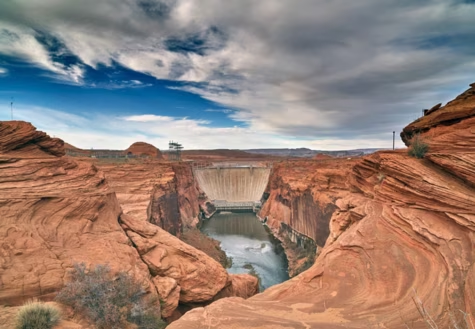
CONS -
- Building hydroelectric facilities requires substantial upfront investments. In 2022, the average cost of building hydroelectric power plants worldwide was about $2,881 per kW of installed capacity. The cost varies massively depending on size and location. Projects are known to run millions over budget and years beyond their original timelines.
- Hydroelectricity is geographically dependent. Large quantities of water and land are needed for projects to be feasible.
- Manmade reservoirs drastically alter the natural environment and landscape, often resulting in adverse environmental effects. They reduce river flows, raise water temperatures, degrade water quality, cause sediment buildup, destroy habitats, and affect aquatic life.
- They cause large-scale displacement of communities. Between 40 and 80 million people have been displaced directly as a result of dams and reservoirs. Communities that live downstream are affected even more severely as they suffer from food insecurity and flooding, which threatens their homes and livelihoods.
- Some hydro plants are major emitters of carbon and methane due to the decomposition of underwater vegetation.
- The risk of catastrophic failure, although rare, is disastrous. Dam breaching results in massive flooding and large-scale loss of life downstream.
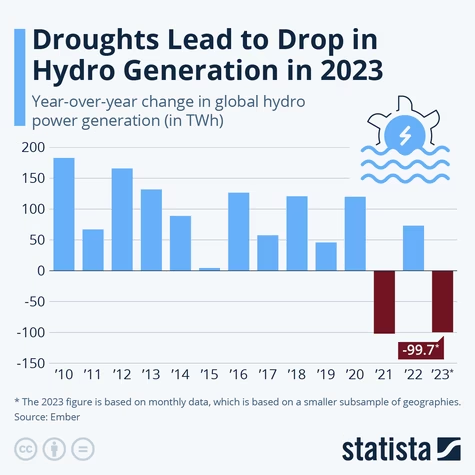
- Hydroelectricity is highly vulnerable to the effects of climate change, namely drought. Reduced water availability significantly affects power production and water supply to downstream users.
The Future of Hydropower
New turbine technology will make hydropower more flexible and powerful, but as our climate changes, so does the viability of mega-dam projects. Droughts are becoming more frequent, and in the past few decades, we have seen a significant reduction in hydropower generation.
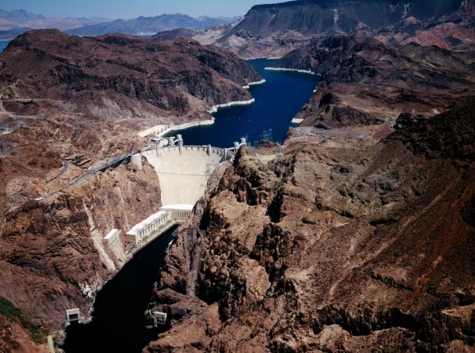
Declining water levels at the Hoover Dam in the U.S. have resulted in a 25% reduction in energy production. In Brazil, reservoir levels have fallen by more than half in the past 20 years and are currently at just under a third of their capacity.
Heavy rain and flooding also pose major problems. In 2019, severe flooding following Cyclone Idai damaged two major plants in Malawi, cutting off power in the country for several days.
Due to their enormous cost and the social and economic impacts, even countries with vast potential for hydropower generation are cautious about untapping the full potential of hydroelectricity. Careful management of these factors and consideration of future climatic conditions are crucial for the sustainable development and operation of hydroelectric power.
Author: Rachael Mellor, 12.02.25 (Updated 04.06.26) licensed under CC BY-SA 4.0
For more information on Hydroelectric Energy see below ⬇️
More Resources
Curated Directory & Deep-Dive Resources on Hydroelectric Energy
- Flexible management of hydropower plants would contribute to security of electricity supply - ENN 06.08.20 213549
- 8,700+ new hydropower plants threaten Europe’s biodiversity - Sustain Europe 23.07.20 373569
- The environmental impact of mega-dams - DW 25.06.20 373566
- Documentary: DamNation: The Problem with Hydropower - Patagonia Films 23.04.20 373554
- What are the Four Major Types of Hydropower Plants? - Scientific World 31.03.20 373558
- Australia: Snowy 2.0 is a wolf in sheeps clothing - Conversation 24.03.20 202527
- Federal report rejects removal of 4 US Northwest hydroelectric dams to protect salmon - Associated Press 29.02.20 200118
- Canada’s Not-So-Green Green Energy - FP 05.02.20 373590
- IIED calls on climate funds to help reframe hydropower - IIED 03.02.20 203731
- Not All Hydropower Is Climate-Considerate - Scientific American 13.12.19 373553
- Indigenous Activists Fight Expansion of Canadian Hydropower - Pulitzer Center 09.12.19 373592
- Reducing greenhouse gas emissions of Amazon hydropower with strategic dam planning - Nature 19.09.19 457437
- The impact of climate change on hydropower in Africa - Oxford Policy Management 09/19 457413
- Hydropower dams can harm coastal areas far downstream - Conversation 17.05.19 373562
- The Same Coin: Hydropower Dams and the Biodiversity Crisis - WWF, 2019 373567
- How Hydropower Can Help Climate Action - UN 21.11.18 373548
- Profiling the top five hydropower producing countries in the world - NS Energy 28.09.18 373543
- Land under water: Estimating hydropower’s land use impacts - Norwegian SciTech News 15.03.18 373564
- Publication: Case study series - Dam displacement - Internal Displacement 04/17 373572
- Displaced by Brazil’s giant Belo Monte hydroelectric dam, ‘river people’ reoccupy reservoir - Mongabay 13.03.17 457420
- Hydroelectric dams emit a billion tonnes of greenhouse gases a year, study finds - Guardian 14.11.16 457433
- The hydropower paradox: is this energy as clean as it seems? - Guardian 06.11.16 373551
- Hydroelectric displacement in East Malaysia 02.07.16 373571
- Hydropower Development and Involuntary Displacement: Toward a Global Solution - ResearchGate 01/16 373574
- 12 dams that changed the world - Guardian 12.01.15 457421
- Hydropower as an Alternative Energy Source in China - NBR 28.04.14 373581
- Environmental Impacts of Hydroelectric Power - UCS 05.03.13 373546
- Canada Looks to Expand Hydro Exports to US - International Rivers 3/12 85157
- Company withdraws from hydroelectric megaproject in Peru's central Amazon - WWF 29.11.11 457423
- Documentary: Patagonia Rising - IMDb, 2011 373555
- European nations agree on offshore North Sea electric grid - BBC 12/10 85158
- Hydropower: Going With the Flow - National Geographic 8/10 85159
- Summary Report of the 2010 Summit Meeting on Environmental Mitigation Technology for Hydropower - NHA 06/10 373563
- Secretary Chu Announces more than $200 Million for Solar and Water Power Technologies - 4/10 85160
- Scotlands First Minister launches Oyster - Franz Alt 11/09 85164
- Underwater Power Plant Designed - Solfpedia 10/08 85165
- Second generation tidal turbines promise cheaper power - Guardian 9/08 85166
- Report: Social Impacts and Social Risks in Hydropower Programs: Preemptive Planning and Counter-risk Measures - UN 10/04 373573
- Future of China’s Hydropower: Speeding up development and sustainable development - UN, 2004 373579