
BIG OIL
Explore the global impact of the oil industry. From major oil spills and fracking to political lobbying, windfall taxes, and corporate accountability.
➡️BIG OIL - Players, Profits & Pollution
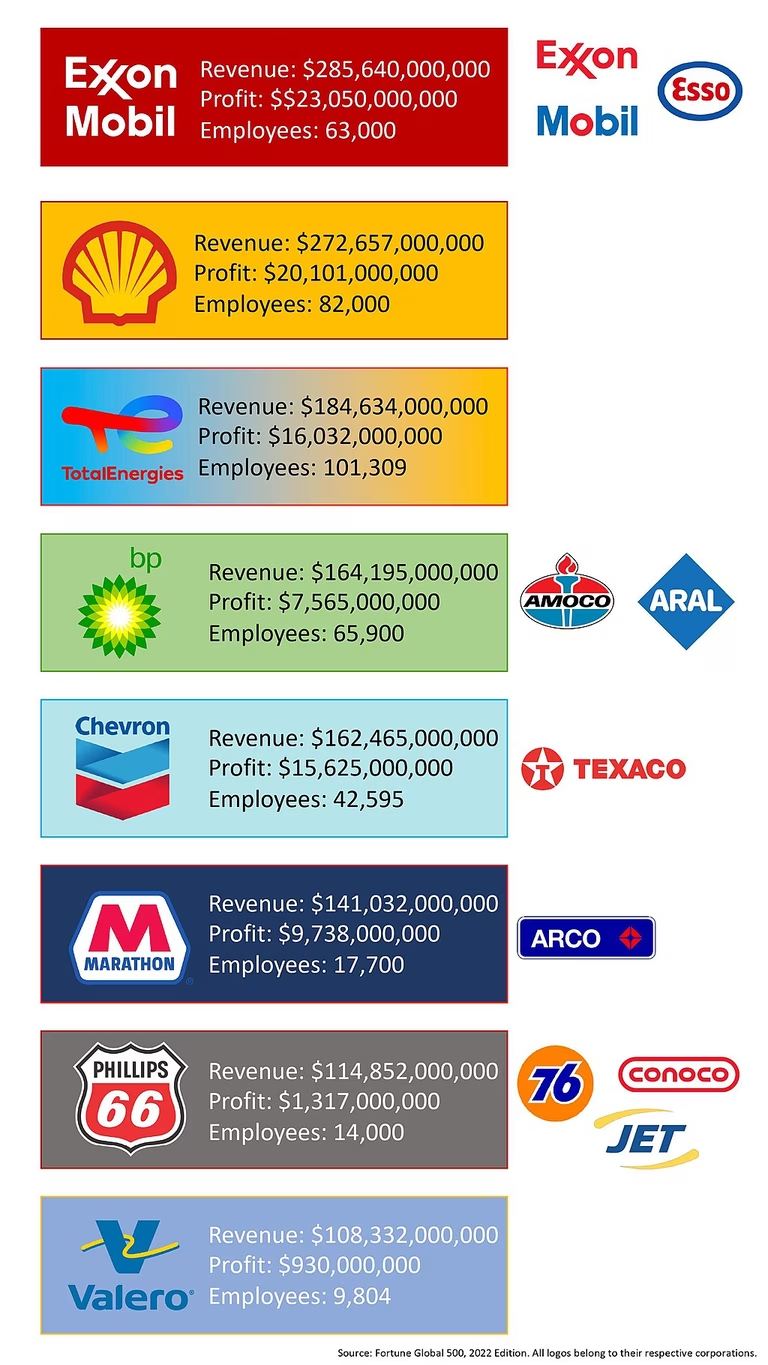
Big Oil refers to the world's largest oil and gas companies. They wield significant influence over global energy markets, economies, and environmental policies. These corporations have vast resources and extensive operations, and they play a pivotal role in the exploration, extraction, refining, and distribution of petroleum products.
While they contribute substantially to global energy supplies and economic growth, they are also responsible for devastating environmental damage, are the biggest contributors to climate change and air pollution, and pose serious risks to human health.
The industry has yet to find a balance between economic development and ecological preservation. It is facing increasing pressure from the public, NGOs, and some governments as calls for net-zero energy production become louder.
As the world increasingly focuses on reducing carbon emissions and mitigating climate change, these companies must innovate and adapt to a more sustainable energy future.
Jump straight to our resources on ➡️ Big Oil
Explore our comprehensive guides on -
- Fracking
- Major Oil Spill Disasters
- Windfall Taxes
- Oil as a Driver of Conflict
- The Fossil Fuel Industry in General
- The Energy Transition
- Fossil Fuels Divestment and Campaigns
- Conference on Transitioning Away
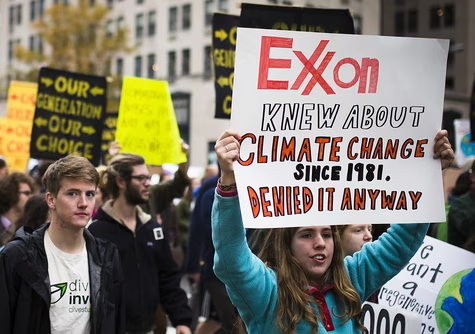
Despite scientific evidence (that Big Oil tried to cover up), which proves the devastating impacts of burning gas and oil and the dangers of global warming, Big Oil continues operations unchecked as governments line their pockets with enormous subsidies.
The warmest year on record was 2024, yet the combined profits of ExxonMobil, Chevron, Shell, and BP totalled over $100 billion. Rather than using this to grow their renewable energy portfolios, Big Oil continues to expand fossil fuel development (look no further than the Rosebank oilfield in the UK) – at the expense of the taxpayer, human health, biodiversity, and our planet.
Big Oil - Who Are The Key Players?
The five oil supermajors are enjoying record profits, show no signs of slowing production and expansion, and prefer to invest in disinformation, greenwashing campaigns, and expensive carbon capture rather than clean, renewable energy production.
SHELL -
Shell has a long history of controversy and total contempt for the planet and its people. Every year, they spend $22 million on anti-climate lobbying.
They have been aware of the dangers of climate change for more than 30 years and have continued production unabated.
Oil extraction in the Niger Delta has completely destroyed the entire area. The company has been associated with a number of murders, torture cases, and rapes in Nigeria. Shell was aware of these atrocities, yet did nothing.
Shell avoids paying taxes in the countries where it operates by registering limited companies in tax havens. As such, a large portion of Shell's revenue goes untaxed.
They have been involved in high-level bribery, avoided paying millions in damage liability, and have lined the pockets of corrupt petroleum executives.
BP OIL -
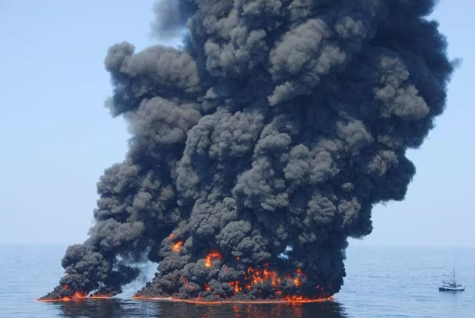
BP has one of the worst environmental records in the industry. They are responsible for the largest oil spill in history – Deepwater Horizon.
In 2010, an explosion at the offshore rig led to the release of 4.9 million barrels of crude oil into the Gulf of Mexico. Millions of marine animals and seabirds perished, and the environmental effects are still being felt today.
The company has repeatedly been linked to human rights abuses, including violence, disappearances, murder, arbitrary arrests, and prosecutions.
With their 'Beyond Petroleum' slogan, they have become one of the most notorious offenders of corporate greenwashing, committed to aggressive oil and gas exploration, with very little interest in renewable energy investment.
EXXONMOBIL -
ExxonMobil is the biggest offender of climate change denial and disinformation campaigns. They were the subject of high-profile legal proceedings over a decades-long campaign to cover up evidence of human-caused global warming.
Documents from the 1970s and 1980s revealed that they were well aware that burning fossil fuels increased atmospheric CO2. Since 1998, ExxonMobil has invested $33 million into groups that spread doubt and disinformation about climate change.
The company's 2025 net-zero targets were rejected as falling far short of the Paris Agreement goals and as woefully inadequate for managing its climate impacts. Between 2010 and 2018, ExxonMobil spent just 0.2% of its capital on renewable energy sources like wind and solar.
In a massive distraction campaign, the self-proclaimed leader of carbon capture claims that they remove 9 million tonnes of CO2 per year - less than 2% of its 2019 annual emissions.
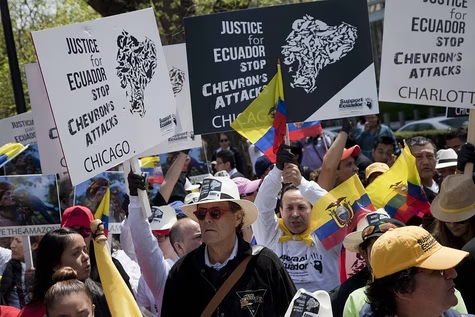
CHEVRON -
Chevron, widely recognised as a corporate criminal, have been at the centre of legal battles for decades.
In 1993, making climate justice history, communities from Ecuador won a $9.5 billion judgment against Chevron Corporation after it discharged 16 billion gallons of cancer-causing toxic waste into the Ecuadorian Amazon, affecting 30,000 Ecuadorians. The company has committed billions to fighting the judgment and has refused to pay for the clean-up, so it remains there to this day.
Currently, Chevron has no net-zero commitment and has not outlined any plans to reduce its oil and gas production.
TOTALENERGIES -
TotalEnergies was originally an initiative of the French state; it is now one of the world's leading oil companies.
They have been accused of bullying and intimidation of NGOs, campaigners, and communities in relation to the controversial EACOP project in Uganda and Tanzania. The proposed 1,440 km pipeline will have devastating environmental consequences, including the creation of 380 million tonnes of CO2 over its 25-year lifespan.
In 1999, Total was proven guilty in court for an oil spill in the Bay of Biscay - one of the worst environmental disasters in France's history. They attracted controversy for pushing to drill in the Amazon rainforest and a major gas project in Mozambique, firmly out of alignment with the Paris Agreement.
Total lobbied for including gas as an environmentally sustainable business under the EU Green Taxonomy initiative.
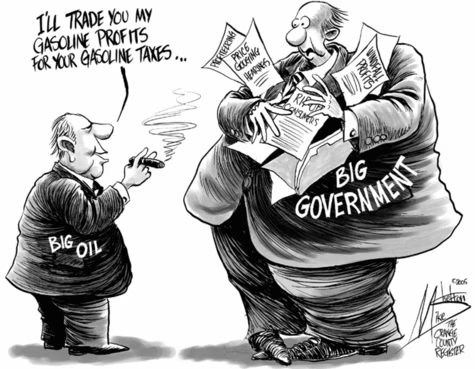
What are the Main Issues with Big Oil?
- Big Oil fuels war and conflict. The struggle over fossil fuel resources played key roles in the 1990 Gulf War, the Iran-Iraq War in the 1980s, the Sudanese Civil War, the war in Libya, the U.S. war on Iraq, and the current Middle East crisis. Almost two-thirds of EU military missions are dedicated to monitoring and securing the production and transport of oil and gas to Europe.
- Between 1970 and 2023, 3.7 million tonnes of oil were spilt into our oceans. Almost half of this was from large oil tankers. These spills have profound and long-lasting effects on the environment and marine life.
- Oil exploration and extraction are highly exploitative. Rich nations, in the hunt for greater profits, will exploit abundant oil deposits in previously unexplored, poorer nations. This often results in regional instability and has very few benefits, economic or otherwise, for local communities. Oil operations leave thousands displaced, without livelihoods, and with a legacy of environmental destruction and toxic pollutants to contend with.
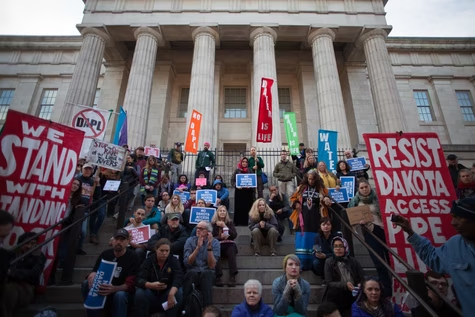
- Controversial gas and oil pipelines such as Keystone XL, Dakota Access, EACOP, Enbridge Line 3, and Trans Mountain plague the communities they pass through. Between 1986 and 2013, there were almost 8,000 pipeline incidents in the U.S. alone. These accidents resulted in hundreds of deaths, 2,300 injuries, $7 billion in damages, and an average of 76,000 barrels of hazardous products a year spilt into the natural environment. These pipelines have been the subject of large-scale protests and legal challenges.
- Fracking, or hydraulic fracturing, forces cracks to open in the ground, releasing the gas or oil trapped below. It is controversial as the practice has been found to be even more damaging than traditional extraction methods. It causes large-scale air, water, and noise pollution, and uses unregulated toxic chemicals which can leach into local water supplies.
- Gas flaring is a way to reduce gas pressure during oil drilling. It is a danger to human health and the environment, and is a huge waste of fuel. In 2021, energy companies flared 144 billion cubic metres of gas, releasing 400 million tonnes of carbon dioxide and methane into the atmosphere. Flaring is responsible for 40% of the carbon which has built up in the Arctic region - a key cause of Arctic melting.
- In the three years following the Paris Agreement, the five oil supermajors invested over $1 billion in misleading climate branding and lobbying. They have a long track record of obstructing climate action, weakening legislation, and rolling back existing environmental protections. Backed by enormous wealth and buoyed by the importance of the energy and transportation sectors, lobbies have the capacity to influence government policy, and they know it. In the UK, government officials met with oil and gas lobbyists an average of 1.4 times per working day in 2023.
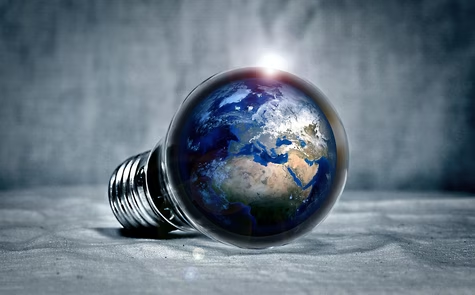
The Energy Transition
The energy transition is driven by the need to dramatically reduce carbon emissions and combat climate change, as well as to reduce reliance on finite, environmentally damaging resources – like oil.
Unsurprisingly, Big Oil is doing everything in its power to delay this shift. Oil is massively profitable, and an energy transition does not serve its short-term, greedy interests.
A rising wave of climate action, protests, and litigation has begun against Big Oil and the governments propping them up. In the hope that they are held accountable for their damages and downsize their operations, lawsuits worldwide have more than doubled since 2017, and the number continues to rise.
Used as a key tool in delivering climate justice, making sure the voiceless are heard, and forcing governments to step up, there have been a few historic breakthroughs – despite Big Oil throwing its full weight to fight them.
Notable achievements include -
- The UN Human Rights Committee recognises Australia's climate policy failures as a human rights violation.
- Brazil's Supreme Court is recognising the Paris Agreement as a human rights treaty.
- A Dutch court ordered Shell to comply with its duty towards the Paris Agreement.
- A court in France is holding the government accountable for failure to meet its carbon budget goals.
- A UK court ruling that the government failed to comply with its legal duty under the Climate Change Act.
- The Vanuatu ICJ Initiative led to an advisory opinion confirming that nations have a legal duty to combat the planetary crisis.
The global shift from fossil fuels such as coal, oil, and natural gas to renewable, low-emission energy sources is critical for protecting our planet, ensuring energy security, supporting continued economic growth, halting the unsustainable rise in temperatures, and fostering a healthier future for everyone.
We must put an end to lobbying, corruption, enormous subsidies, and greenwashing, and shift the focus to renewable energy investments, technology sharing, and global cooperation to halt the worst effects of climate change.
Author: Rachael Mellor, 24.02.25 (Updated 06.06.26) licensed under CC BY-SA 4.0
For more information on Big Oil see below ⬇️
More Resources
Curated Directory & Deep-Dive Resources on BIG OIL
- General INFO 40
- The Children vs. Big Oil 6
- Kinder Morgan TRANS MOUNTAIN Pipeline (Canada) 49
- DAKOTA Access Pipeline & STANDING ROCK Camp 288
- KEYSTONE XL Pipeline & TAR SANDS 350
- Shale Gas & OIL / FRACKING
- Gas FLARING - another scandal 47
- Major OIL SPILLS
- ExxonMobil / Esso 78
- Shell - one of the biggest corruption scandals in the history of the oil industry 45
- Shell - additional 105
- BP 78
- Total 36
- Repsol 14
- TNK-BP 21
- Enbridge Line 3 tar sands pipeline 78
- WINDFALL TAX 97
- Mountain Valley Pipeline 58
- EACOP Pipeline - East Africa 91
- Rosebank Oil Field - UK 142
- Energy Wars - how oil fuels conflict 55
- Articles on Big Oil 285
- Videos on Big Oil 29