

Safer Internet Day - February 10
Join us in promoting safer, more responsible, and positive use of digital technology. Regulation, protections, and digital literacy.

➡️ SAFER INTERNET DAY, February 10 – Smart Tech, Safe Choices: Exploring the Safe & Responsible Use of AI
This global event was created to promote a safer, more responsible, and positive use of digital technology. It began in 2004 as an initiative of the EU SafeBorders project and has since expanded to 170 countries.
We are spending more time online than ever, and the internet offers limitless opportunities to broaden our horizons, inspire creativity, and connect with people around the world. With 1 in 3 internet users being children, a huge amount of online content is unsuitable for them. This makes them especially vulnerable to the risks of an unsafe internet environment.
In the UK, 68% of young people considered their online time was harmful to their mental health. Cyber-attacks doubled in the first half of 2019 and are on an upward trend. One in five people has shared sensitive data with strangers, and one in five women has experienced online abuse.
Safer Internet Day helps raise awareness of these issues, promotes tools to reduce risks, and equips people with the skills and confidence to make safe online choices. We must ensure that children's rights are protected.
"The digital world should be a place where everyone feels safe and empowered to express themselves." - CEO of Google, Sundar Pichai
*****
Jump straight to our resources on ➡️ Safer Internet Day
Explore our comprehensive guides on -
- Our Guide to the Internet
- The Dangers of Big Tech & Silicon Valley
- Artificial Intelligence - Dangers, Regulation & Audrey Tang
- AI in Schools
- Internet Governance
- Net Neutrality in Danger
- Cybercrime
- Digital Rights
- Intellectual Property & the New Monopolists
- Global Media Giants
- Google, Amazon & Meta – Criticisms
- Social Media – Data Privacy & Manipulation
- Social Media – Addictive by Design
- The Digital Revolution
- EU AI Act
Exploring the Safe & Responsible Use of AI - 2026 Theme
Artificial Intelligence (AI) is technology that enables machines to think and learn. It operates using algorithms to process data, identify patterns, solve problems, be creative and even make decisions. AI has been one of the fastest emerging technologies of the decade. It has the potential to drive innovation, reduce costs, and improve quality of life.
In healthcare, AI supports early diagnosis and treatment planning. It can help improve safety and efficiency in transport and many other sectors. Businesses can use it to accelerate data analysis and boost productivity. It can even be used in environmental protection to help monitor ecological changes and optimise resource use.
When used safely and responsibly, AI can have a positive impact on all of our lives. The rapid advancement of AI has meant that it has developed faster than laws can even be written. It is also incredibly difficult to define, monitor, and control something intangible and constantly evolving.
The dangers of AI are unignorable. The potential for the misuse of AI technologies, such as in cyberattacks, surveillance, and weapon systems, is already a global issue. Biases in AI algorithms lead to unfair treatment and discrimination, for example, in facial recognition technology. There is also a lack of transparency in AI decision-making, raising serious ethical concerns about accountability and control.
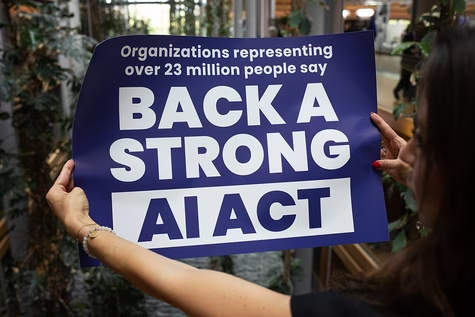
In 2024, the world's first comprehensive law on artificial intelligence was approved. The EU AI Act was a major milestone, spearheaded in Europe, that set the standard for safe, ethical, and trustworthy AI development. It has put an end to the dangerous culture of self-regulation, as companies must now prove that their AI systems pose no risk to society. A new EU AI Office and national authorities will oversee compliance with data management, EU copyright law, manipulative AI, and the clear watermarking of AI content.
It is hoped that this law will serve as a blueprint for other nations that must also step up to establish standards for data privacy, individual rights, and ethical guidelines. International cooperation is vital to create a framework that addresses the global implications of AI technology.

Why Do We Need a Safer Internet?
-
Data Theft & Breaches - Online data theft is becoming increasingly concerning. Breach rates rose by 44% in 2025's third quarter compared to the second. The average cost of a global data breach is $4.44 million.
-
Data Privacy - Due to the escalating risk of online privacy issues, 79% of countries have implemented data protection laws. The development of AI has increased concerns, and the global data privacy software market is expected to increase from $5 billion in 2026 to $45 billion by 2032.
-
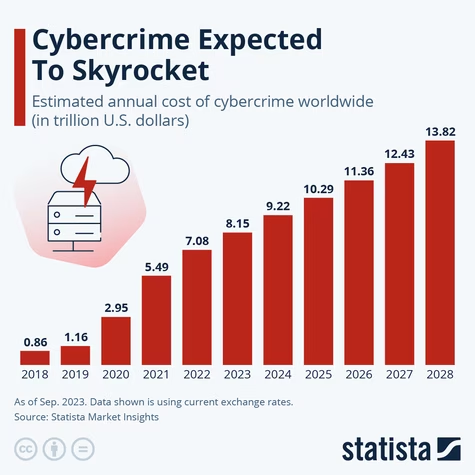
Hacking - Global cyberattacks now occur roughly every 39 to 97 seconds. In 2023, over 6 billion malware attacks were recorded. In the UK, over 1.2 million identity theft reports were made in 2024.
-
Cyberbullying - The internet has become an enabler of different forms of abuse. Over 30% of children and teenagers report experiencing online bullying, 61% of which is based on appearance. YouTube is the most common platform for bullying, followed by Snapchat, TikTok, and then Facebook.
-
Online Predators - More than 300 million children are victims of online sexual abuse and exploitation every single year. Online grooming crimes have risen by 80% over the past four years. Reports of inappropriate AI-generated images of children rose by 380% between 2023 and 2024.
-
Misinformation - In a survey across 25 countries, 86% of internet users reported being exposed to "fake news". False information spreads up to 100 times faster and reaches more people than fact-based stories. Misinformation and disinformation are of particular concern for democracy, elections, in conflict regions, and during the Covid-19 pandemic.
-
Addiction - More than 1 in 10 adolescents show signs of problematic social media behaviour, struggling to control their use and experiencing negative consequences. Approximately 36% of the global population is addicted to the internet, defined as excessive and compulsive use of digital devices such as smartphones, computers, and gaming consoles.
-
Mental Health Issues - Excessive internet use is strongly linked to higher rates of anxiety, depression, and sleep disruption. The numbers are even higher for adolescents. Social media use is now the second leading cause of psychiatric disorders.
-
Physical Health Issues - High-intensity internet use is now linked to sedentary behaviour associated with headaches, back pain, increased body weight, and difficulty sleeping.

Conclusion
With the average person spending more than 6.5 hours a day online, it is more important than ever to ensure the internet is a safe environment, especially for children.
Students must be educated on the safe use of technology, the risks, and how to protect themselves. Internet literacy will help people identify misinformation, recognise unacceptable behaviour online, and report their concerns.
Governments play a central role in advocating for and adopting regulations which safeguard internet users from serious dangers. Tech companies must also step up to ensure that their technologies are not being used maliciously. They have a duty to implement safety measures on their platforms and must be held accountable when they fail to do so.
Days like Safer Internet Day are here to promote our right to access the internet free from fear of bullying, data theft, abuse, and scams. At the same time, we must ensure that other freedoms, such as freedom of expression and the right to access information, are upheld.
"The web is a powerful tool for change, but with great power comes great responsibility. Let's work together to build a safer, more inclusive internet for everyone" - Computer scientist Tim Berners-Lee
Author: Rachael Mellor, 16.02.26 licensed under CC BY-SA 4.0
For further reading on Safer Internet Day see below ⬇️
More Resources
Curated Directory & Deep-Dive Resources on Safer Internet Day - February 10
- Safer Internet Day - EU 508505
- Safer Internet Day - EU 508506
- Safer Internet Day 2026 - UK 508507
- Safer Internet Day - British Council 508508
- Safer Internet Day: A global celebration! - EU 508510
- Better Internet for Kids - EU 508881
- Safer Internet Day 2026 - Ireland 508509
- BBC Bitesize - Online Safety and Safer Internet Day – Teaching Resources 508882
- Supporting Safer Internet Day: Tuesday 10 February 2026 - The FA 10.02.26 508883
- Safer Internet Day 2026 - Data Protection Commission 10.02.26 508886
- Helping kids and teens learn and grow online on Safer Internet Day - Google Blog 10.02.26 508885
- Tips to support responsible AI use and safe online experiences - Save the Children 10.02.26 508888
- Safer Internet Day 2026: Helping students become AI‑aware, safe, and smart online - Microsoft 10.02.26 508892
- Safer Internet Day: 5 tips for safe, effective learning - Google Blog 09.02.26 508887
- Safer Internet Day 2026 is all about AI - CBBC 09.02.26 508891
- ‘It felt hypocritical’: child internet safety campaign accused of censoring teenagers’ speeches - Guardian 08.02.26 508884
- Video: Safer Internet Day 2026 Webinar for educators and professionals in Northern Ireland (Primary) - UK Safer Internet Centre 27.01.26 508889
- Safer Internet Day 2026 – Resources, lessons and ideas - Teachwire 508890