Mental Health
Mental health is a universal human right. Discover the global efforts to strengthen mental health responses and turn the tide on mental health challenges.
➡️ MENTAL HEALTH - Mental Wellbeing, Just As Important As Physical Health
Mental health is increasingly viewed as a universal human right and a crucial foundation of human development and health. Our mental well-being influences every facet of our lives, from our relationships and work, to our ability to cope with stress and overcome challenges.
It is now understood that mental health conditions directly impact physical health. Data shows that 1 in 5 adults experiences a mental health condition annually. Increased reliance on technology has led to greater anxiety and burnout due to constant stimulation and high pressure.
Greater awareness has led to more people seeking professional help and talking openly about mental issues.
Historically, mental illnesses were largely either ignored or, in serious cases, became synonymous with madness. Treatments such as lobotomies and confinement to asylums were inhumane, dangerous, and unscientific. Today's care has thankfully shifted to psychotherapy, medication, and patient advocacy.
Since 1949, May has been widely recognised as Mental Health Awareness Month. These four weeks are dedicated to raising awareness, reducing stigma, supporting mental and emotional well-being, and starting conversations.
"It's okay to not be okay - as long as you are not giving up" - celebrated self-help author Karen Salmansohn.
Jump straight to our resources on ➡️ Mental Health
Explore our comprehensive guides on -
- World Mental Health Day - October 10
- Mental Health in Children
- Mental Health in the Elderly
- The Impact of Social Media
- Psychiatry
- Physcotherapy
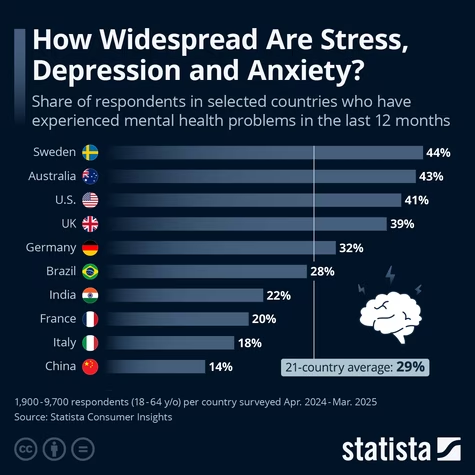
The State of Mental Health Around the World
- According to the WHO, over 1 billion people globally live with a mental health disorder. Of these, anxiety and depression are identified as the most common mental health conditions.
- Mental health conditions are the leading cause of disability worldwide.
- One in two people worldwide will develop a mental health disorder at some point in their lifetime, according to recent studies.
- Mental health disorders are more common among women than men.
- The most significant rise in mental health disorders in recent years has been observed in individuals aged 20 to 29 years.
- Over 13% of adolescents globally have a diagnosed mental disorder. It is estimated that 72 million children and teenagers currently live with anxiety.
- There is a large global treatment gap. In some parts of the world, 90% of people with depression are unable to access adequate treatment.
- People suffering from the most severe mental health conditions have an average life expectancy that is 10 to 20 years shorter than that of the general population.
- Male mental health is a serious issue due to high suicide rates, lower rates of seeking help, and high rates of substance abuse.
- Approximately one in ten men experiences anxiety or depression during their lives, but less than half of those affected receive treatment.
- Nearly 90% of individuals with mental illness in developed countries report experiencing stigma.
- From 2019 to 2021, the incidence rate of mental disorders increased by 16%.
Mental Health in the Developing World
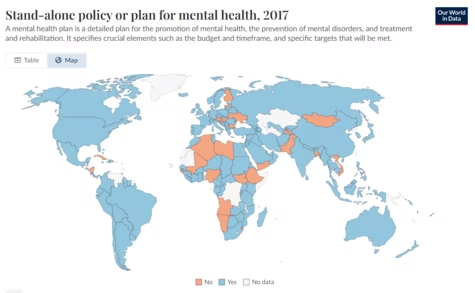
Mental health in developing countries faces a massive treatment gap. Approximately 80% of individuals with mental health conditions in low- and middle-income countries receive no care at all, highlighting the seriousness of the situation.
In these regions, due to resource constraints and other priorities, less than 0.5% of health budgets are allocated to mental health. Half of the countries surveyed have fewer than 1 psychiatrist per 100,000 people. Many have no mental health programs at all.
Lack of education, ignorance, or stigma means mental illness is not seen as a medical issue. Untreated mental illness and poverty form a cycle. Mental illness causes poverty, and poverty leads to mental illness.
The WHO Mental Health Gap Action Programme was launched in 2008 in over 100 countries. It has helped to scale up services for mental, neurological and substance use disorders in low- and middle-income countries.
It has brought mental health care out of specialised hospitals (which are few in number, unaffordable and inaccessible) into local communities. The programme has increased access to treatment for conditions like depression and epilepsy, helped to reduce stigma, and improved outcomes for those living with mental health conditions.
High rates of conflict and the increasing impacts of climate change in developing nations are multiplying risk factors for mental health disorders. These factors disproportionately affect vulnerable populations, causing immense stress, trauma, and displacement. Not to mention destroying already weak healthcare systems.
Making mental health a priority in developing countries is critical. Despite its role in achieving the Sustainable Development Goals, it has become a neglected and seriously underfunded afterthought.

Mental Health in the Modern World
Driven by high-pressure environments, societal expectations to have-it-all, urbanisation, poor work-life balance, rising expenses, increasing isolation, and social media comparison, the modern world has become characterised by rising rates of anxiety, depression, and stress.
Mental health issues are both increasing and being recognised more frequently. So while increased awareness, reduced stigma, and better tools mean more people are receiving care, there is also strong evidence of a genuine rise in the prevalence of mental illness, especially among young people.
The Covid-19 pandemic was a major catalyst that plunged people into isolation and generated fear. In its first year, the pandemic triggered a 25% global increase in anxiety and depression.
Managing our mental well-being through self-help methods, such as maintaining a balanced lifestyle, is essential. Connecting with others, limiting screentime, setting boundaries, practising mindfulness, exercising and spending time in nature have been proven to reduce stress hormones, lower blood pressure, and boost our mood.
In developed countries, seeking out professional help has never been easier due to the accessibility of telehealth, a major reduction in social stigma, a host of mental health apps, and the growth of local support networks. Crisis support and self-help resources are now readily available 24/7 for those in need.

Mental Wellbeing For A Better World
Mental health is an integral part of building a better world. A world that prioritises mental health is one that values empathy, understanding, and support.
We must continue to work towards destigmatisation and create environments where people can seek help without fear of judgement. Education systems must incorporate mental health awareness from an early age, teaching children the importance of emotional intelligence and resilience.
In the workplace, employers must provide a safe and supportive culture, promote open communication, and ensure a good work-life balance. They have a responsibility to ensure that mental health needs are met and understand that a healthy mind is as crucial as a productive employee.
A greater focus on mental health leads to stronger communities. By placing mental health at the forefront of societal priorities, we pave the way for a future where everyone has the opportunity to thrive.
“Mental health is not a destination, but a process. It’s about how you drive, not where you’re going” - Professor of Psychology Noam Shpancer.
Author: Rachael Mellor, 23.04.26 licensed under CC BY-SA 4.0
For further reading on Mental Health see below ⬇️
More Resources