
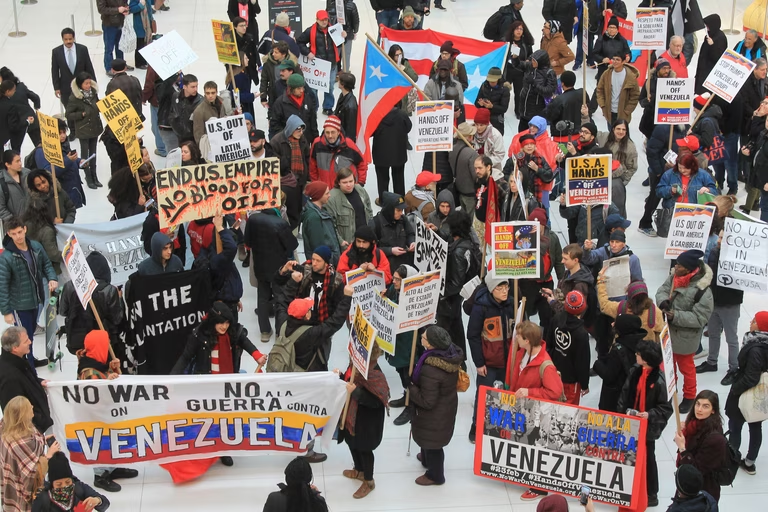
Ongoing U.S. Interference
Ongoing U.S. interference in Venezuelan politics and oil has devastated the country. The recent kidnapping of President Maduro broke international laws.
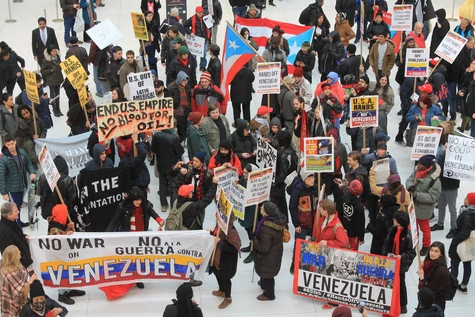
➡️ U.S. INTERFERENCE IN VENEZUELA – Naked Imperialism & A Dangerous Precedent
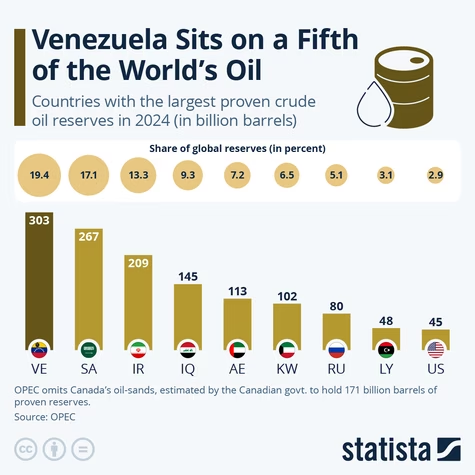
The U.S. has a long history of meddling in Latin America, and Venezuela is no exception. In the 20th century, the vast majority of U.S. interference was motivated by Venezuela's massive oil reserves.
They have backed repressive dictators, brutal regimes, and military dictatorships, as long as they were generous to transnational corporations.
Under the thin guise of narco-terrorism, the most recent military intervention, 'Operation Absolute Resolve', resulted in the kidnapping of Venezuelan president Nicolás Maduro and his wife.
Shortly after U.S. President Donald Trump proclaimed, "American dominance in the western hemisphere will never be questioned again"
Jump straight to our resources on ➡️ U.S. Interference in Venezuela
Explore our comprehensive guides on -
-
➡️ U.S. Regime Change in Venezuela
-
Political Situation in Venezuela
-
U.S. Sanctions on Venezuela
-
U.S. Imperial Wars Abroad
-
Human Rights in Venezuela
*****
Two Decades Timeline of Escalating Tensions
-
1999 - Controversial left-wing socialist Hugo Chavez became president and challenged U.S. imperialism. In 2007, he completed the nationalisation of foreign oil projects in Venezuela, a project which began in 1976. The now state-owned oil sector was named PDVSA.
-
2000s - Chavez works hard to strengthen ties with Russia, China, and Iran. He uses massive oil profits to fund social programmes, but corruption and mismanagement impede progress. Chávez expels U.S. NGOs and diplomats.
-
2002 - An attempted coup removes Chavez from office for 48 hours. The U.S. denies involvement.
-
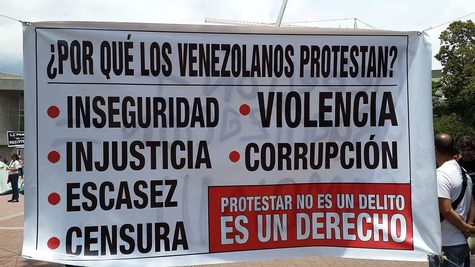
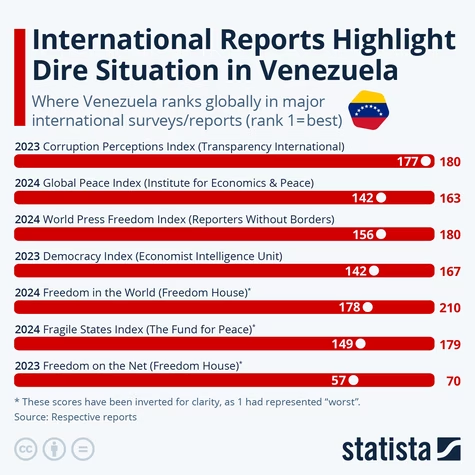
2013 - Maduro, as the longstanding deputy to Chavez, takes the presidency after winning the election by a fraction. Relations with the U.S. continue to decline, as does the country's economic situation. Corruption scandals persist, and citizens begin to protest.
-
2014 - The start of U.S. sanctions. Citing human rights abuses, visa restrictions and sanctions are placed on high-level Venezuelan officials. The sanctions push Venezuela into an economic crisis. Inflation is sky high, and massive migration begins as shortages of food and medicine take hold. A World Bank tribunal ruled that Venezuela must pay ExxonMobil $1.6 billion for ousting the company after the nationalisation of its oil industry.
-
2017 - Serious economic crisis continues. Venezuela is blocked from U.S. financial markets, and sanctions on oil imports skyrocket. Inflation reaches 345%. The country is in collapse.
-
2018 - Maduro is reelected in an election where the opposition was barred from running. The results were boycotted, and with the support of the U.S. and other allies, Juan Guaido declared himself president. Sanctions on Venezuelan oil are extended to gold, mining, and banking industries.
-
2024 - In an election criticised by the United Nations, Maduro yet again takes the helm. The U.S., along with several Latin American nations, questions the election results and calls for a recount.
Venezuela Under Trump 2.0
On the day of Donald Trump's inauguration, one of his first moves was to sign an executive order labelling criminal organisations and drug cartels as 'foreign terrorists'. One of his main areas of concern was the alleged cooperation of Maduro with drug cartels to enable drug trafficking and illegal immigration into the U.S.
In August 2025, 3 missile destroyers were positioned in the waters off Venezuela. Over the following weeks, this increased to a fleet of 6,000 sailors and marines, along with fighter jets and submarines. By September, Trump gave the go-ahead for the start of a series of attacks on alleged drug-carrying vessels. The people on these boats were suspected criminals and were killed without trial. This led to serious concerns about the legality of these strikes.
Attempts by the Senate to require the president to seek authorisation before carrying out further strikes were voted out, and the strikes continued. On October 31st, U.N. human rights chief Volker Türk called for an investigation into the strikes in light of the extrajudicial killings in 14 separate attacks.
The attacks continued, and the Senate this time voted on limiting Trump's ability to conduct an attack on Venezuelan soil without authorisation. It failed to pass. By mid-November, there were 12,000 U.S. naval troops in the region. The investigations by lawmakers continue, but in December, the U.S. seized a Venezuelan oil tanker carrying 2 million barrels of crude oil. They claimed it was part of an illicit network which supports foreign terrorist organisations.
Questions about transparency arise as the Pentagon keeps videos of the strikes under wraps, hindering investigations.
Things further escalated as Trump ordered a blockade of all sanctioned oil tankers, putting the already crippled Venezuela under further economic pressure. He claimed that they were using oil to fund illegal activities, drug trafficking, and terrorism. House Republicans yet again voted out a bill limiting Trump's power to carry out more attacks.
On December 30th, the CIA carried out a drone attack on a docking area allegedly used by drug traffickers. The following day, sanctions were imposed on four companies from Venezuela's oil industry, and the U.S. continued to block more oil tankers.
On January 1st, Maduro announced that he was willing to negotiate an agreement with the U.S. to tackle drug trafficking. He reiterated his stance that the U.S. was orchestrating a forced regime change to gain control of the country's oil reserves.
The January 2026 Attack & Capture of Maduro
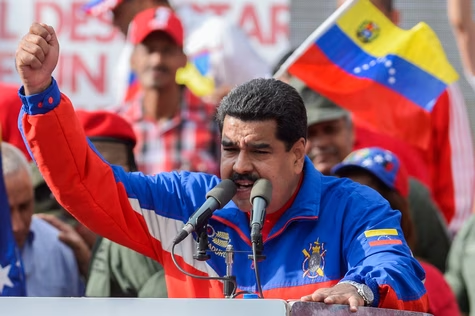
On Saturday, 3rd January, the U.S. carried out a large-scale attack on Venezuela, resulting in the kidnapping of Venezuelan leader Nicolás Maduro. This escalation has set a new precedent for authoritarian powers across the globe.
For more information, visit ➡️ U.S. regime change in Venezuela
The narrative of drug trafficking was quick to fall as Trump declared control of Venezuela's massive oil reserves.
-
This attack was not self-defence.
-
The 'use of force' against the political independence of a state is illegal.
-
The U.S. violated Venezuelan airspace, destroying civilian infrastructure.
-
President Maduro was illegally removed from Venezuela.
Warnings for the World
The global community must stand up for international law and uphold the principles of the UN Charter. Otherwise, who is next? Greenland, Colombia, Cuba, Lebanon, the Democratic Republic of Congo, Taiwan?
Historically, the U.S. has exerted its repressive and damaging control over Haiti, Cuba, Mexico, Nicaragua, Panama, the Dominican Republic, and many others. We cannot let this happen again; the citizens of Venezuela have suffered enough.
The fragmentation of the peace movement has silenced the voices of reason, calls for peace, and respect for human rights. The greedy pursuit of oil, money, power, and retribution only ever serves to exacerbate the suffering of civilians. The Iraq War, the Gulf War, the ongoing war in Sudan, and the conflict over the Niger Delta serve as reminders of the severe human and environmental cost of oil-driven conflicts.
Author: Rachael Mellor, 05.01.25 licensed under CC BY-SA 4.0
For further reading on U.S. Interference in Venezuela see below ⬇️
More Resources
Curated Directory & Deep-Dive Resources on Ongoing U.S. Interference
- Operation Southern Spear - Wikipedia 503374
- Proposed United States invasion of Venezuela - Wikipedia 503375
- United States military buildup in the Caribbean during Operation Southern Spear - Wikipedia 503376
- United States strikes on alleged drug traffickers during Operation Southern Spear - Wikipedia 503377
- State Department Pushes Human Rights Watchdog to Ignore Deadly, Illegal Boat Strike Campaign - CD 14.04.26 513678
- A Venezuela Foreign Influence Scandal for Trump’s Circle - Jacobin 11.03.26 510722
- ‘This Is Murder’: Trump Strike Kills 3 More Boaters in the Pacific - CD 21.02.26 509420
- US Attacks in Venezuela and Greenland Lay Groundwork for Billionaire Fiefdoms - Truthout 21.02.26 509457
- Venezuela releases over 100 political prisoners — NGO - DW 26.01.26 506722
- Venezuela’s acting president says she has had ‘enough’ of US orders - CNN 26.01.26 506723
- Meet Trump's Partners in Venezuela - WSJ 25.01.26 506724
- Venezuela’s interim president to visit US amid deepening oil ties - France24 22.01.26 506726
- U.S. Seizes Another Venezuelan Oil Tanker in the Caribbean - DN! 21.01.26 506725
- Trump ‘Piracy’ Continues as US Hijacks 7th Venezuela-Linked Oil Tanker - CD 20.01.26 506372
- US may've abducted Maduro, but its oil hopes in Venezuela will not be easily realised, say experts - TRT World 14.01.26 504680
- Senate Expected To Vote on Venezuela War Powers Resolution on Wednesday - AntiWar 13.01.26 504672
- US faces war crime allegation for ‘disguising’ aircraft in drug boat attack - Al Jazeera 13.01.26 504681
- Drugs and gangs exist in Venezuela, but don’t be fooled. Trump arrested Nicolás Maduro to plunder our wealth - Guardian 13.01.26 504550
- Video: What Venezuela Means for China, Russia, and Iran - The State of Play 13.01.26 504933
- Video: Why didn't Russia aid Venezuela during Maduro's ouster? - DW 13.01.26 504783
- Is the US unlocking Venezuela's oil wealth or exploiting it? - Al Jazeera 09.01.26 516371
- Watchdog Demands to Know If Trump Admin Colluded With Big Oil in Lead-Up to Venezuela Attack - CD 07.01.26 507649
- The Cost of Europe’s Weak Venezuela Response - Carnegie Endowment 06.01.26 504594
- Airstrikes, Maduro, and the U.S. Constitution - POGO 06.01.26 505268
- Video: An Emergency in Venezuela - Brennan Center for Justice 06.01.26 504595
- Meet Paul Singer, the Billionaire Trump Megadonor Set to Make a Killing on Venezuela Oil - CD 05.01.26 504576
- If You Liked Libya, Iraq, Afghanistan, and Vietnam, You’ll Love What Trump Is Offering in Venezuela - CD 05.01.26 504575
- International Law Experts Agree: Trump-Ordered Attack on Venezuela 100% Illegal - CD 05.01.26 504590
- How US intervention in Venezuela mirrors its actions in Panama in 1989 - Conversation 04.01.26 504598
- Run Venezuela? They Can’t Even Run The United States - CD 04.01.26 504572
- ‘Get the Oil Flowing’: Trump’s Own Words Make His War Aims in Venezuela Clear - CD 04.01.26 504573
- The Brazen Illegality of Trump’s Venezuela Operation - NewYorker 03.01.26 504592
- Video: U.S. Strikes Against Venezuela: Trump “Wants the Oil” as Grassroots Resist “Economic Asphyxiation” - DN! 31.12.25 502949
- Trump’s shadow war in Venezuela grows, but country’s strongman leader still clings to power - Guardian 30.12.25 502838
- Russia may gain more than lose from a US intervention in Venezuela - Al Jazeera 29.12.25 503057
- Will China come to Venezuela’s rescue? - Al Jazeera 26.12.25 503678
- Trump ‘Choosing From the War Crimes Menu’ With ‘Quarantine’ on Venezuela Oil Exports - CD 25.12.25 505379
- Trump Blockade of Venezuela, Murders on High Seas Violate International Law: UN Experts - CD 24.12.26 505380
- Trump’s claims to Venezuelan oil are part of broader ‘resource imperialism’, experts say - Guardian 24.12.25 505398
- Video: Venezuela – UN Security Council - “Threats to International Peace and Security” - Venezuela en la ONU 24.12.25 502162
- Video: U.N. Security Council Holds Meeting on Venezuela - C-Span 23.12.25 502161
- Video: Venezuela – UN Security Council - “Threats to International Peace and Security”, 23 December 2025 - Venezuela en la ONU 23.12.25 506508
- US sanctions more relatives, associates of Venezuelan President Maduro - Al Jazeera 20.12.25 506782
- When Cheering for Murder Is Disguised as Patriotism - Tim Hjersted 17.12.25 507428
- Spurring conflict: Venezuela and the US thirst for foreign oil - Al Jazeera 15.12.25 501477
- Trump’s approach to Venezuela repeats the mistakes of the past - Guardian 15.12.25 501394
- All of the deadly US strikes on alleged drug boats are murders - Guardian 10.12.25 502187
- “Murder on the High Seas”: War Crimes Prosecutor Reed Brody on Trump’s Boat Strikes - DN! 08.12.25 502172
- US attack on Venezuela risks ‘Vietnam-style’ regional conflict, warns Lula adviser - Guardian 08.12.25 503792
- Congressmen Unveil Bipartisan War Powers Resolution to Block Trump War on Venezuela - CD 03.12.25 502055
- Pope Leo Presses Trump to End Military Escalation Against Venezuela - CD 03.12.25 502060
- The Guardian view on Trump and Venezuela: a return to seeking regime change - Guardian 12.12.25 501190
- Venezuela says Trump wants its oil. But is that the case? - BBC 12.12.25 501108
- The US is already at war with Venezuela - Al Jazeera 12.12.25 501023
- White House plans oil blockade of Venezuela in drive for regime change - WSWS 12.12.25 501025
- Trump expands Venezuela sanctions as Maduro decries new ‘era of piracy’ - Guardian 12.12.25 501021
- Donald Trump’s strikes against narcoterrorists are new but the logic behind them isn’t - Conversation 11.12.25 501533
- Venezuela and US conflict: What's it all about? - DW 11.12.25 500998
- Why is Trump attacking Venezuelan boats? - Today on Focus 11.12.25 500993
- Is War Next? U.S. Seizes Venezuelan Oil Tanker as Anti-Maduro Campaign Escalates - DN! 11.12.25 501121
- Venezuela decries ‘act of piracy’ after US forces seize oil tanker off country’s coast - Guardian 11.12.25 500931
- Tanker Seized By US Off Venezuela Was Part Of Iranian Shadow Fleet - RFERL 11.12.25 500930
- What we know about The Skipper, the oil tanker seized by the U.S. near Venezuela - CBS 11.12.25 500966
- Pressure on Maduro grows after US seizes ‘dark fleet’ tanker off coast of Venezuela - Guardian 11.12.25 500995
- US lawmakers condemn seizure of Venezuelan oil tanker: ‘Trump is sleepwalking us into a war’ - Guardian 11.12.25 501022
- Video: US seizes Venezuelan oil tanker in major escalation with Maduro - euronews 11.12.25 500929
- Two U.S. F-18 Fighter Jets Enter Venezuelan Airspace for 40 Minutes - DN! 10.12.25 501110
- Trump says US seized 'very large' oil tanker near Venezuela - DW 10.11.25 500964
- Why is Trump so obsessed with Venezuela? His new security strategy provides some clues - The Conversation 10.12.25 501024
- US forces seize oil tanker near Venezuela, Caracas condemns move as 'piracy' - France24 10.12.25 500965
- Video: Advocacy groups sue Trump administration seeking release of legal memo justifying boat strikes - NBC 09.12.25 500816
- Trump administration quietly builds plans for what would happen if Maduro were ousted in Venezuela - CNN 09.12.25 500757
- US attack on Venezuela risks ‘Vietnam-style’ regional conflict, warns Lula adviser - Guardian 08.12.25 500643
- Video: Trump reverses course on releasing Sept. 2 boat strike video, says he’ll defer to Hegseth - AP News 08.12.25 500815
- All the ways the Trump administration has changed its story on the boat strikes - CNN 08.12.25 500813
- Video: Why Trump's reversal on video release of alleged drug vessel strike matters - NBC 08.12.25 500814
- Trump blames Maduro for migrants, but a war in Venezuela could create millions of refugees - CNN 07.12.25 500760
- How Venezuelan leader Nicolás Maduro defied all predictions - CNN 07.12.25 500967
- Video: Maduro’s forces face renewed scrutiny as US tensions rise: ‘A fortress built on sand’ - Fox News 07.12.25 500764
- Insomnia and anxiety stalk Venezuelans amid US military buildup - CNN 06.12.25 500762
- ‘All of Them Constitute Murder,’ Amnesty Says of Trump Boat Bombings - CD 05.12.25 500910
- Facing the Threat of Invasion Against Venezuela: Statement From the BRICS National Committee of Argentina - Pressenza 04.12.25 504237
- New WikiLeaks cable reveals US embassy strategy to destabilize Chavez government - RT 04.04.13 167646
- US Threats to Venezuela Are About Power, Not Drugs - CD 05.12.25 500913
- Opening ‘Pandora’s box’: What happens if the US attacks Venezuela? - Al Jazeera 05.12.25 500759
- ‘The homeland is the homeland’: Venezuelans brace for possible US attack - Al Jazeera 05.12.25 500763
- Trump's Venezuela boat strikes fuel war crimes allegations. Are they legal? - CBS 04.12.25 500812
- Killing of survivors sparks outrage – but entire US ‘drug boat’ war is legally shaky - Guardian 04.12.25 500811
- US strikes on Latin American 'drug boats': What do we know, and are they legal? - BBC 04.12.25 500809
- Venezuela denounces US-ordered ‘forced sale’ of oil company Citgo - Al Jazeera 03.12.25 499887
- Video: Follow-up strike on alleged drug boat: Did the US commit a war crime in the Caribbean? - DW 03.12.25 500807
- Five reasons why the US-Venezuela conflict has entered its most critical and dangerous phase - El Pais 03.12.25 500766
- “A War Crime & Murder”: David Cole on U.S. Killing of Survivors of Boat Strike in Caribbean - DN! 02.12.25 499864
- Mapping the U.S. Military Buildup Near Venezuela - CFR 02.12.25 500765
- Trump’s boat bombings: How the US has long used ‘double-tap’ strikes - Al Jazeera 02.12.25 499798
- Trump struggles with Venezuelan dilemma as Maduro digs in and storm builds at home over potential ‘war crime’ - CNN 02.12.25 500758
- Did the US commit a war crime in the Caribbean? Here’s what we know - CNN 02.12.25 500808
- “A War Crime & Murder”: David Cole on U.S. Killing of Survivors of Boat Strike in Caribbean - DN! 02.12.25 500885
- “Kill Everybody”: Could Hegseth Face War Crimes Probe for Killing Survivors of U.S. Boat Strike? - DN! 01.12.25 499869
- Did the U.S. commit a war crime in the Car NPRibbean? - NPR 01.12.25 500810