
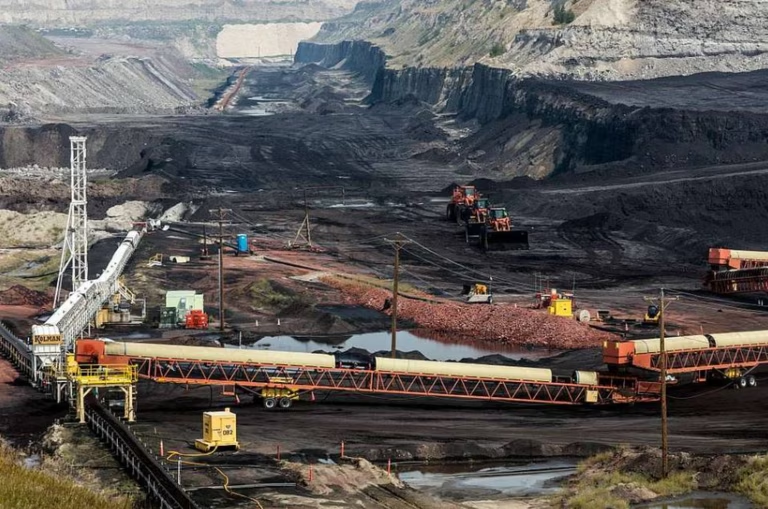
BIG COAL
Explore the true impact of coal mining, from the "clean coal" myth to global divestment. Discover how the US, China, India, and the UK are handling the phaseout.
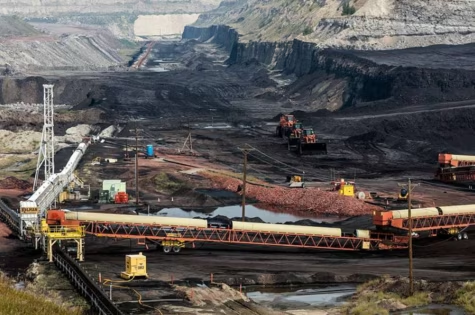
➡️ BIG COAL - Big Pollution & The Coal Phaseout
Big Coal refers to the powerful coal industry, which accounts for a third of the world's electricity generation. Favoured for its abundance and relatively low cost, it played a pivotal role in the Industrial Revolution in the late 18th century.
Coal-fired power plants burn coal to make steam, which rotates turbines to generate electricity. It is the most carbon-intensive and dirtiest fossil fuel.
The industry has historically promoted development and urbanisation and is a significant source of employment and economic growth, particularly in countries like China, India, and the United States.
Jump straight to our resources on ➡️ Big Coal
Explore our comprehensive guides on -
- The Fossil Fuel Industry
- Coal in India, China & the U.S.
- Toxic Coal Ash
- The Energy Transition
- Renewable Energy Alternatives
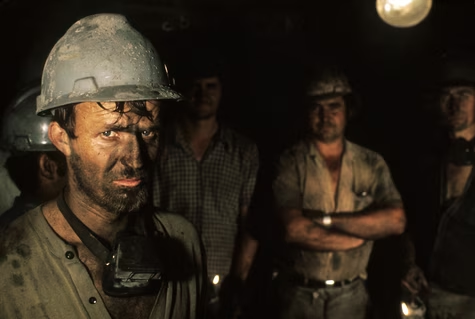
The burning of coal for electricity is highly detrimental to the environment and the communities affected by its production. It causes contamination of water supplies, destroys landscapes, has long-lasting, deadly health consequences for workers, and causes large-scale displacement.
The majority of global coal use is found in developing countries. These emerging markets have been the biggest driver of global emissions growth in recent years as they urbanise, develop their economies, and seek to keep pace with rising energy demand.
The State Of The Coal Industry
- Coal is the biggest source (40%) of greenhouse gas emissions. The world generated 16 billion tons of greenhouse gas emissions from coal in 2025 alone.
- BHP, Rio Tinto, Shenhua Energy, and Coal India are among the leading coal-producing companies.
- Coal production provides a huge boost for local employment. In the US alone, 80,000 people work directly in the coal industry and more than 1 million indirectly.
- Coal mining is one of the most dangerous jobs in the world. Thousands of workers die each year due to poor regulations and health complications caused by inhalation of toxic gases and dust.
- There are 6,900 coal mines worldwide, 5,400 of which are located in China.
- There are over 2,500 coal-fired power stations worldwide, and 1,195 are in China.
- Coal burning is one of the biggest causes of air pollution globally. Toxic chemicals and pollutants such as sulfur dioxide and nitrogen oxides are released during its combustion.
- Approximately 70% of the world's steel production relies on coal – a key factor for the industry's continued survival.
- More than 40 countries have officially agreed to phase out coal-fired power, and seven European countries have become coal-free since the Paris Agreement.
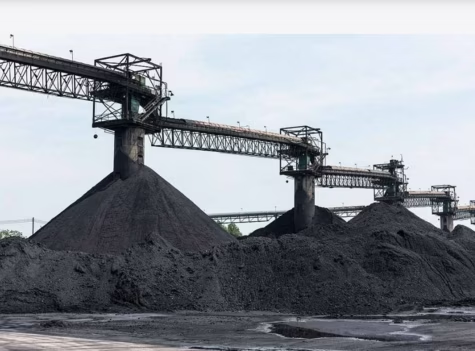
How Bad Is Coal For The Planet?
Every stage of coal energy production is polluting. From mining to when it is later burned in power stations, coal is by far the worst fuel. Mining has significant environmental impacts, mainly through habitat destruction, air pollution, and water contamination.
Mines scar landscapes, cause deforestation, lead to soil erosion, and cause subsidence. Exposed coal, when wet, produces sulphuric acid, resulting in acid mine drainage. It is well documented that coal mining severely affects the health of miners, workers, and those in surrounding communities.
Coal power plants emit more than 60 different hazardous air pollutants. Mountains of coal ash are produced during the combustion process, which contain heavy metals that leach into local rivers, streams, and groundwater.
Coal produces the most carbon dioxide per unit of energy of all the fossil fuels. Scientists have warned that there should be no new coal mines if we want to avoid a climate catastrophe.
A range of health problems are associated with coal energy production, including higher rates of childhood asthma, heart and lung disease, and cancer. The health and climate impacts of the coal industry cost taxpayers an estimated $500 billion to $1 trillion every year.
In China, hundreds of thousands of deaths have been attributed to coal over the last decade, with approximately 3.5 to 4 million premature deaths resulting from coal-related air pollution, and thousands more from direct coal mining accidents.
In the U.S., a staggering 460,000 deaths between 1999 and 2020 are attributable to air pollution from coal plants alone.
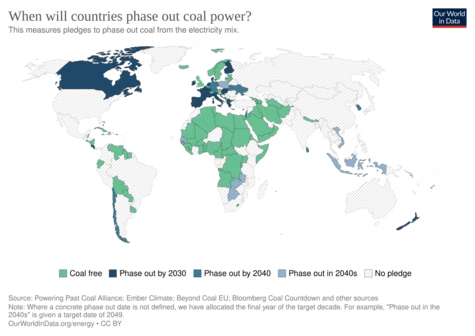
Can We Achieve A Coal Phaseout?
One of the fastest ways to stay within the 1.5°C target is to phase out coal. The IPCC has stated that global coal use in electricity generation must fall by 80% below 2010 levels by 2030, and that all OECD countries must end coal use by the same year. They report that all coal-fired power stations must be shut by 2040 at the latest.
Of the OECD countries, 27 out of 38 are committed to being coal-free by 2030. Eleven countries have already closed their last power plants, including Iceland, Switzerland, Luxembourg, Latvia, Belgium, Sweden, Austria, Portugal, Norway, Slovakia and the UK.
Almost two-thirds of OECD & EU governments are now members of the Powering Past Coal Alliance.
Coal power is already in rapid decline across most of the OECD. However, four countries still rely on coal for more than a quarter of their electricity - Poland, Australia, Czechia, and Germany. Together, Türkiye, Japan, and South Korea represent 35% of the remaining coal generation in the OECD. These countries have demonstrated the slowest progress towards a coal phaseout.
A concerning state-backed resurgence of coal in China is underway. In recent years, they have ramped up the construction of new coal-fired plants. China is responsible for 95% of all new coal power construction.
Although overall progress is heading in the right direction, significant barriers such as low cost, readily available technologies, and the growing energy demand in developing countries are preventing a faster phaseout. Coal energy is still labelled as cheap because it does not account for the long-term environmental and health impacts.
A phaseout of the coal industry must occur alongside a phase-in of renewable energy production to ensure energy security and a clean energy future. Many regions are economically dependent on coal mining and related activities, and the closure of mines and power plants will result in job losses. Governments must open up opportunities for green jobs, economic diversification, and new skills training to ensure a just transition.
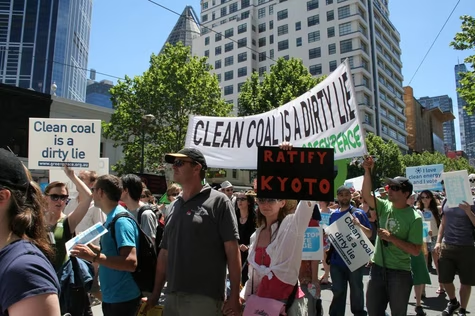
Does Clean Coal Exist?
Any claims of 'clean coal' by governments, businesses, and policymakers are a myth. Everything to do with coal - from mining to combustion to waste disposal and all the processes in between- is detrimental to public health and the environment.
Attempts to make coal energy production more environmentally friendly by refining it with chemicals have cost billions in government tax subsidies and have failed to deliver on their promises.
The American coal industry began trialling the use of refined coal to reduce nitrogen oxide (NOx) emissions. They ended up pumping out not only more NOx but also calcium bromide. This carcinogenic toxic chemical leeched into the water supply of more than a million people.
The rebranding of coal as clean is corporate greenwashing at its finest. Coal, no matter how refined, will still release enormous amounts of harmful toxins into the air.
Carbon capture advocates claim they can bring the clean coal fantasy to life by capturing and storing carbon at the point of its release from coal power plants. Not only is there simply no way to capture all the carbon dioxide released, but it also does not prevent the other issues associated with coal mining. Investments would be much more beneficial in the renewable energy sector!
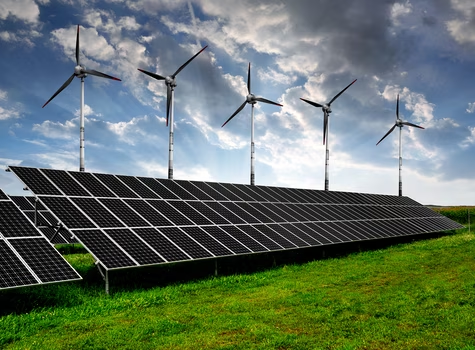
The Energy Transition
The energy transition is driven by the need to dramatically reduce carbon emissions and combat climate change, as well as to reduce reliance on finite, environmentally damaging resources – like coal.
“Phasing out coal from the electricity sector is the single most important step to get in line with the 1.5 degree goal.” - UN Secretary-General António Guterres.
The global shift from fossil fuels such as coal, oil, and natural gas to renewable, low-emission energy sources is critical for protecting our planet, ensuring energy security, supporting continued economic growth, halting the unsustainable rise in global temperatures, and fostering a healthier future for everyone.
We must put an end to lobbying, corruption, enormous subsidies, and greenwashing. Let's shift the focus to renewable energy investments, technology sharing, and global cooperation to halt the worst effects of climate change.
Author: Rachael Mellor, 25.02.25 (updated 09.06.26) licensed under CC BY-SA 4.0
For more information on Big Coal see below ⬇️
More Resources
Curated Directory & Deep-Dive Resources on BIG COAL
- General Info 35
- NGOs and social movements 53
- Divest Fossil Fuels - international initiatives
- Adani's Coalmine, Carmichael, North Queensland - Australia 41
- U.S. Coal 39
- Coal in China 44
- Coal in India 48
- German Coal 81
- Rotterdam Coal Port 16
- Polish Coal 48
- UK Coal 43
- Coal Fly Ash 46
- Clean Coal? 41
- Articles on Big Coal 108
- Films on Big Coal 12