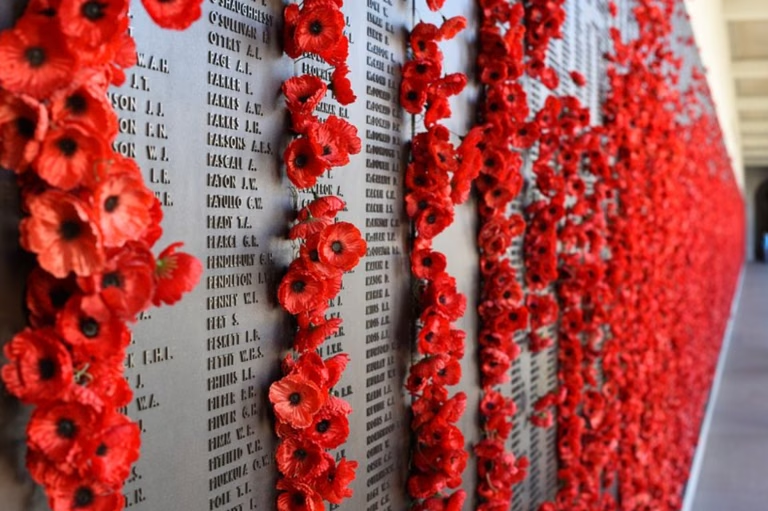
Remembrance Day - November 11
Explore UK Remembrance Day history, traditions, and the peace perspective. Learn about red poppies and the origins of the white poppy for all war victims.
REMEMBRANCE DAY, November 11 - Commemorating The End of WWI & Honouring The Sacrifices Made
Remembrance Day is an important memorial day to honour members of the armed forces who have died in the line of duty.
The day is celebrated annually in the UK and across the Commonwealth, including Canada, Australia, New Zealand, India, South Africa, Barbados, and Belize.
The tradition began at the end of the First World War in 1918 to mark the signing of the Armistice. The terms of this agreement were an immediate cessation of hostilities between the Allies of WWI and Germany on the 11th hour of the 11th day of the 11th month.
Today, commemorations have been expanded to remember all victims of war, civilian and military, and of all nationalities.
Jump straight to our resources on ➡️ Remembrance Day
“When I wear my poppy, I’m remembering everyone affected by war, across races, genders, ideologies and borders. I’m remembering the tragedy of war, all wars. I wear it in the hope that wars will be a thing of the past.” – Dave Stewart.
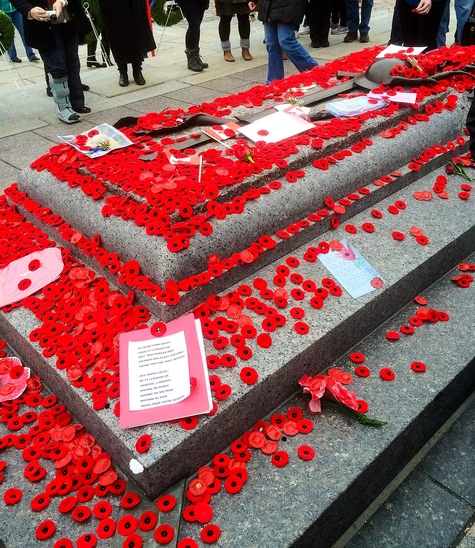
Remembrance Day Traditions
Each year, at 11:00 am on November 11th, a nationwide two-minute silence is held. It is held at war memorials, ceremonies, public places, workplaces, schools, and universities. TV and radio broadcasts are paused, and even buses pull over to honour the tradition.
This pause encourages us to reflect, remember those who have lost their lives in all conflicts, recognise the ongoing sacrifices of service personnel, show solidarity for those who have personally lost loved ones, consider the human cost of war, and give thought to the incredible value of peace.
An unmistakable symbol of Remembrance Day is the red poppy. This campaign, organised by the British Royal Legion, helps to raise important funds for veterans and their families as people donate in exchange for a small paper poppy that they can attach to their lapel to show their support.
During World War I, bright red poppies were among the first plants to bloom in the devastated battlefields in France and Belgium. These flowers inspired Canadian doctor Lieutenant Colonel John McCrae to write his famous poem "In Flanders Fields".
The poppy went on to become the international symbol of remembrance, and in 1921 the first official poppy appeal was launched. The 2025 Poppy Appeal raised an incredible £56.6 million.
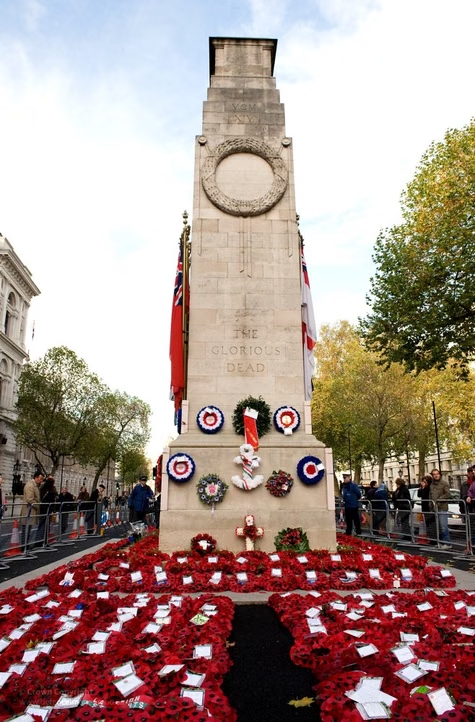
Remembrance Sunday is also an important part of the commemorative events. It is held on the second Sunday in November. The national ceremony is held in London at the Cenotaph. At the ceremony, members of the royal family lay wreaths, followed by prayers and hymns. The event concludes with a march of 10,000 ex-service personnel.
This year, the ceremony was led by King Charles III, he was joined by other royal family members, Prime Minister Andy Burnham, and nine former prime ministers.
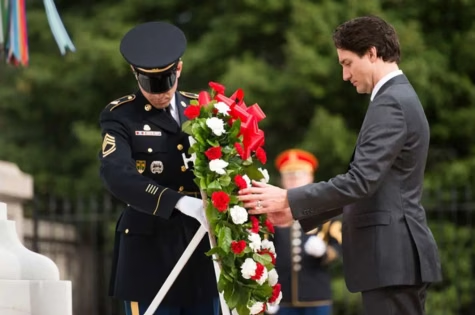
Is Remembrance Day Losing Relevance & Becoming More Controversial?
Critics argue that Remembrance Day has shifted from its original purpose of reflecting on the human cost of war and committing to an ethos of "never again" into a show of state militarism, nationalism, and war glorification.
It seems that the British government has quietly abandoned its commitment to never again as it commits to building up its military. They have recently announced a target rise to 2.6% of GDP by 2027, bringing its total defence and security budget to between £70-92 billion.
At the same time, the EU has committed to an €800 billion defence spending target by 2030, and NATO members (including the UK) have pledged to raise defence spending to 5% of GDP by 2035.
The world is currently experiencing the highest number of armed conflicts since 1945 (the end of WWII), with a 65% increase in conflict-affected areas since 2021 - more ‘time and time again’ than ‘never again.’
The UK itself is currently actively engaged in several ongoing international military campaigns, coalition operations, and security commitments, including ongoing support for Ukraine, massive complicity in Gaza, and operations in Yemen.
An article published by Stop the War Coalition discusses how Remembrance Day has become merely a militaristic celebration of war. A Guardian article titled ‘No more remembrance days’ summarises the phenomenon well:
“We are told we must remember, ‘lest we forget,' and thus avoid the same mistakes again. I wonder how many remembrance days it takes for that to come true.”
Other controversy stems from the fact that, once a year, these large public performances show leaders paying their respects, yet the everyday situation for British veterans is often a solemn affair. Challenges with mental health funding, poverty, and housing are all well documented.
Research suggests that up to 3% of people sleeping rough in England are veterans.
As direct living memory of the First and Second World Wars fades, Remembrance Day has shifted. Citizens are becoming less engaged with initiatives like the Poppy Campaign. The day is evolving from one of mourning into a broader reflection on peace, the devastating human cost of war, ongoing global conflicts, and the burden that militarisation takes on welfare.
Remembrance Day From A Peace Perspective
Whilst militarism and nationalism rise around the world, we call on Remembrance Day to refocus on building peace, countering the next arms race, promoting disarmament, ending the nuclear madness, and committing to preventing future wars.
Whilst it will always be important to honour military service members, the countless civilian lives lost, and even the thousands of service animals who unknowingly give their lives, the priority should be on nonviolent conflict resolution and avoiding this devastating loss of life in the first place.
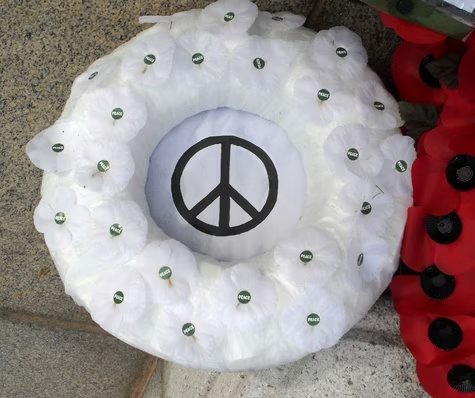
The most prominent symbol of the alternative peace-focused remembrance is the white poppy.
It was first introduced in 1933 by the Women's Co-operative Guild in the UK, today, white poppies are distributed by the Peace Pledge Union (PPU).
By wearing a white poppy, we are showing respect for all of those killed, wounded (physically and emotionally), and those made homeless, sick, and starving because of war. It also honours the war resisters and conscientious objectors who refuse to fight and are killed or imprisoned for their values.
White poppies encourage us to question the normalisation and justification of war. War can never be justified; we must resist militarisation and tackle the root causes of conflict.
The white poppy serves as a symbol of hope. It encourages us to stand up for peace and resist the war machine and its path of destruction.
We can remember those who sacrificed their lives for our freedom and also promote a world without war.
How To Choose Peace This Remembrance Day
Remembrance Day remains a vital tradition for historical awareness and honouring sacrifice. If we work to build a culture of peace, then we can recapture the true spirit of ‘never again’.
By looking forward rather than to the past, we can advocate for disarmament, diplomacy, and addressing the root causes of conflict such as poverty, injustice, corruption, nationalism, religious intolerance, military posturing, and resource competition.
As well as honouring the armed personnel, citizens, and animals who lost their lives, we should also honour the brave conscientious objectors who refuse to fight in wars on moral, ethical, or religious grounds.
They play a vital role in standing up against the cycle of violence, yet war resistors and objectors face intense social stigma, imprisonment, discrimination, persecution, and hard labour.
A peace perspective also highlights the devastating impact of armed conflict on ordinary people, children, refugees, infrastructure, and the devastating environmental toll.
Remembrance Day is our opportunity to learn from the dire consequences of war and prevent them from happening in the first place.
"Only the dead have seen the end of war." - George Santayana.
Author: Rachael Mellor, 17.11.26, licensed under CC BY-SA 4.0
More Resources
Curated Directory & Deep-Dive Resources on Remembrance Day - November 11
- British Legion 527369
- IWM - Why We Wear Poppies On Remembrance Day 527373
- IWM - The Armistice and the end of the First World War 527429
- Forces War Records - Remembrance Day 527374
- BBC iPlayer - Remembrance Day 527424
- Royal British Legion - Armistice Day 527430
- Remembrance Day - Wikipedia 527368
- Remembrance poppy - Wikipedia 527437
- Remembrance Sunday - Wikipedia 527433
- Armistice Day - Wikipedia 527432
- Armistice of 11 November 1918 - Wikipedia 527379
- YouTube - Remembrance Day 527428
- Commonwealth War Graves Commission - Remembrance Day resources and activities 527423
- Video: Remembering the fallen from Penzance to Paddington - BBC 12.11.26 527427
- Remembrance Day and the real reason young people don't want to fight for their country - Independent 11.11.26 527380
- Why Remembrance Day should also be about survivors like N Ireland veterans facing prosecution – Murdo Fraser - Scotsman 11.11.26 527439
- Video: Remembrance Day ceremony in the UK marking the end of World War I - AP News 11.11.26 527375
- Green councillor accused veteran of ‘glorifying war’ on Remembrance Sunday - Telegraph 10.11.26 527434
- Remembrance Day and Remembrance Sunday in the UK - UK Parliament 10.11.26 527372
- Video: The King leads Remembrance Sunday service at the Cenotaph - ITV 08.11.26 527435
- Video: How Remembrance Day Was Hijacked - Outpost 07.11.26 527425
- Everything you need to know about Remembrance Day - Common Wealth 04.11.26 527371
- What do Britons make of remembrance poppies? - YouGov 04.11.26 527386
- ‘Palestine Poppy’ Sparks Outrage Over Politicization of Britain’s Remembrance Day - Combat Antisemitism 19.10.26 527436
- Remembrance Poppy: Meaning for British Veterans - Regimental Store 14.02.26 527444
- Arguing about whether or not to wear a poppy misses the most crucial point - Guardian 11.11.25 527414
- ‘The cult of the poppy’: Why many Independent readers skip the Remembrance Day symbol - Independent 11.11.25 527384
- I served but I now think twice about wearing the poppy – here’s why - The Herald 08.11.25 527440
- Remembrance: What is it and why is it important? - BBC 08.11.25 527370
- 6 meaningful ways to commemorate Remembrance Day - Rest Less 07.11.25 527376
- Remembrance Day, Veterans Day, and the philosophy of forgetting - IAI 07.11.25 527381
- Building peace through teaching Remembrance Sunday - Open University 28.10.25 527422
- Interesting Remembrance Day facts to discover - Commonwealth War Graves 27.10.25 527377
- Remembrance Day has become a militaristic celebration of war - Stop the War 11.11.24 527445
- Why our young people are scared to wear the poppy - Telegraph 10.11.24 527413
- Remembrance Sunday: How can we be peacemakers? - Salvationist 09.11.24 527418
- Eight in ten say it is important to mark Remembrance Day but one in four Gen Z say it’s not very important - Ipsos 10.11.23 527382
- Remembrance Day Controversies - Heritage Park 08.11.23 527401
- Poppy day is about more than remembrance - The Spectator 11.11.22 527387
- Does commemorating war really promote peace? - Lowy Institute 22.04.22 527417
- ‘Lest we forget’: the significance and meaning of Remembrance Sunday in contemporary British society - T&F 12.11.21 527406
- How the poppy became a symbol of racism - Independent 11.11.21 527438
- The best documentaries and films about war to watch this Remembrance Day - Big Issue 11.11.21 527426
- Lest we Forget: Respectfully, We Need to Fix Our National Day of Remembrance - Swamp, 2021 527419
- How Remembrance Day has changed - British Library 11.11.20 527378
- Why I refuse to wear the red remembrance poppy - Oxford Blue 09.11.20 527411
- We’ve never needed Remembrance Day poppies more than right now - Washington Post 08.11.19 527400
- Majority of public want to remember all nationalities on Remembrance Sunday - PPU 16.10.19 527398
- Armistice - National WWI Museum and Memorial 11.11.18 527431
- Video: Remembrance Day: Why people wear poppies and others don't - BBC News 09.11.18 527415
- Remembrance Day: Why some people choose not to wear poppies - BBC 08.11.18 527399
- Lest we forget what Remembrance Day should really be about - Guardian 10.11.17 527402
- No more remembrance days – let’s consign the 20th century to history - Guardian 09.11.17 527383
- Remembrance Day: why do we fall silent and wear poppies? - The Week 07.11.17 527407
- Third of young people could REFUSE to wear a poppy this Remembrance Day ‘because it glorifies war’ - The Sun 02.11.17 527409
- Remembrance Day and the poppy: reflections from a militarized feminist - LSE 10.11.16 527385
- Fifa’s poppy ban: the latest remembrance outrage - Guardian 01.11.16 527441
- The Problem with Remembrance Day Ceremonies; or, Why I Do Not Attend These Public Rituals - Feminist Wire 11.11.15 527405
- I'm a pacifist: here's how I'll commemorate Remembrance Day - Premier Christianity 11.11.15 527416
- Five reasons people don't wear poppies - BBC News 09.11.15 527410
- Why the Cenotaph has become the dark heart of British militarism - Stop the War 09.11.15 527421
- Why Remembrance Day makes me feel excluded as a person of colour - Independent 08.11.15 527403
- How Remembrance Sunday is exploited to promote militarism, nationalism and war - Stop the War 06.11.15 527446
- Remembrance Day is not a day to glorify war - Globe and Mail 11.11.13 527420
- Why I Won't Be Wearing A Remembrance Day Poppy - Huff Post 05.11.13 527388
- Why I won’t wear a red poppy on Remembrance Day - Counterfire 30.10.13 527404
- The politics of poppy day - Open Democracy 25.01.10 527408
- Seven reasons not to wear a red poppy - Peace News 527412
- The poppy is over. Remembrance Day is not - Progress Report 527442
- Poppy Appeal is a political tool to support current wars - Forces Watch 527443