
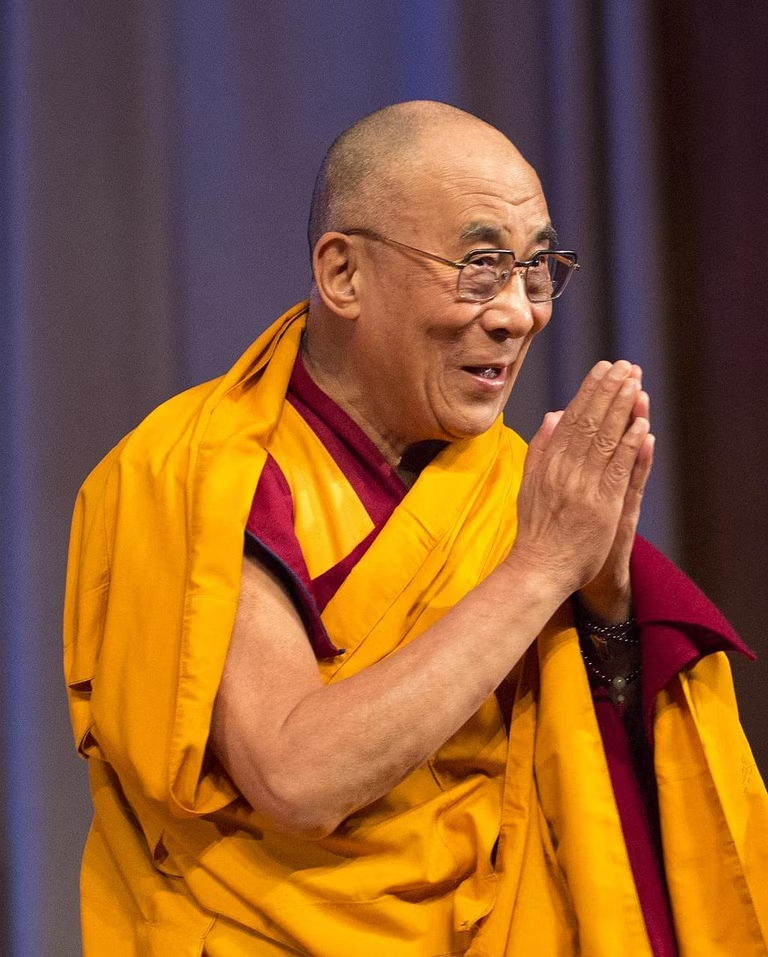
DALAI LAMA: Tenzyn Gyatso
Discover the life, core teachings, and Tibetan human rights advocacy of Tenzin Gyatso, the 14th Dalai Lama—a global symbol of peace and compassion.
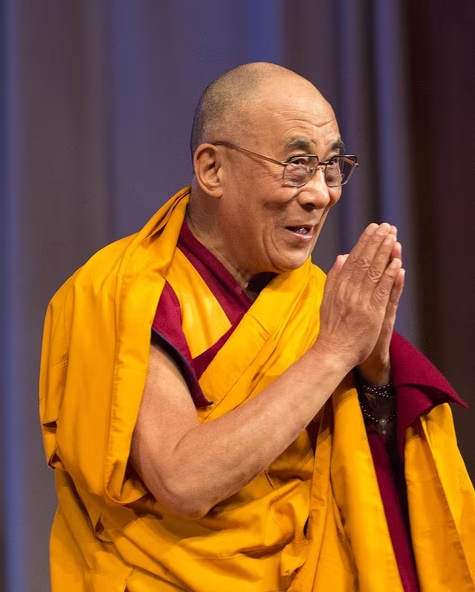
DALAI LAMA: TENZYN GYATSO – Role Model Of Peace, Tolerance & Compassion
Discover the inspiring life of Tenzin Gyatso, the 14th Dalai Lama, and learn how we can all embrace his wisdom. Our guide offers you in-depth information on his life, teachings, Nobel Peace Prize legacy, and nonviolent advocacy.
Connect with hundreds of valuable resources, initiatives, and books – for global responsibility, spiritual dialogue, and human rights.
Jump straight to our resources on ➡️ The Dalai Lama
*****
General Information
The current Dalai Lama, Tenzin Gyatso, is the 14th in line and is the highest spiritual leader and head of Tibetan Buddhism. He established the Tibetan government in exile, and is also the leader and a monk of the Gelug school, the newest school of Tibetan Buddhism.
Recognised at the age of two as the reincarnation of his predecessor, Tenzyn Gyatso began his monastic education at age six. His teachings and practices in Tibetan Buddhism are world-famous, and his advocacy for compassion, happiness, and mindfulness has inspired millions.
The Dalai Lama has used his global influence to become a symbol of peace and nonviolence, which was acknowledged with the Nobel Peace Prize in 1989.
In 1959, following the Tibetan uprising against the brutal suppression of Chinese rule, he was forced to escape and fled to India to live in exile.
In 2011, as part of his retirement, he relinquished his political roles to focus solely on his spiritual duties, making way for an elected leadership in the Central Tibetan Administration. He continues to spread his vision of a kinder, more peaceful, and more tolerant world.
Explore our comprehensive guides on his statements and important messages, his international travel, must-read articles, must-watch videos, and our toolboxes on peace, and Tibetan Buddhism.
“World peace must develop from inner peace. Peace is not just mere absence of violence. Peace is, I think, the manifestation of human compassion.” - Dalai Lama
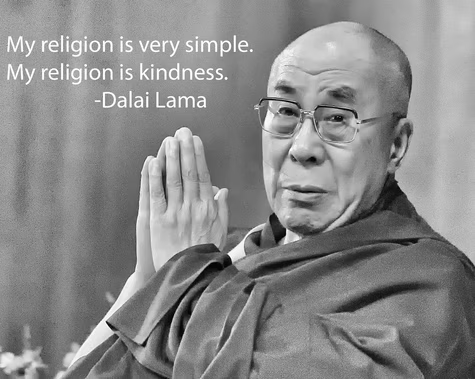
What Are The Dalai Lama’s Key Teachings?
The central message delivered by the Dali Lama is universal responsibility and a commitment to peace. He advocates for a secular approach to universal ethics, promoting values such as kindness, compassion, and respect for others, which transcend religious boundaries.
His views on nonviolence and human rights have influenced numerous global leaders and organisations, significantly shaping modern peace and ethical dialogue.
His Holiness has spread his message to more than 60 countries across 6 continents. To honour his dedication and commitment to peace, he has received over 150 awards. He has also authored and co-authored more than 110 books.
His work also extends to environmental affairs and climate change. In 2020, he issued a “Climate Appeal To The World” in a powerful manifesto urging everyone – citizens, government officials, policy managers, religious leaders – to confront climate change by working together for the benefit of all human beings.
He also initiated a historic collaboration between Buddhist monks and world-renowned scientists in his goal of finding peaceful solutions to ending conflict and the pursuit of harmony.
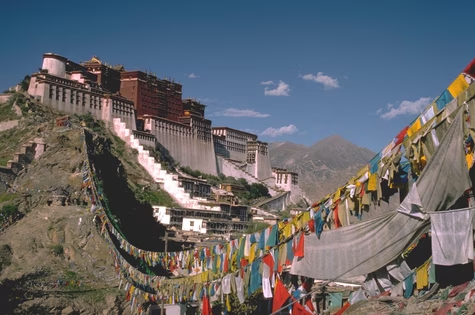
What Was The Five Point Peace Plan For Tibet?
In 1987, the Dalai Lama addressed members of the U.S. Congress, proposing a Five-Point Peace Plan for Tibet as a first step towards a peaceful solution to the deteriorating situation in Tibet. The plan was as follows:
-
Bring peace to the whole of Tibet
-
End China’s population transfer policy
-
Respect for Tibet’s fundamental human rights and democratic freedoms
-
The protection and restoration of Tibet’s natural environment, declaring a nuclear weapon and waste-free zone
-
To begin negotiations on the future status of Tibet and relations between Tibetan and Chinese peoples
China rejected the plan despite much international support. Various negotiations have taken place since then but have not been successful. Today, the situation in Tibet is increasingly tense. China’s military occupation continues, Tibetans are imprisoned for political and religious dissent, the use of torture is employed, and freedom of movement is heavily restricted. Under international law, Tibet today is an independent state under illegal occupation.
The plan, although unsuccessful, was celebrated as it was the first time such demands for a largescale demilitarised zone of peace and nonviolence have been proposed. Governments in Europe and the Americas still support this plan, especially as it would contribute to wider peace in the entire region.
What Is Next For The Dalai Lama?
On 24 September 2011, His Holiness relieved himself of his temporal authority to concentrate solely on spiritual affairs. He provided clear guidelines for the recognition of the next Dalai Lama.
He recently announced that will soon be consulting leading Lamas of Tibet’s Buddhist traditions and Tibetan citizens to assess whether a 15th Dalai Lama should take his place.
Author: Rachael Mellor 08.01.25, latest update 29.08.26, licensed under CC BY-SA 4.0
More Resources