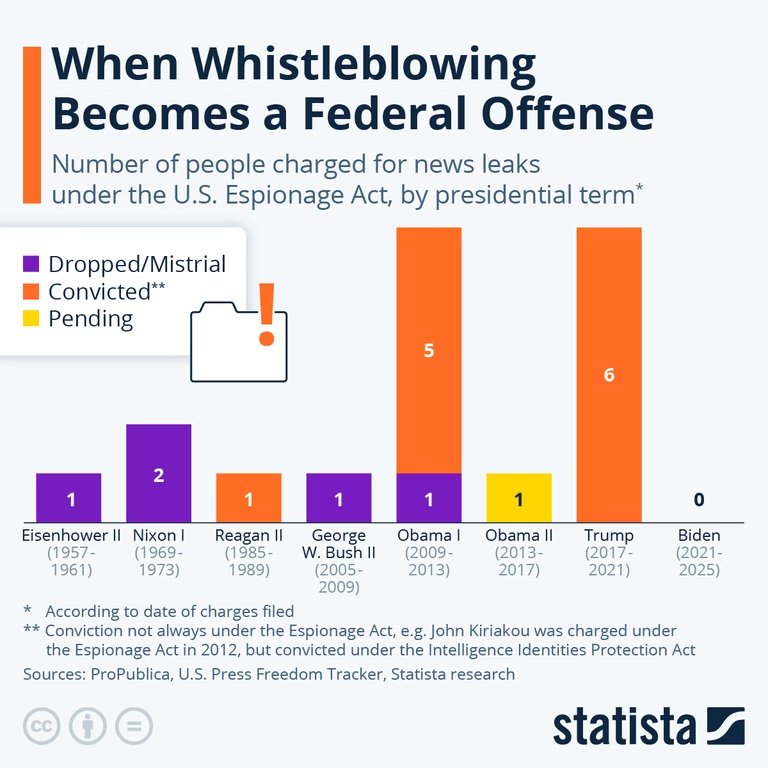
Whistleblowers
Explore our curated directory of brave whistleblowers, secure drop resources, and activist organizations fighting for transparency, truth, and press freedom.
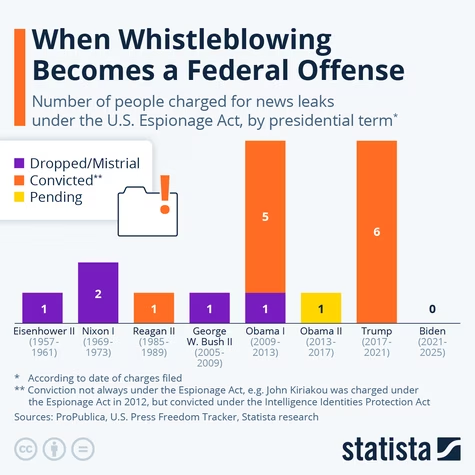
WHISTLEBLOWERS - Exposing The Truth At All Costs
Discover the courageous world of whistleblowers and learn how they need protection more than ever. Our guide offers you in-depth information on the pursuit of truth, transparency, and press freedom.
Connect with hundreds of valuable resources, initiatives, and organisations – for genuine accountability, improved legal protections, and hopes of a more democratic future.
Jump straight to our resources on ➡️ Whistleblowers
*****
General Information
Whistleblowing is when an individual reveals wrongdoing to the public, an employer, or a regulator. This could involve uncovering governmental misconduct, military cover-ups, police corruption, financial fraud, any criminal offence, dangers which affect the general public, breaches of laws and regulations, and even environmental damage.
“Government officials should not be allowed to indiscriminately classify information to cover up their own mistakes” - Daniel Ellsberg.
Blowing the whistle from the workplace to the highest levels of government carries huge risks. Those who expose the truth face severe personal, professional, financial, and mental health risks. It can lead to job loss, harassment, defamation, physical violence, imprisonment, and, at its worst, can threaten their lives.
Despite 150 countries passing whistleblower protection laws, individuals exposing corruption have become increasingly at risk.
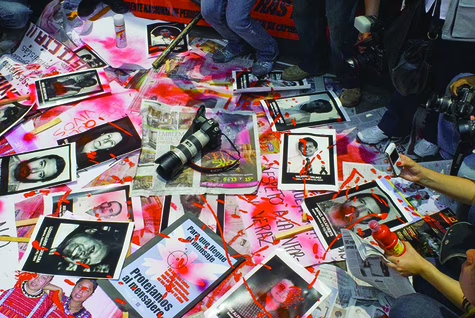
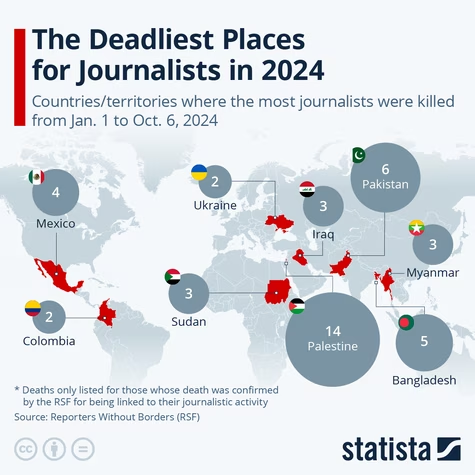
As of 2026, around the world, over 330 journalists are serving jail time. Around 37% of those imprisoned are serving harsh sentences of 5 years to life. They are charged with anti-state activities, revealing state secrets, and distributing false news. All mechanisms used to silence whistleblowers.
In 2025, the IFJ Killed list revealed that 128 journalists and media workers lost their lives for doing their jobs.
Of particular concern are environmental defenders. Global Witness revealed that roughly 150 to 200 environmental defenders are murdered globally every year for exposing the illegal activities of the mining and logging industries, as well as corporate land theft.
Despite these known risks, whistleblowers continue to expose the truth. Throughout history, their contributions have helped improve laws, democracy, human rights, and society in general.
Explore our comprehensive articles on tax dodging and tax justice, freedom of expression, individual freedoms, SecureDrop, and our selection of positive examples and heroes.
What Are Some Of The Biggest Whistleblower Leaks?
These whistleblower leaks have had sweeping impacts on global politics, finance, and national security.
The Pentagon Papers -
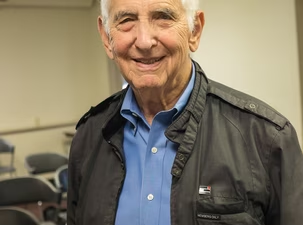
The Pentagon Papers were released by Daniel Ellsberg in 1971, revealing the full scale of government deception regarding U.S. involvement in the Vietnam War. It included covert military operations, the manipulation of events to secure public support, political engineering, and their self-serving motivations for dragging this brutal conflict on for almost 2 decades.
The papers completely shattered public trust in the government, had far-reaching implications, and ultimately helped end the war.
The leak set a new precedent in the U.S. for press freedom and whistleblower protection. Soon after, Ellsberg dedicated his life to advocating for nuclear disarmament, raising awareness of the catastrophic risks posed by nuclear policy, and promoting transparency in U.S. governance.
Wikileaks -
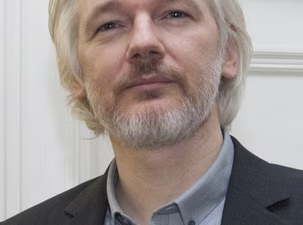
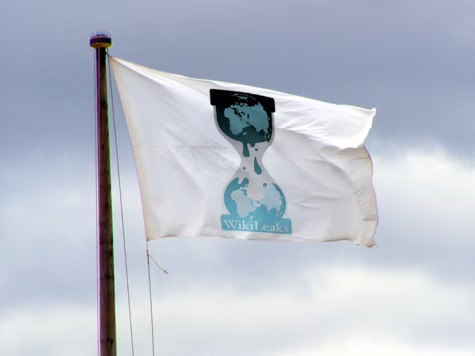
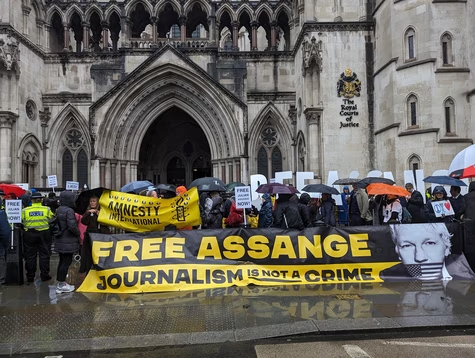
Founded by Julian Assange, Wikileaks gained international recognition in 2010 after 700,000 files were released on to site exposing US war crimes, evidence of mass surveillance, torture, war documents on civilian deaths in Iraq and Afghanistan, secret drone strikes in Yemen, election interference, and much more.
Assange was aided by ex U.S. Army intelligence analyst Chelsea Manning. It was the start of 13 years of legal battles, death threats, persecution, and smear campaigns. In 2024, after serving 5 years in prison and 7 years in hiding at the Ecuadorian Embassy in London, Assange was finally freed.
Manning served seven years in prison, longer than any whistleblower in U.S. history.
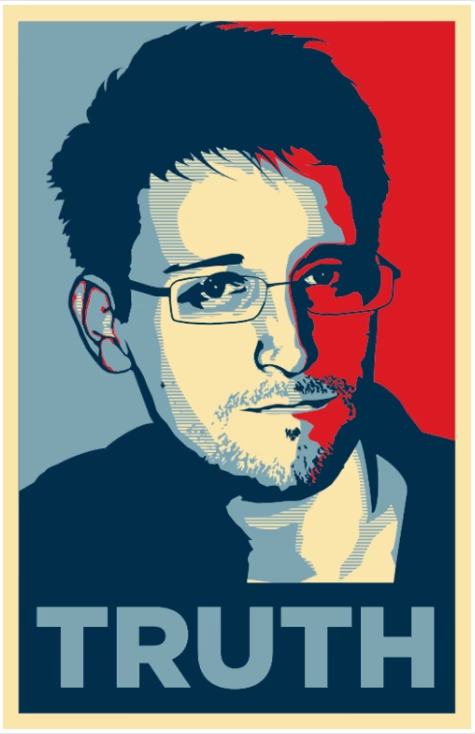
NSA Leaks -
In 2013, former intelligence contractor Edward Snowden leaked top-secret NSA documents. They revealed massive, secret global surveillance programs operated by the United States National Security Agency alongside international partners in the UK, Canada, Australia, and New Zealand.
The rapid expansion of surveillance over the past decade was driven by the fear of terrorism after the 9/11 attacks and the digital revolution that aided massive phone and internet use. This dangerous overreach of surveillance by the NSA included collecting the telephone records of millions of US customers.
Much of the world’s communications traffic passes through the US, and the NSA collected massive amounts of data through major US telecom and internet companies.
It sparked intense debates over national security at the expense of digital privacy. Eventually, it led to the USA Freedom Act and stricter data privacy regulations in Europe, such as the GDPR.
Snowden to this day remains a wanted fugitive facing felony charges in the U.S. He has spent years living in exile and has now received asylum and citizenship in Russia.
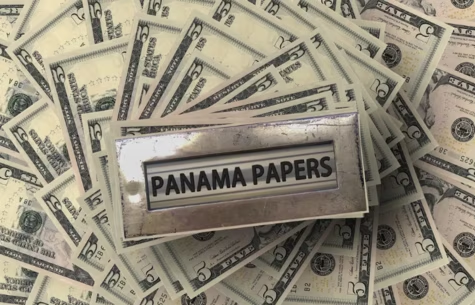
The Panama Papers -
In 2016, an anonymous source leaked 11.5 million financial and legal documents from the world's fourth-biggest offshore law firm, Mossack Fonseca. The identity of this person is still unknown.
The Panama Papers leak exposed one of the biggest global corruption scandals in history, along with the systems and mechanisms that enable it. The leak put hundreds of journalists' lives at risk.
It revealed how anonymous shell companies and offshore accounts were used to conceal wealth, hide ownership, and facilitate corruption and crime. This vast international network involved many heads of state, forced their resignation, and revealed the true scale of the problem.
This was not only standard practice, but it was done with minimal scrutiny.
Initially, governments responded with a crackdown on financial secrecy. Governments pledged to end anonymous companies, strengthen tax transparency, and tighten anti-money laundering frameworks.
Faced with intense scrutiny and legal action, Mossack Fonseca shut down in 2018. A decade later, offshore secrecy remains a major problem. Tax havens are estimated to hide $10 to $32 trillion in private financial wealth - about 10% of global GDP.
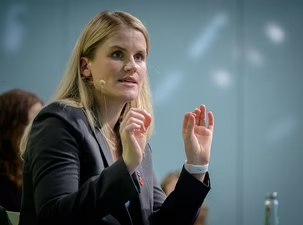
Other important leaks include the Luxembourg Leaks, the Bahamas Leaks, the Paradise Papers, the Pandora Papers, the Facebook Files, the Big Tobacco exposé, and the Watergate scandal.
Whistleblower Organisations
These national and cross-border organisations are essential for upholding our right to information, promoting transparency, ensuring that press freedom is defended. They provide legal advice, support, and a safe way to report corruption, fraud and other wrongdoings.
- Whistleblowing International Network (WIN): Supporting and connecting national and international NGOs that support whistleblowers to help them develop their capacity and expertise to protect whistleblowers.
- Transparency International: Engaged for over 10 years in a wide range of advocacy, public awareness and research activities for whistleblowers. They fight for strong whistleblower protection laws and their enforcement and implementation in both the public and private sectors. They also raise awareness about the importance of whistleblowing and provide advice on making their disclosures.
- The Signals Network (TSN): Working towards a more accountable world by empowering people to speak out about wrongdoing; protecting those who speak out; supporting investigations of wrongdoing; and helping to change policy and improve whistleblower protections.
- Government Accountability Project (GAP): U.S. organisation founded in 1977 in the wake of Daniel Ellsberg's landmark release of the Pentagon Papers. Works tirelessly to defend and advocate on behalf of those who speak up in the face of injustice.
- Protect: A confidential advice line in the UK that provides free information on how to raise concerns about workplace wrongdoing and the legal protections available to whistleblowers.
- Platform to Protect Whistleblowers in Africa (PPLAAF): Supports whistleblowers whose disclosures speak to the public interest of African citizens. They protect whistleblowers, amplify the reach and impact of their disclosures, and advocate for stronger legal protections across the continent.
Whistleblowing Is Becoming Even More Dangerous
Approximately 150 countries have whistleblower protection laws, yet the situation on the ground is very different. Weak enforcement mechanisms, lack of duty to investigate, and confusing rules mean that laws often fail.
The landmark 2021 report "Are Whistleblowing Laws Working? A Global Study of Whistleblower Protection Litigation" - published by the Government Accountability Project and the International Bar Association (IBA) revealed that severe economic, procedural, and legal barriers make successful litigation rare.
The 2019 landmark EU Whistleblower Directive was designed to set binding minimum standards across the European Union to protect people who report breaches of EU law. It established safe reporting channels, introduced strict response times, prevented retaliation, ensured confidentiality, and protected reporters with immunity.
Years later, these goals have been met only halfway. Of 20 countries surveyed, 19 failed to meet minimum standards in at least one of four key areas. Not one met best practice in all areas.
Globally, the Business and Human Rights Centre (BHRC) reports a five-year high in retaliation, tracking 790 attacks across 80 countries against corporate whistleblowers. Devastatingly, this includes 53 fatalities.
A VoiceGuard Project study on corporate malpractices highlights that over half of reported cases result in no action. Roughly 78% of whistleblowers faced immediate victimisation.
Another worrying trend is the dramatic increase in civil and criminal lawsuits against activists and corporate employees. These are designed to drain their financial resources, cause immense stress, and ultimately silence the whistleblower.
“The government should be afraid of the people, the people shouldn't be afraid of the government.” - Edward Snowden
Whistleblower Protection For A Better World
Whistleblowing, especially at the high level, enforces accountability, drives legislative change, safeguards democracy, protects public safety, and saves taxpayer money.
Historically, leaks have helped to fundamentally change public opinion on important topics, protect our digital privacy, and even end wars.
We must protect the brave individuals who risk everything to keep the public informed and expose corruption, fraud, and abuse of power.
Around the world, we must strengthen whistleblower laws and protections. We must eliminate the barriers to whistleblowing that protect those accountable. Retaliation, harassment, and imprisonment are not acceptable responses to exposing the truth.
These heroes should be honoured for their commitment to truth, not punished.
“When exposing a crime is treated as committing a crime, you are being ruled by criminals.” - Edward Snowden
Author: Rachael Mellor, 02.09.26, licensed under CC BY-SA 4.0
More Resources
Curated Directory & Deep-Dive Resources on Whistleblowers
- General Info 29
- Secure Drop 11
- Organizations 45
- Positive Examples & Heroes 1382
- WikiLeaks 2259
- Links & Resources 11
- Anonymous etc. 14
- Afrileaks 3
- Law Info 22
- OpenLeaks 14
- Selected Articles 37
- Obama's War on Whistleblowers 12