
Congo (DRC)
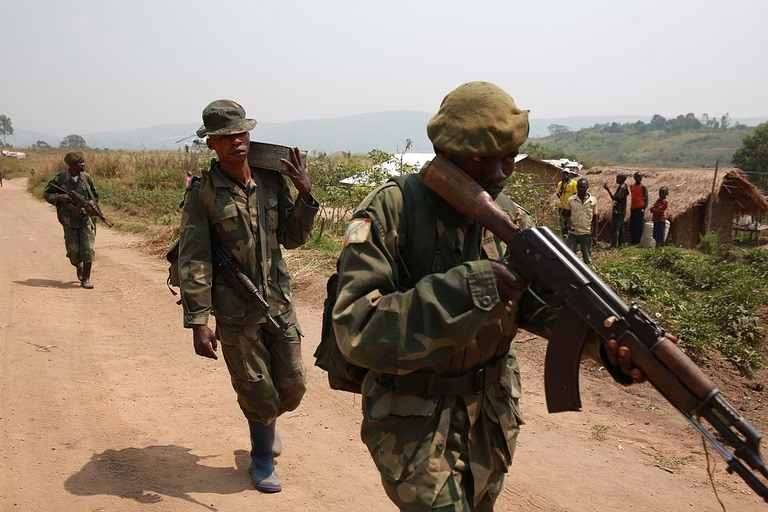
Explore our complete guide on the conflict in the DRC. Learn about the 30-year crisis, the role of conflict minerals, M23 rebels, and ongoing peace efforts.
CONFLICT IN THE DEMOCRATIC REPUBLIC OF CONGO - More than 30 years of Instability, Death & Suffering
Discover the devastating reality of the conflict in the DRC and learn how you can actively advocate for lasting peace. Our conflict guide offers you in-depth information on human rights concerns, the crisis of conflict minerals, the situstion in Kivu, violence against women, child soldiers, and key armed groups like the M23 Rebels.
Connect with hundreds of valuable resources, initiatives, and organisations – for genuine peace-building, improved humanitarian aid, and a stable future for the Congolese people.
Jump straight to our resources on conflict in the ➡️ Democratic Republic of Congo
*****
General Information
Since 1996, the conflict in the DRC has led to an estimated six million deaths. Predominantly in the eastern regions, clashes have intensified since December 2024. Fighting between armed M23 rebels and the Congolese army has displaced hundreds of thousands of people and has resulted in a dire humanitarian crisis.
At the end of January 2025, after heavy fighting, the M23 took control of Goma. As the regional hub on the East and positioned close to the Rwandan border, the new unofficial leadership of the city has cut off citizens from food, medical care, and even water.
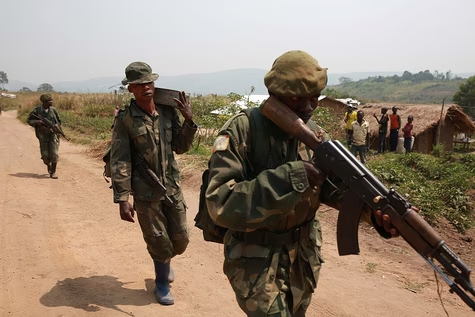
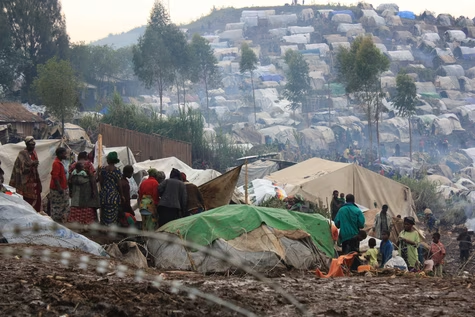
The already critical humanitarian situation is worsening as displacement camps spill over, disease spreads, sexual violence runs rampant, children are forced to fight, and living conditions become unbearable.
Explore more on the politcal situation in the DRC, the former president and war criminal Joseph Kabila, the 1994 Rwandan genocide, and the latest Ebola outbreak.
Conflict Minerals in the DRC
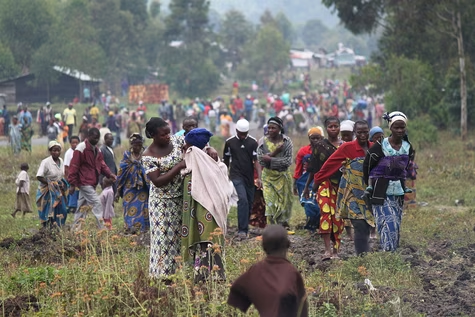
The DRC is a devastating example of how a country so rich in natural minerals and resources also grapples with widespread poverty, instability, food insecurity, and collapsing public services. Civilians are caught in the crossfire as human rights atrocities by armed groups and government forces take over daily life.
It is estimated that the country holds $24 trillion in mineral deposits, including tin, tantalum, tungsten, and gold. These are some of the most essential resources needed in modern industry and technology. Their illegal extraction and smuggling directly fund corruption and armed groups; as such, they have become known as conflict minerals.
When the second Congo war began in 1998, various factions began fighting over control of mining territories. Clashes between armed groups and militias have lasted decades. Rather than a blessing, these minerals have created nothing but death, violence, and suffering for local communities. The profits of which remain firmly in the grips of warlords, militias, and corrupt politicians. Global demand is fueling this illegal trade, making those countries involved complicit in the horrific situation for civilians.
The vast majority of the minerals are concentrated in the Eastern and Southern regions, unsurprisingly, these are the areas with the highest levels of conflict. Katanga, North and South Kivu, Ituri, Maniema, and Kasdai are especially vulnerable.
Who are the M23 Rebels?
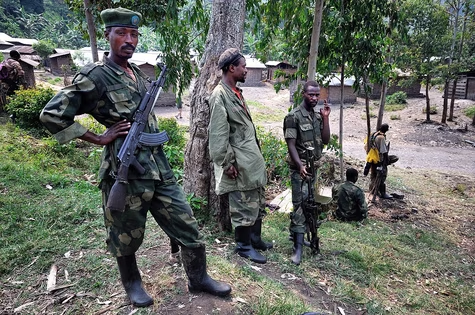
Also known as the Congolese Revolutionary Army, this rebel group of armed militants is led by ethnic Tutsis who say they are fighting to protect the rights of their minority group. They have close ties to the Tutsi in Rwanda, who also help fund their activities and have previously sent troops to support their offensives.
Their name comes from the shattered peace agreement signed on 23 March 2009 between the Congolese government and the previous Tutsi-led rebel group, the National Congress for the Defence of the People (CNDP). The vast majority of M23 rebels are former CNDP members. Both groups are responsible for grave atrocities and war crimes, using sexual violence as a weapon of war, carrying out summary executions, and forcibly recruiting child soldiers.
The M23 formed in 2012 after numerous failed attempts to restore peace and ensure adequate protection of Tutsi rights, rapidly gaining territory in the East. After losing a series of deadly battles with the Congolese army and a UN force, they were expelled from the country. A deal was brokered for many of them to be integrated into the military, on the condition that their rights be protected.
Tensions flared up again in 2021 and have continued to escalate since. The M23 claimed the army's part of the deal was not being upheld and took up arms again to fight for their rights. Their aggression may also be motivated by the vast mineral resources and desire to topple the government. Still, the ultimate goals of this ragtag group of ill-trained and ill-equipped soldiers are little understood.
In a recent escalation, M23 rebels, backed by 4,000 Rwandan troops, seized Goma and Bukavu, the two largest cities in eastern DRC, triggering mass displacement to already overflowing camps in neighbouring countries where services simply cannot cope.
Humanitarian Crisis in the DRC
-
Since the very start of the conflict, an estimated 6 million lives have been lost.
-
Over 7 million people are currently internally displaced, and more than one million have fled across borders.
-
Gender-based violence has increased by 300% in the last few years.
-
Sexual violence is being used as a deliberate tactic to control mineral-rich regions. Mass rape and sexual assault terrorise communities so that they can be easily exploited for labour and resources.
-
More than 25 million people, a quarter of the population, are experiencing acute food insecurity.
-
Destroyed infrastructure has left more than half of the population without access to adequate healthcare.
-
Despite its extraordinary mineral wealth, the DRC is among the world's poorest countries. Employment in the mines is dangerous, degrading, and pays barely enough to survive. An estimated 73% of the population lives on less than $2.15 a day.
-
It is estimated that 40,000 children work directly in the mines.
-
In the first 2 months of 2025, 400 children were forcibly recruited by various armed factions.
Peace Efforts & Hopes for Ceasefire
Over the last 3 decades, many attempts at peace have been made. They have all failed to tackle the deep-seated issues and complex roots of the conflict between the countries' 120 armed groups, and the government.
Deep mistrust, stalled commitments, exclusion of neighbouring states, fragmentation, poor implementation measures, a focus on economic incentives, overlapping initiatives, and a lack of pressure from key international players have all undermined progress.
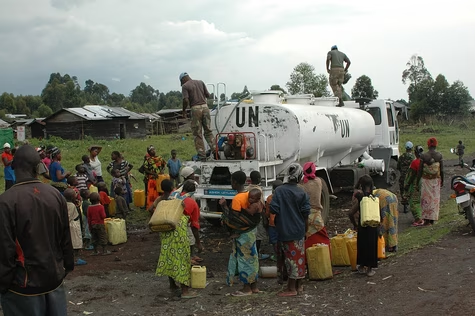
The Nairobi process, the Luanda process, the deployment of forces by the East African Community and the Southern African Development Community all failed. The United Nations has had peacekeepers in eastern DRC for over a decade, but has made very little progress.
With the conflict escalating, temporary ceasefires are not enough. Peace can only be negotiated and created by the parties themselves. The only path forward for the millions of innocent Congolese citizens is lasting sustainable peace, open dialogue, and a new prioritisation of human rights.
In March 2025, renewed negotiations in Doha involving the presidents of Congo and Rwanda offered new hope. On November 15, the M23 Rebels and the government of the DRC agreed to a new peace framework to establish greater stability and end violence in the East of the country. The framework covers the withdrawal of troops from certain territories, the disbanding of rebel militia, the safe return of displaced people, unhindered humanitarian access, and prisoner exchanges.
To finalise the agreement, U.S. President Donald Trump is set to host both parties later this week to formally adopt the deal.
Stay tuned for updates.
Author: Rachael Mellor, 02.12.25, latest update 14.07.26, licensed under CC BY-SA 4.0
For further reading on Conflict in the DRC see below ⬇️
More Resources
Curated Directory & Deep-Dive Resources on Congo (DRC)
- Background 24
- War Criminals 61
- M23 Rebels 201
- Kivu Conflict 61
- Child Soldiers 21
- Articles - DRC Conflict 145
- Violence Against Women 42
- Joseph Kabila 44
- Conflict Minerals 55
- Videos - DRC Conflict 20