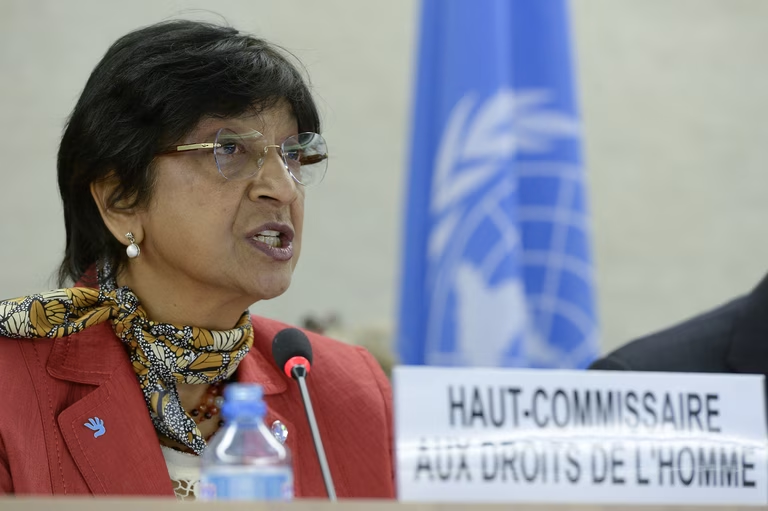
Nobel Prize for Peace 2026 - Navi Pillay (South Africa)
Discover insights on Navi Pillay, South Africa's prominent human rights champion, and updates regarding the 2026 Nobel Peace Prize.
Navi Pillay - Nobel Peace Prize Winner 2026
Navanethem "Navi" Pillay was awarded the 2026 Nobel Peace Prize on October 9, 2026, for her lifelong efforts to advance international law, international criminal justice, and human rights.
Key Highlights of Her Career and Recognition
- International Law & Accountability: The Norwegian Nobel Committee highlighted her work guarding the global rule of law and international criminal justice during a time when multilateral institutions face intense geopolitical pressure.
- Anti-Apartheid Roots: Born in Durban, South Africa, in 1941, Pillay overcame systemic discrimination to become the first Black woman to establish a law practice in Natal Province (1967) and later the first Black woman appointed to South Africa's High Court (1995).
- Precedent-Setting Jurist:
- As President of the International Criminal Tribunal for Rwanda (ICTR), she oversaw the landmark Akayesu ruling, which established that sexual violence and rape can constitute acts of genocide under international law.
- She served as a judge at the International Criminal Court (ICC) and currently serves as a judge ad hoc at the International Court of Justice (ICJ).
- UN High Commissioner for Human Rights: Pillay led the UN’s high commission for human rights from 2008 to 2014, advocating globally for vulnerable populations, anti-discrimination, and women's rights.
- UN Commission of Inquiry on Gaza & Israel: She chaired the UN Independent International Commission of Inquiry investigating violations in the Occupied Palestinian Territory and Israel.
Pillay received the announcement while attending a legal conference in Courtroom 600 of the Nuremberg Palace of Justice in Germany—the historic site of the Nuremberg trials after World War II—where she emphasized that world leaders have an obligatory legal duty to uphold international human rights and refrain from war.
_______________________________________________________________
How did Donald Trump react?
Donald Trump reacted with sharp criticism, voicing strong dissatisfaction both at a campaign rally in Syracuse, New York, and on social media.
Key highlights of his response include:
- Dismissed the Winner: He referred to Navi Pillay as a "mystery person" and a "liberal person who works at the United Nations, who nobody has ever heard of", alleging on social media that she "hates Israel".
- Attacked the Award's Integrity: He declared that the Nobel Peace Prize was "forever discredited" and called the decision an "indelible stain on Norway," suggesting the prize is handed out by "radical ideologues".
- Claimed He Deserved It: He argued that the United States—and he as president—should have received the prize for his diplomatic efforts and foreign policy achievements, claiming his record on peace was unparalleled.
- Criticized Norway: He accused Norway of "ripping off our country" and warned, "We will not forget, Norway".
*****
And the International Criminal Court?
The International Criminal Court (ICC) reacted with strong praise for Navi Pillay alongside grave concern over a escalating clash with the United States government, which unfolded on the exact same day.
Key Aspects of the ICC's Response
- Warm Praise & Celebration: ICC President Tomoko Akane hailed the Nobel Committee's decision as "an important recognition of the vital role that international justice plays as a cornerstone of lasting peace," noting that honoring Pillay—a former ICC judge herself—was particularly significant during a period of mounting threats to international institutions.
- Defiance Against Direct US Sanctions: Just hours after Pillay's win was announced, the U.S. government imposed broad sanctions targeting the ICC. ICC Deputy Prosecutor Nazhat Shameem Khan condemned the sanctions, calling them "an attempt to obstruct the course of justice and to prevent the court from doing what it was created to do," while emphasizing that the court "will not be deterred" and will continue its investigations and prosecutions.
- Warning to the World: In an official statement responding to the political fallout, the tribunal called the pushback an "assault on the rule of law" and warned that "history will judge this moment," adding that the court's ultimate survival relies on the member states that created it.
Draft: Google Gemini, Date: 11.10.26
Work in progress. Suggestions, photo and expert input welcome!
____________________________________________________________
Afterthought by Jan Oberg
"Navi Pillay is an admirable and worthy laureate. But her selection should not prevent a broader discussion (TFF Substack).
Why are the world’s foremost advocates of disarmament, reconciliation, mediation, violence prevention, forgiveness, nonviolence, alternative defence, so rarely chosen? Most other prizes go to scholars. Why have peace scholars gone unawarded for decades?
Why does the Nobel Peace Prize so often reward causes adjacent to peace rather than peace itself? Why does it have to state every year that, with its own invented broader, modernised and circumventing interpretation of Nobel’s will, this or that candidate - de facto way outside his words and their spirit - is what the committee believes Nobel meant?
With a few exceptions, the Nobel Peace Prize has become a series of political reinterpretations of Nobel’s intention, shaped to fit Western politics, or at least not challenge it.
The question is not whether recent laureates deserve recognition. The question is why the Nobel Peace Prize still primarily rewards what Alfred Nobel clearly did not have in mind."
Tip: See also our guides on The Real Nobel Peace Prize
More Resources
Curated Directory & Deep-Dive Resources on Nobel Prize for Peace 2026 - Navi Pillay (South Africa)
- The Nobel Prize - Navi Pillay 525084
- Equality Now 525086
- Equality Now - Founders 525087
- OHCHR - Navi Pillay 525101
- Guardian 525099
- Navi Pillay - Wikipedia 525080
- International Criminal Tribunal for Rwanda - Wikipedia 525112
- South African History Online - Navanethem (Navi) Pillay 525088
- Why Is the Nobel Peace Prize So Rarely Awarded for Peace? - Jan Oberg, TFF 10.10.26 (must read) 524507
- Nobel Peace Laureate Navi Pillay on ICC, Gaza, Rape as War Crime, Her South African Roots & Mandela - DN! 20.10.26 525292
- Navi Pillay Punctured Trump’s Overblown Ego in Six Words - CD 14.10.26 525434
- Navi Pillay Wins Nobel Peace Prize for a Lifetime of Fighting for Human Rights - Ms 13.10.26 525128
- The Values We Refuse to Abandon: What Navi Pillay’s Nobel Peace Prize Means for Our World - Heinrich-Böll-Stiftung e.V. 13.10.26 524729
- Navi Pillay’s Undeserved Nobel Peace Prize - Foundation for Defense of Democracies 13.10.26 524732
- Navi Pillay’s Nobel Peace Prize and a victory for the cause - Justice in Conflict 12.10.26 524730
- Navi Pillay’s Nobel Peace Prize Is a Vote of Confidence in a Global Legal Order under Fire - Global Issues 12.10.26 524731
- Navi Pillay: A Nobel Prize for human rights and against the atrocities of war - Gariwo Foundation 12.10.26 524733
- Navi Pillay’s Nobel peace prize is a vote of confidence in a global legal order under fire - The Conversation 10.10.26 524457
- 'Stain on the country': Trump criticises Norway over Nobel Peace Prize - BBC 10.10.26 525156
- An International Career Forged by the Struggles of Apartheid - NY Times 10.10.26 525124
- International Criminal Court President Tomoko Akane said that US sanctions on the institution attack international law and warned that "we'll be judged by history for the cho… 524445
- Nobel peace laureate Pillay calls US sanctions on ICC 'unacceptable' - France24 10.10.26 525083
- Navi Pillay’s Nobel peace prize is a vote of confidence in a global legal order under fire - Conversation 10.10.26 525089
- The International Criminal Court Is Under Attack - CommonDreams 10.10.26 524446
- ‘No crime, however grave, justifies genocide’: What Nobel winner Navi Pillay wrote about Gaza - Telegraph 10.10.26 525137
- ‘Why Would You Need Courage to Speak the Truth?’: Navi Pillay, Who Led UN Report on Gaza Genocide, Wins Nobel Peace Prize - CD 09.10.26 525178
- After Former ICC Judge Wins Nobel Peace Prize, US Hits Court With New Sanctions - CD 09.10.26 525176
- Peace prize winner Navi Pillay has served as a judge across multiple international courts - Washington Post 09.10.26 525090
- Navi Pillay | Enabler of justice - The Hindu 09.10.26 525144
- Video: Nobel peace prize winner Navi Pillay jokes about sharing award with Donald Trump - Guardian 09.10.26 524708
- Nobel Peace Prize Turns Toward Peace in 2026 - Pressenza 09.10.26 524690
- Lawyer Who Found Israel Is Committing Genocide Wins Nobel Peace Prize - Novara Media 09.10.26 524686
- Nobel Peace Prize Turns Toward Peace in 2026 - WBY 09.10.26 525157
- Who is Navi Pillay, winner of the 2026 Nobel Peace Prize? - Al Jazeera 09.10.26 524649
- Israel a rare dissenting voice as praise pours in for Nobel Peace Prize winner Navi Pillay - France24 09.10.26 525151
- Video: Navi Pillay, South African Jurist, Wins Nobel Peace Prize in “Stinging Rebuke to Donald Trump” - DN! 0910.26 524450
- Video: Antonio Guterres congratulates Navi Pillay - LinkedIn 09.10.26 524443
- Israel Denounces the Decision to Award the Nobel Peace Prize to Navi Pillay - NY Times 09.10.26 525136
- ‘Why Would You Need Courage to Speak the Truth?’: Navi Pillay, Who Led UN Report on Gaza Genocide, Wins Nobel Peace Prize - CD 09.10.26 524447
- Video: Navi Pillay in a phone conversation with the Secretary of the Norwegian Nobel Committee - LinkedIn 09.10.26 524444
- 2026 Nobel Peace Prize awarded to Navi Pillay - Al Jazeera 09.10.26 524454
- ICJ judge Navi Pillay wins Nobel peace prize for promoting international law - Guardian 09.10.26 524455
- Nobel Peace Prize honours Navi Pillay for lifelong commitment to human rights, justice and accountability - Amnesty 09.10.26 524456
- Navi Pillay, former UN human rights chief, wins Nobel Peace Prize - BBC 09.10.26 525081
- Video: Who is Nobel Peace Prize winner Navi Pillay? - BBC 09.10.26 525082
- Video: ‘This Is Definitely a Message…’: Nobel Peace Prize Announcement Delivers Pointed Rebuke to Trump - Hook Global 09.10.26 525158
- Video: First reactions | Navi Pillay, Nobel Peace Prize 2026 | Telephone interview - Nobel Prize 09.10.26 525085
- President Ramaphosa congratulates Justice Navy Pillay as laureate of the 2026 Nobel Peace Prize - Presidency Republic of South Africa 09.10.26 525114
- A single shell, fired by the IDF at a fertility clinic: peace prize recipient explains what lies behind her genocide finding - Guardian 04.11.25 525155
- Video: Interview: Navi Pillay Steps Down - United Nations 30.10.25 525100
- Video: From Rwanda to Gaza: Navi Pillay on proving genocide | Expert Witness - MEE 28.10.25 525107
- Commission of Inquiry Reports on Alleged Genocidal Conduct, Forced Displacement, and Territorial Re-engineering in Gaza, Statement by Navi Pillay - United Nations 28.10.25 525139
- Video: UN’s Navi Pillay: Israel committing genocide in Gaza war - Al Jazeera 16.09.25 525140
- My U.N. Commission’s Finding: Israel Is Committing Genocide - NY Times 16.09.25 525154
- Israel has committed genocide in the Gaza Strip, UN Commission finds - OHCHR 16.09.25 525153
- Defending human rights: Navi Pillay - SWI 05.09.23 525106
- Genocide, gender and the pursuit of justice - WITS 28.04.22 525108
- An interview with Navi Pillay - Lacuna 01.11.16 525102
- Interview with Navi Pillay: Former UN High Commissioner for Human Rights - Diplomatic Courier 06.10.16 525103
- Indian-South African judge Navaneetham Pillay bags top French honour - Times of India 06.04.16 525146
- Farewell to Navi Pillay, South Africa’s first non-white female judge - Independent 14.08.14 525145
- Gaza: Israel's invasion of Palestine could amount to war crimes, says UN Human Rights High Commissioner Navi Pillay - Morning Star 23.07.14 525141
- Dangerous practice of digital mass surveillance must be subject to independent checks and balances - Pillay - OHCHR 16.07.14 525152
- Ukraine: Misinformation, propaganda and incitement to hatred need to be urgently countered – UN human rights report - OHCHR 15.04.14 525150
- UN High Commissioner for Human Rights Navi Pillay on the International Day of Reflection on the 1994 Genocide in Rwanda - AP Group 07.04.14 525110
- UN High Commissioner for Human Rights Navi Pillay on the International Day of Reflection on the 1994 Genocide in Rwanda 7 April 2014 - Relief Web 06.04.14 525109
- Pillay calls for killings in northern Rakhine State to be investigated - Relief Web 24.01.14 525134
- Navi Pillay calls for investigation into Rohingya deaths - Tamil Guardian 23.01.14 525133
- Nelson Mandela: Statement by the UN High Commissioner for Human Rights Navi Pillay - OHCHR 06.12.13 525115
- Human Rights Council, 21st session Nelson Mandela International Day Panel Opening Statement by Ms. Navi Pillay High Commissioner for Human Rights - OHCHR 21.09.12 525123
- Myanmar: Pillay concerned about human rights situation in Rakhine state - OHCHR 27.07.12 525129
- UN rights chief honours witnesses at Rwanda tribunals - Relief Web 07.04.09 525113
- Apartheid Legacy Haunts ICC Appeals Judge - IWPR 18.08.06 525147
- The bus driver’s daughter - Harvard Law Bulletin 23.04.06 525149
- Historic judgement finds Akayesu guilty of genocide - UNICTR 09.02.98 525148
- The Rwanda Tribunal and its Relationship to National Trials in Rwanda - American University Intrenational Law Review, 1998 525111
- At 81, South Africa’s fearless rights defender Navi Pillay fights on - African Insider 525122