
SUDAN / Darfur
Explore the 2023 Sudan civil war, the SAF and RSF power struggle, and the resulting humanitarian crisis, political instability, and peace talks.

CONFLICT IN SUDAN - Seven Decades Of Conflict, Instability & Suffering
Sudan has been crushed by profound instability, structural inequality, and persistent violence rooted in its colonial legacy.
During the Anglo-Egyptian Condominium (1899–1956), British administration deliberately isolated the wealthy, predominantly Arab and Muslim North from the underdeveloped, marginalised South, cementing deep regional and ethnic divides.
This structural imbalance sparked the First Civil War (1955–1972) just before independence, which temporarily calmed under the Addis Ababa Agreement.
The nationwide imposition of strict Islamic sharia law triggered the brutal Second Civil War (1983–2005). This multi-decade conflict claimed an estimated two million lives. It ultimately concluded with the 2005 Comprehensive Peace Agreement, paving the way for the formal secession of South Sudan as an independent republic in 2011.
Long-standing military rule and authoritarian governance have continuously exacerbated these historical grievances. For three decades, Sudan was ruled by Omar al-Bashir, an Islamist dictator who seized power in a military coup.
Under his regime, a horrific counter-insurgency campaign unfolded in western Darfur starting in 2003, after non-Arab groups revolted against systemic marginalisation. The government unleashed aerial bombings alongside the Janjaweed (an Arab militia that later evolved into the powerful Rapid Support Forces (RSF) resulting in hundreds of thousands of deaths, massive displacement, and an International Criminal Court (ICC) genocide indictment against Bashir.
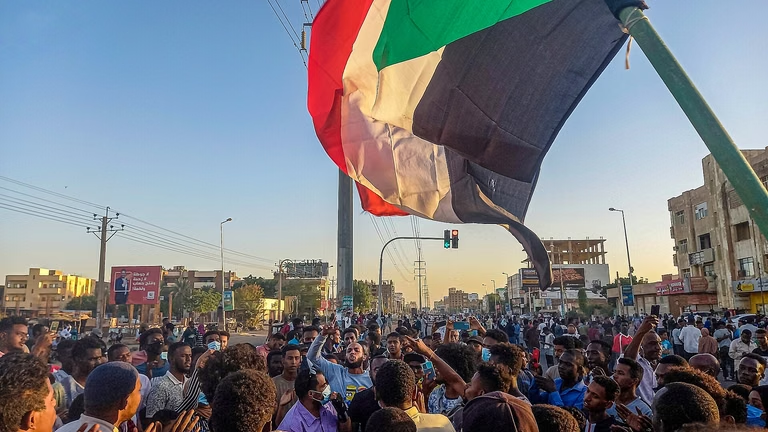
Severe economic collapse and mass pro-democracy protests eventually forced the Sudanese Armed Forces (SAF) and the RSF to oust Bashir in April 2019.
The fragile partnership between the military and paramilitary factions collapsed into all-out warfare in April 2023, as a vicious power struggle between the SAF and the RSF devastated urban centres like Khartoum, Darfur, and Kordofan.
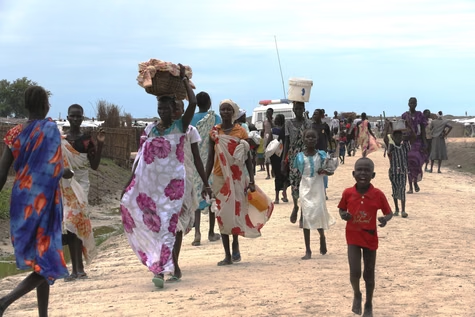
This ongoing conflict has triggered the world's largest displacement crisis, uprooting over 12 million people, collapsing health infrastructure, and leaving tens of millions facing acute food insecurity and famine conditions.
Both the RSF and allied militias face formal accusations of genocide and ethnic cleansing in Darfur. The country is fracturing under two rival authorities, and the humanitarian catastrophe continues to worsen amid widespread war crimes and heavy reliance on drone warfare.
Explore specialised topics on human rights abuses, the underlying causes of the conflict, and the unfolding humanitarian emergency. Users can explore detailed documentation on war crimes, international reactions, regional implications, the political situation, and the ongoing struggles of South Sudan.
More Resources