
Azawad (Mali)
Explore the history and ongoing conflict in Azawad, Northern Mali. Learn about the JNIM, Tuareg rebellion, and the region's continued insurgence.

MALI CONFLICT (2012 - Ongoing) - Tuareg Separatists, Islamist Insurgents & Mali's Ruling Junta
This ongoing conflict began in January 2012 following a Tuareg rebellion in northern Mali. The Tuareg people are fighting for independence in northern Mali to establish a separate homeland called Azawad.
This motivation is caused by decades of political marginalisation, economic neglect, and broken peace agreements. Mali's central government in Bamako is dominated by southern ethnic groups like the Mandé/Bambara, who sideline the interests of the north, which suffers from severe droughts, loss of livestock, and severely limited investment.
Over the years there have been multiple Tuareg rebellians (1962–1964, 1990, 2007, and 2012) although they may have led to temporary truces, no peace agreement have ever stuck and the north remains poverty stricken and incredibly volotile.
The conflict in Mali is driven by an extremely complex mix of Tuareg separatists, Islamist militant groups, the military junta, and foreign security forces.
During the 2012 Tuareg armed rebellion, insurgents led by Captain Amadou Haya Sanogo, frustrated with the government's weak response in the north, overthrew President Amadou Toumani Touré. Tuareg separatists and Islamist groups had already seized control of northern cities like Gao, Kidal, and Timbuktu.
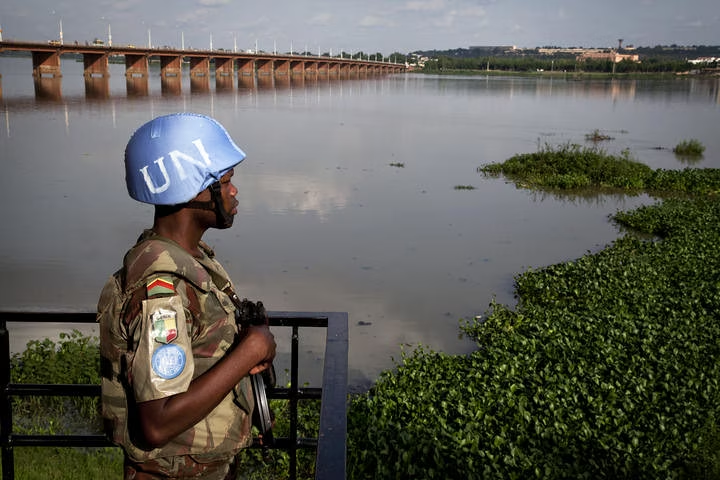
The following year, France launched a military operation to drive Islamist groups away from northern urban centres. The MINUSMA peacekeeping mission was then launched by the United Nations.
The Algiers Peace Accord
After years of fighting, the Algiers Peace Accord is signed between the government and northern coalition groups. Lack of political will, poor funding, and rampant corruption led to its failure, with only about 20% ever implemented.
Two more successive coups took place in 2020 and 2021, led by Malian military officers who overthrew civilian leaders. The French forces and MINUSMA peacekeepers were expelled, and the new coup leaders turned to Russia’s Wagner Group for security support.
The peace accord was officially terminated in 2024 after Tuareg separatists regroup under the Front de Libération de l'Azawad (FLA), causing renewed heavy clashes in the north.
Renewed Fighting & 2026 Escalation
The FLA and Jama'at Nusrat al-Islam wal-Muslimin (JNIM), an al-Qaeda-linked jihadist coalition, two historically opposed insurgent groups, joined forces to launch a massive nationwide offensive on 25 April 2026.
On its first day, they killed Malian Defence Minister General Sadio Camara and have continued to stretch Malian forces and Russian mercenaries.
The new alliance successfully captured major northern towns, including Kidal, Tessalit, and Tessit. Coordinated attacks have continued in waves since.
Humanitarian Crisis
- Around 5.1 million to 5.9 million people in Mali now require urgent humanitarian assistance due to escalating conflict and insecurity, exacerbated by severe climate shocks including severe droughts and extreme flood events.
- Over 400,000 people are internally displaced within Mali, while hundreds of thousands more have fled across borders into countries like Mauritania.
- Millions face acute food shortages, with almost 400,000 children under the age of five suffering from acute malnutrition.
- Nearly 2,500 schools are closed, leaving over 700,000 children out of school. Many health facilities are non-operational due to violence and medical supply shortages.
- Blockades, urban sieges, and attacks on infrastructure and aid workers have heavily restricted the delivery of relief supplies.
- The country faces a deepening national water and power crisis.
- All sides, Islamist insurgents, separatists, the Malian armed forces, and foreign mercenaries have faced widespread accusations of abuses, extrajudicial killings, and targeting of civilians.
*****
Ending this multi-layered conflict in Mali requires addressing the militant Islamist insurgency, the northern Tuareg separatist rebellion, and all other armed groups, alongside the country's severe political and economic crises.
Endless military escalation has failed from all sides to either destroy groups or prevent territory loss. The cycle of violence merely continues. Negotiation channels must be opened as an international priority.
Increased levels of stability must come hand in hand with inclusive governance, a new peace accord, decentralisation of central governance, disruption of the illicit financial networks of the Islamist insurgency, and immediate humanitarian relief for the millions of suffering civilians.
More Resources
Curated Directory & Deep-Dive Resources on Azawad (Mali)
- Azawad - wikipedia 173405
- Mouvement Nationale de la Liberation de l'Azawad 173409
- Toumast Press 173410
- Temoust Le Peuple Touareg 173411
- What can save Mali from collapse? - Atlantic Council 01.05.26 514981
- Al Qaeda-linked insurgents establish check points around capital, call on Malians to rise up - Reuters 01.05.26 514967
- Mali attacks spotlight the growing reach of militants across West Africa - Reuters 30.04.26 514971
- Kremlin says Russian forces will stay in Mali as insurgents press attacks - Reuters 30.04.26 514983
- France urges citizens to leave 'extremely volatile' Mali 'as soon as possible' - France24 29.04.26 514984
- What role has Russia played in Mali’s security and the Sahel region? - Al Jazeera 29.04.26 514982
- Islamic State-linked insurgents leave Mali town as army tries to reassert control - Reuters 29.04.26 514974
- Taking power in Mali might be a stretch but insurgents can force hand of weakened regime - Guardian 28.04.26 514969
- Mali leader says situation under control in first speech since attacks - Reuters 28.04.26 514977
- Mali in turmoil after insurgents seize towns and kill defence minister - Guardian 27.04.26 514978
- Mali at risk of splintering after jihadi and separatist attacks - Reuters 27.04.26 514966
- Mali defence minister killed during major assault by insurgents - Sky News 27.04.26 514980
- Armed groups launch coordinated attacks across Mali - BBC 26.04.26 514968
- Mali defence minister killed as country hit by wave of rebel attacks - BBC 26.04.26 514972
- Malian defense minister killed in attack as jihadi and rebel forces seized towns and military bases - PBS 26.04.26 514965
- Explosions and gunfire go off for major military base in Mali - wetin we know - BBC 25.04.26 514979
- Militants and separatists launch coordinated attacks across Mali - Guardian 25.04.26 514973
- Gunmen stage simultaneous attacks across Mali, army says - Al Jazeera 25.04.26 514985
- Mali army bases hit in large-scale attacks claimed by al Qaeda-linked militants - Reuters 25.04.26 514975
- Islamic militants and separatists attack several locations in Mali's capital and other cities - PBS 25.04.26 514970
- Mali's army clashes with ‘terrorist’ groups, Tuareg rebels claim they seized Kidal - France24 25.04.26 514986
- Al Qaeda-linked JNIM says it carried out Mali attacks with Tuareg‑led FLA, SITE reports - Reuters 25.04.26 514976
- EU sanctions Russian Wagner Group for African operations - DW 25.02.23 331903
- UN peacekeepers deployed to northeastern Mali amid spate of killings - WION News 04/22 282057
- Mali's crisis hits 10-year mark - DW 03/22 282047
- Islamic State kills hundreds of civilians in northern Mali - 03/22 282058
- HRW Slams Surge in Killings of Civilians in Mali - VOA News 03/22 282048
- Mali: Could the war between Bamako and the North’s former rebels restart? - The Africa Report 03/22 282044
- Mali – Violent fighting in Northern Mali (DG ECHO, UNHCR, local media) - Reliefweb 03/22 282052
- Russia, Wagner Group, and Mali: How European fears weaken European policy - ECFR 12/21 282056
- Mali tells U.N. it will confirm post-coup election date in December - Reuters 10/21 282053
- It’s time for a reality check in Mali - Al Jazeera 06/21 282043
- Egyptian, Mali FMs confer over cooperation on international scale, counterterrorism - Egypt Today 05/21 282054
- Mali: CMA leader Sidi Brahim Ould Sidati dies from gunshot wounds - Al Jazeera 04/21 282042
- Jihadists kill scores of soldiers in Mali attack - Guardian 02.11.19 198582
- Movement For The Salvation Of Azawad - Arab News 07/18 282041
- Mali Crisis: A Historical Perspective of the Azawad Movement - Geopolitical Monitor 02/18 282051
- United Nations Investigating Mass Graves In Northern Mali - ndtv 08/17 282037
- Suspected Islamist Terrorist Attack Mali UN Base, Several Dead - ndtv 02/16 282038
- Mali’s separatist war ends at last - The Guardian 06/15 282036
- Mali's Tuareg Rebels Prepare to Sign Landmark Peace Deal - ndtv 06/15 282039
- Mali Rebels to Initial Peace Deal on Today - ndtv 05/15 282040