
Illegal Wildlife Trade
Explore our comprehensive guide to wildlife trafficking and poaching. Learn about the illegal trade of ivory, rhino horns, pangolins, and shark fins.
ILLEGAL WILDLIFE TRADE - A $23 Billion Industry
Illegal wildlife trafficking is a global criminal enterprise. It is the fourth-largest illicit trade in the world after drugs, human trafficking, and counterfeiting.
The wildlife trade involves the unlawful capture, smuggling, and then sale of wild animals, their parts, plants, and fungi.
Between 2015 and 2026, 9.2 tonnes of ivory, 30.6 tonnes of pangolin scales, and over 13,400 live animals were seized by wildlife organisations.
This devastating crisis is driving extinction risks, causing ecosystems to collapse, and creating untold suffering and cruelty to countless animals.
The trade is organised by the same organised crime groups that facilitate drugs and weapons trafficking. It fuels corruption, other illegal activity, creates instability, and puts the lives of local communities, rangers, enforcement officers, and conservationists in great danger.
Roughly 50 to 100 wildlife rangers are killed every year by poachers and armed militias involved in the trade.
This trade also poses significant risks to global health and security. The illegal movement of animals and plants can facilitate the spread of diseases, some of which may leap to humans, as seen in past pandemics.
The most trafficked species include:
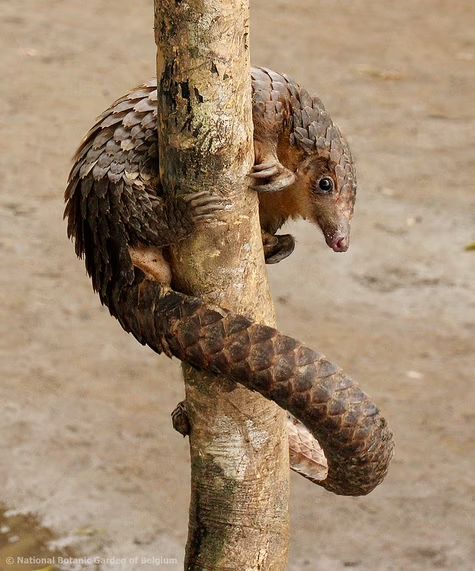
Pangolins - Over 1 million have been poached in the last decade for their keratin scales used in traditional medicines.
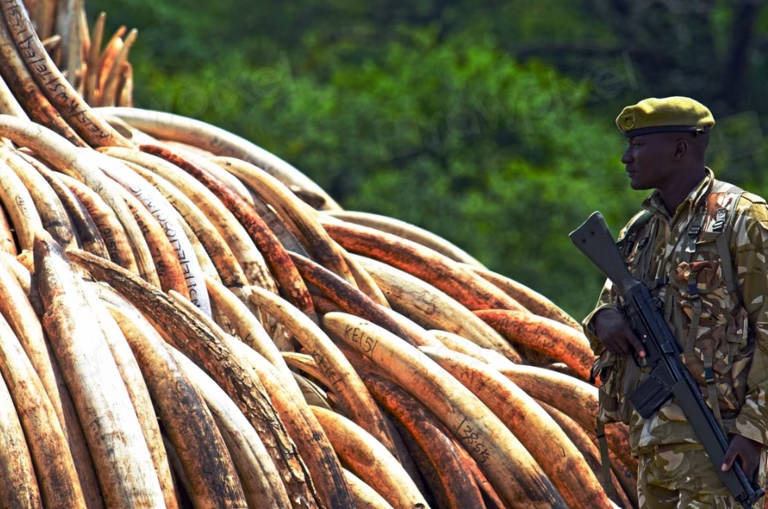
Elephants - An estimated 55 African elephants are poached every day for their ivory tusks used for carvings and jewellery.
Rhinos - For their horns, used in traditional medicine and seen as a symbol of status and wealth.
Tigers & Other Big Cats - For their skins, teeth, bones, and meat.
Parrots & Songbirds - For the exotic pet trade.
China is by far the world's largest consumer destination of illegally trafficked products. Countries like Nigeria and Vietnam act as major transit hubs for transporting products to their final destination.
*****
Combating this destructive industry requires international cooperation, strict enforcement of laws and treaties, and a dramatic reduction in demand for these products.
Park rangers and border officials must be supported and protected.
As individuals, we can:
- Never buy products made from ivory, fur, reptile skins, tortoise shell, or other wild animal parts.
- Ensure exotic pets are certified captive-bred.
- Check that traditional medicines do not contain endangered animal ingredients.
- Avoid unethical tourism, for example, paying for photos with captive wild animals or consuming exotic meats.
Public awareness and education play crucial roles in curbing demand, while conservation initiatives strive to protect habitats and rehabilitate affected species. By addressing the root causes and implementing robust measures, we can hope to preserve the planet's rich biodiversity for future generations.
More Resources
Curated Directory & Deep-Dive Resources on Illegal Wildlife Trade
- Wild Foundation 167310
- The International Anti-Poaching Foundation 167313
- Defenders of Wildlife 167315
- Born Free 167317
- Stand for Wildlife 167318
- The Snow Leopard Trust 167319
- The Australian Rhino Project 167320
- Stop the Illegal Wildlife Trade - Independent 305213
- Stop Ivory (Africa) 167324
- Save the Elephants (Africa) 167329
- Uganda Wildlife 167330
- Save the Rhino 167332
- More Latin American species are surfacing at a Bangkok wildlife market - Mongabay 05.10.26 524485
- Weak prosecution leaves Southeast Asia’s tigers vulnerable to trafficking: Report - Mongabay 05.10.26 524482
- Uganda’s UN-supported wildlife forensics lab turns ivory seizures into convictions - UN News 03.10.26 524661
- Wildlife traffickers are now targeting Indonesia’s critically endangered maleo birds - Mongabay 02.10.26 524489
- NGOs call on Vantara to end all wild animal imports permanently - Mongabay 25.09.26 523482
- Reptiles, gold and money: How Australia is cracking down on wildlife trafficking - Mongabay 23.09.26 523489
- In Bangladesh, scientists learn what happens after rescued pangolins return to the wild - Mongabay 16.06.26 518466
- Indonesia’s native hornbills are being hammered by online and offline trade - Mongabay 09.06.26 518469
- Trump called trophy hunting a “horror show,” but permitted 300-plus elephant trophy imports in 2025 - Mongabay 18.05.26 516565
- Illegal wildlife trade in Himalayan countries threaten mountain ecosystem - Mongabay 15.05.26 516204
- Brazil police seize devices from bird expert in trafficking probe linked to Vantara zoo - Mongabay 07.05.26 515536
- Protecting lions and people: the biologist dedicated to tackling human-wildlife conflict - Guardian 30.04.26 514902
- Nearly a million birds shipped from Africa to Asia in 15 years; canaries top the list - Mongabay 15.04.26 513706
- Experts flag trafficking after monkey endemic to Borneo is found in Thailand - Mongabay 09.04.26 513908
- Decades after poaching drove them extinct, rhinos are back in the wild in Uganda - Mongabay 31.03.26 512510
- Asia now hub of growing illegal wildlife trade across 100+ countries, study shows - Mongabay 30.03.26 512512
- Zambia seizes half-ton of ivory in major illegal wildlife crime operation - Mongabay 28.03.26 512515
- ‘Staggering’ trade for belief-based use drives hooded vultures to near-extinction in Benin - Mongabay 25.03.26 511908
- Songbird trade threatens lesser-known ‘master birds’ with secondary extinctions: Study - Mongabay 23.03.26 511905
- Proboscis monkey found in Thailand adds to evidence of cross-border illegal trade - Mongabay 20.03.26 511904
- How Wildlife Traffickers Are Using Coded Language to Sell Protected Animals On Facebook - Bellingcat 19.03.26 512225
- Facebook shuts Indonesia groups after Mongabay and Bellingcat report illegal wildlife trade - Mongabay 19.03.26 511531
- These shy, scaly anteaters are the most trafficked mammals in the world - AP News 21.02.26 509693
- Great apes are humans’ closest relatives, but many are endangered by illegal trading. Here’s what needs to be done - Conversation 22.12.25 502495
- It’s ‘whack-a-mole’: Alarming rise in pet trade fuels wildlife trafficking into California - Mongabay 25.11.25 499466
- Inside the illegal eel trade: is there a way to stop Europe’s biggest wildlife crime before it’s too late? - Guardian 22.10.25 494674
- Rhino horns made radioactive to foil traffickers in South African project - Guardian 31.07.25 482778
- Why anti-trafficking measures alone won’t save Africa’s pangolins - Conversation 13.06.25 475339
- Wildlife crime crackdown in jeopardy worldwide after US funding cuts - Mongabay 22.05.25 470486
- Insect trafficking poses a risk to wildlife and human health - Conversation 09.05.25 468723
- WWF helping facilitate trade in polar bear fur, investigation reveals - Guardian 15.02.25 457321
- China’s pangolin scale trade declines, study shows, but smuggling persists - Mongabay 14.02.25 457396
- The U.S. Imported Billions of Animals in Recent Decades, Fueling Global Wildlife Trade - Inside Climate News 14.02.25 457385
- Meet the giant rats fighting wildlife trafficking - Mongabay 12.02.25 457397
- Video: Giant Rats - Sniffing Out Wildlife Crime - Mongabay 12.02.25 456975
- CITES rejects proposed suspension of Cambodian monkey exports - Mongabay 11.02.25 456976
- Why is this endangered dolphin being killed to make “love perfumes”? - Mongabay 05.02.25 455404
- Video: Why is this snake one of the most trafficked species in the world? - Mongabay 29.01.25 456978
- Video: This rescue center saves Rio’s wildlife from poachers - Mongabay 22.01.25 456979
- Bangladesh adopts new technology to fight wildlife crimes - Mongabay 31.12.24 448132
- Tortoise protection culture prompts efforts to curb trafficking in Madagascar - Mongabay 30.12.24 447820
- Police seize 6,000 illegal wild birds’ eggs as raids net largest haul in UK history - Guardian 30.12.24 447796
- Namibia's female rangers: Protecting wildlife - Borgen Project 22.12.24 446928
- Unlike: Brazil Facebook groups give poachers safe space to flex their kills - Mongabay 19.12.24 446976
- Historic operation returns almost 1,000 trafficked animals to Madagascar - Al Jazeera 19.12.24 446181
- ‘Killed while poaching’: When wildlife enforcement blurs into violence - Mongabay 19.12.24 446977
- Luxury hunting firm linked to decades of poaching in Tanzania, whistleblowers say - Mongabay 22.08.24 429561
- This World Elephant Day, Conservationists Ask Tanzania to Stop Allowing Trophy Hunting - EcoWatch 12.08.24 427896
- South Africa’s 70,000kg rhino horn stockpile must be burnt to prevent illegal trading - Conversation 02.07.24 421208
- Madagascar lemurs, tortoises seized in Thai bust reveal reach of wildlife trafficking - Mongabay 28.06.24 420745
- Wildlife smugglers 'freer to offend' after police cuts - BBC 28.06.24 420811
- 4 charts that show how organized crime is endangering wildlife and damaging ecosystems - WEF 11.06.24 418491
- Illegal wildlife trade is booming. What does that mean for the confiscated animals? - NPR 10.06.24 420809
- Help Make Wildlife Traffickers an Endangered Species - ICE 06/24 420807
- Poachers claim to have killed one-third of all Javan rhinos, Indonesian police say - Mongabay 31.05.24 417157
- Rewilding efforts throw a lifeline to Brazil’s most trafficked endangered bird - Mongabay 30.05.24 417159
- Max sentence request for Javan rhino poacher too low, experts say - Mongabay 24.05.24 417162
- UN report: Illegal wildlife trafficking is stubbornly prevalent - VOA 13.05.24 420810
- ‘Untold harm to nature’ from wildlife trafficking, warns UN crime agency - UN News 13.05.24 420812
- Rising rhino poaching in South Africa - Ecologist 24.04.24 408916
- More than 400,000 songbirds killed by organised crime in Cyprus - Guardian 06.03.24 401189
- Elite appetite turns Bangladesh from source to consumer of tiger parts - Mongabay 09.01.24 395960
- Still on the menu: Shark fin trade in U.S. persists despite ban - Mongabay 27.12.23 391157
- This is one of the world’s largest – and most profitable – criminal activities, according to INTERPOL - WEF 05.12.23 420808
- Biden can tip the (pangolin) scales on China’s illegal wildlife trade - Mongabay 03.12.23 388289
- 10 Lessons Learned Combating Illegal Wildlife Trade - UN DP 03.12.23 420813
- The Black Mambas are South Africa's all-female anti-poaching unit. Watch how they take on wildlife poachers, without guns. - BBC 21.11.23 384648
- Video: A day in the life of the Black Mambas - BBC 16.11.23 384646
- Crime analysis sheds light on tiger poaching in Malaysia - Mongabay 14.11.23 383927
- Communities Taking a Sting Out of Poaching With Alternative Livelihoods - Global Issues 01.11.23 381668
- In biodiverse Nepal, wildlife crime fighters are underpowered but undeterred - Mongabay 16.10.23 381853
- Poached, caged, shipped in socks: on patrol with the police battling Colombia’s illegal wildlife trade - Guardian 27.09.23 374107
- Malaysian nicknamed the ‘Godfather’ jailed in US for rhino horn trafficking - Al Jazeera 21.09.23 373420
- Online trade in Philippine hornbills threatens birds and forests - Mongabay 29.08.23 370097
- Falcon trafficking soars in Middle East, fueled by conflict and poverty - Mongabay 10.08.23 366151
- Indonesian illegal shark and ray exports remain rampant amid poor monitoring - Mongabay 08.08.23 366154
- Researchers detect two of Suriname’s most powerful jaguar trafficking networks - Mongabay 07.08.23 364385
- Study: More than 900 at-risk species lack international trade protections - Mongabay 31.07.23 364391
- Wildlife trafficking gradually returns after pandemic lull, mostly by sea - Mongabay 04.04.23 340248
- As CITES turns 50, a report on the ‘extinction business’ shows urgent need for change - Canary 03.03.23 332993
- Taiwan offers hope in battle to save vulnerable pangolin - Al Jazeera 18.02.23 330319
- Fighting wildlife trafficking in Peru: Q&A with prosecutor Alberto Caraza - Mongabay 26.12.22 322226
- For Philippine pangolins, tourism’s return could spell trouble - Mongabay 12.12.22 319194
- Africa Fights Back Against Wildlife Poachers, but Drought is Devastating - Global Issues 09.12.22 319191
- Wildlife trade body needs to step up protection of endangered primate - Canary 25.11.22 317235
- Vast illegal trade in turtle species is happening, despite global protections - Canary 15.11.22 315836
- Wildlife trade is snuffing out species at a shocking rate, expert warns - Canary 14.11.22 315841
- Illegal trade threatens endangered tigers, 150 seized a year - Al Jazeera 01.11.22 313326